In the world of freshwater fishkeeping, few creatures command as much respect, awe, and sheer fascination as the Arowana. Often referred to as the "Dragon Fish," these majestic giants aren’t just pets; they are living prehistoric artifacts that have glided through our planet’s waters since the time of the dinosaurs.
If you’ve ever stood in front of a six-foot tank and watched a Silver Arowana cruise the surface with a metallic, mirror-like grace, you know exactly what I’m talking about. It’s a spiritual experience. But keeping a dragon in your living room isn’t for the faint of heart. It requires space, commitment, and a deep understanding of their unique biology.
In this comprehensive guide, we’re going to dive deep into everything Arowana. From the legal complexities of the Asian Arowana to the nitty-gritty of filtration and disease prevention, consider this your ultimate roadmap to success with the world’s most iconic "monster fish."
The Living Fossil: An Evolutionary Marvel
To understand the Arowana, you have to appreciate just how long they’ve been around. We’re talking about a lineage that dates back over 150 million years. While the Tyrannosaurus Rex was the king of the land, the ancestors of the Arowana were already the undisputed rulers of the river.
Scientists classify them under the family Osteoglossidae, which literally translates to "bony tongues." This isn’t just a cool name; it’s a literal description. These fish have teeth on the floor of their mouths that bite against a tooth-covered bone on the roof of the mouth. It’s a primitive but incredibly effective way to crush prey.
The most fascinating part of their history, however, is their global distribution. You’ll find Arowanas in South America, Africa, Asia, and Australia. How did a strictly freshwater fish end up on different continents separated by thousands of miles of saltwater? The answer lies in vicariance biogeography. When the supercontinent Gondwanaland broke apart millions of years ago, populations of ancestral Arowanas were carried away on the shifting tectonic plates. They are, quite literally, living proof of continental drift.
Arowana Species: Meet the Global Family
Not every Arowana is a good fit for every hobbyist. Depending on your location, your budget, and the size of your house, your choices will vary. Let’s break down the most common species you’ll encounter in the trade.
The South American Arowanas
The Silver Arowana (Osteoglossum bicirrhosum)
If you walk into a local fish store and see a baby Arowana, 99% of the time it’s a Silver. Native to the Amazon Basin, the Silver Arowana is the "entry-level" dragon. I use that term loosely because they still grow to be nearly four feet long!
They are famous for their "drawbridge" mouths and the two long barbels that extend from their lower lip. These barbels act like sensors, helping them detect vibrations on the water's surface. In the light, their scales have a beautiful, iridescent sheen that looks like liquid mercury.
The Black Arowana (Osteoglossum ferreirai)
Often confused with the Silver, the Black Arowana is a slightly more refined and slender cousin. As juveniles, they are stunningly dark - almost jet black - with yellow and orange stripes. As they mature, they take on a steel-grey or blueish hue. They are generally considered to be less aggressive than Silvers and are slightly more sensitive to water parameters, making them a favorite for experienced keepers.
The Asian Arowanas (The True "Dragon Fish")
This is the "Holy Grail." In many Asian cultures, these fish are believed to bring luck, wealth, and prosperity. They come in breathtaking color variants:
The Super Red (Scleropages legendrei)
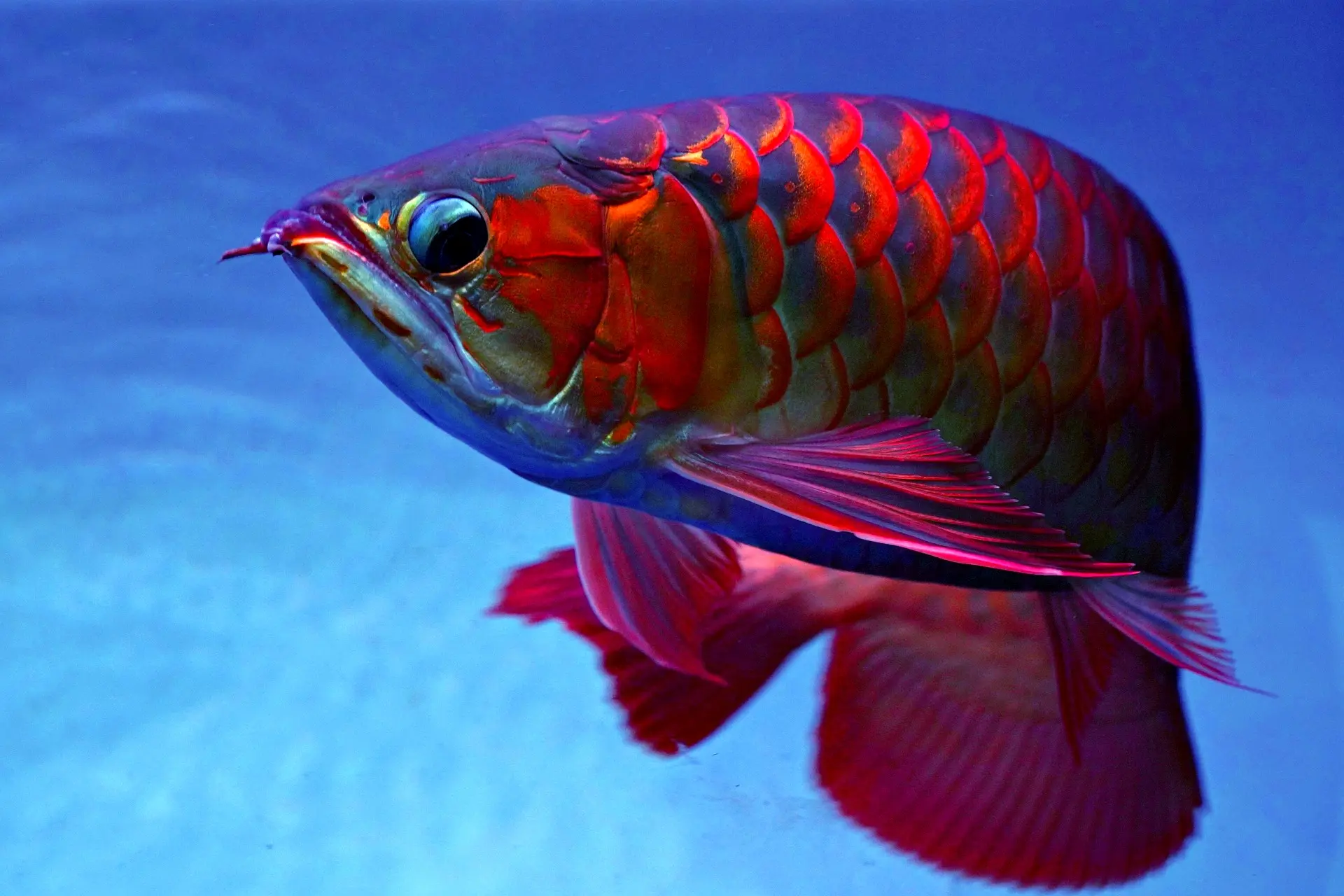
The undisputed king of the hobby, this variety is native only to the upper Kapuas River in Borneo. It is world-renowned for its metallic red gill covers and scales, which develop deep hues ranging from "Chili Red" to "Blood Red" as the fish matures. For collectors, the darker the juvenile's back, the deeper the red is expected to become at adulthood. These are often the most expensive fish in the world, with rare specimens occasionally selling for six-figure sums
The Gold Crossback (Malayan Bonytongue)
Hailing from West Malaysia, specifically the Bukit Merah area, the Crossback is the pinnacle of the golden varieties. Its name comes from its most prized feature: the metallic gold scales that completely cross the fish's back (the 6th level of scales), creating a seamless armor of gold. Because they are quite rare and difficult to breed, they consistently command premium prices in the trade.
The Red Tail Golden or RTG (Scleropages aureus)
Native to northern Sumatra, the RTG is often considered the "entry-level" gold arowana, though it is still a magnificent showcase fish. While it boasts brilliant gold lateral scales and gill covers, the gold does not cross its back, which remains a dark, contrasting color. You can easily identify them by their reddish-brown anal and caudal fins, and they are known among keepers for being slightly more aggressive than their Crossback cousins.
The Asian Green (Scleropages formosus)
This is the most common and widespread variety, found in river systems across Indonesia, Vietnam, Thailand, and Malaysia. While it lacks the high-contrast gold or red of its relatives, a mature Green Arowana is subtle and beautiful, featuring a dark green back and silvery-green sides. The real magic happens when they reach maturity, as the top of their head and eyes develop a bright, luminous emerald color.
The Silver Asian (Yellow or Grey Tail)
Commonly referred to as the Yellow Tail Silver or Grey Tail Silver (S. macrocephalus), these are native to Borneo. It is important for hobbyists not to confuse these with the common South American Silver Arowana; the Asian variety has a much sturdier build and dark ring patches on its silver scales. The Yellow Tail sub-variety is particularly distinct, with yellowish fin membranes that contrast against dark grey rays.
The Australian Arowanas (Saratogas)
Often referred to by hobbyists as Saratogas, these fish are the closest legal relatives to the Asian Dragon Fish.
The Jardini (Scleropages jardinii)
Also known as the Northern Saratoga, this fish is native to northern Australia and New Guinea. It is famous for its dark bronze or copper body and beautiful red crescents on its massive scales. While it looks like a masterpiece, it has a reputation for being the most aggressive arowana in the hobby; it is a powerhouse that often needs to be kept solo because it rarely tolerates tankmates as it matures. It is a favorite for those who want the "Asian look" without the Asian price tag (or the legal headaches).
The Leichardti (Scleropages leichardti)
Known as the Spotted or Southern Saratoga, this variety is native to the Fitzroy River system in Australia. It has a sleeker, silvery base color with small red spots perfectly centered on its scales. You can tell it apart from the Jardini by its straight back profile, its head stays in a direct line with its spine. Most keepers find the Leichardti to be much milder in temper than the Jardini, though it remains a rare find in the aquarium hobby or trade.
The African Arowanas (The Filter Feeder)
The African Arowana (Heterotis niloticus)
The African Arowana, or Nile Arowana, is the "oddball" of the family. This species is actually more closely related to the massive South American Arapaima than it is to the Asian or Australian arowanas. It features a uniform gray, brown, or bronze color with a more rounded tail and a thicker body than its cousins. Unlike its predatory relatives that strike from the surface, the African arowana is a peaceful filter feeder. It uses a specialized organ to strain plankton and tiny food particles from the water, which means it won't harass your other fish. It is also one of the few that builds large circular nests in the mud to protect its young, rather than carrying them in its mouth.
Why is the Asian Arowana Illegal in the U.S.?
If you’re an American hobbyist browsing YouTube, you’ve probably seen stunning Asian Arowanas in Singapore or Canada and wondered, "Why can't I buy one?"
The short answer: The Endangered Species Act. In 1975, the Asian Arowana was listed as an endangered species under CITES (Convention on International Trade in Endangered Species). While the rest of the world eventually allowed the trade of farm-bred, microchipped specimens, the United States Fish and Wildlife Service (USFWS) maintained a total ban.
Even if the fish is 20 generations removed from the wild, it is still classified as an endangered species under U.S. law. For U.S. keepers, the Silver, Black, and Australian species are the only legal options. It’s frustrating, sure, but it’s a law designed to protect these creatures from over-exploitation.
Tank Requirements and Design for Arowanas
You’ve decided you want a dragon. Now you need a castle. One of the biggest mistakes beginners make is thinking they can "grow out" an Arowana in a small tank. These fish grow incredibly fast, sometimes an inch or two per month.
Tank Size: Bigger is Always Better
For a Silver Arowana, the absolute minimum tank size for an adult is 250 to 300 gallons. But here’s the kicker: it’s not about the volume; it’s about the footprint. Arowanas are surface dwellers and are long, stiff fish. They need to be able to turn around comfortably. A tank that is 6 to 8 feet long and at least 2.5 to 3 feet wide is mandatory. If the tank is too narrow, the fish will suffer from spinal deformities and "stunting."
The "Leap of Faith" (Lid Security)
I cannot stress this enough: Arowanas are world-class jumpers. In the wild, they leap out of the water to snatch insects and even small birds from low-hanging branches. In an aquarium, they will jump at a fly on the glass or even at their own reflection.
A standard plastic hood won’t stop them. A 3-foot Silver Arowana hitting a lid is like a muscular torpedo. You need heavy glass tops, often weighted down with bricks or secured with clips. I’ve heard too many stories of hobbyists coming home to find their prized "dragon" dried up on the carpet. Don't let yours be one of them.
Substrate and Decor
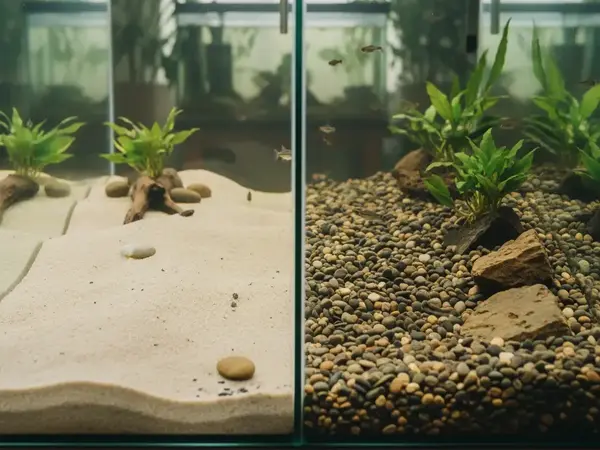
Most Arowana keepers prefer a "minimalist" look. Why? Because these fish are active and can easily injure themselves on sharp rocks or tangled driftwood. A thin layer of sand or even a bare-bottom tank is common. If you do use driftwood, make sure it’s smooth and positioned so it doesn't obstruct the fish's swimming path at the surface.
Water Parameters: Mimicking the Amazon and Beyond
Keeping an Arowana means becoming a part-time chemist. Because they are large carnivores, they produce a massive amount of waste (ammonia and nitrites).
Filtration
You need a filter that can handle a "monster bioload." A large sump system is the gold standard for Arowana tanks because it increases the total water volume and provides massive space for biological media. If a sump isn't an option, you’ll need at least two heavy-duty canister filters (like the Fluval FX6).
Water Parameters
- Temperature: 75°F to 82°F (24°C to 28°C).
- pH: 6.0 to 7.0 for South American species; 6.8 to 7.5 for Australian.
- Nitrates: Aim to keep these below 20ppm. This usually requires weekly water changes of 30% to 50%.
- Hardness: Soft to moderately hard (dH 6-12).
Pro-Tip: South American Arowanas love "blackwater." Adding Indian Almond Leaves or driftwood releases tannins that naturally lower the pH and provide antibacterial properties. Plus, it makes the tank look like a slice of the Amazon. Remember, consistency is more important than "perfect" numbers.
Diet, Nutrition and Feeding Habits of Arowana
Feeding an Arowana is one of the most exciting parts of the hobby, but it’s also where many people go wrong.
The "Feeder Fish" Myth
In the old days, people fed Arowanas nothing but live goldfish. Don’t do this. Feeder goldfish are often kept in terrible conditions and are riddled with parasites and diseases. Furthermore, they are high in fat and contain thiaminase, an enzyme that can lead to vitamin B1 deficiency in your Arowana.
A Balanced Menu
You want a variety of high-quality foods:
- High-Quality Pellets: This should be the staple. Look for floating pellets specifically designed for Arowanas (like Hikari Tropical Food Sticks).
- Insects: Crickets, dubia roaches, and mealworms are excellent. They provide the "chitin" that helps with digestion and mimic their natural diet.
- Meaty Foods: Frozen krill, market shrimp (with the shell removed for younger fish), and mussels.
- Occasional Treats: Small frogs or earthworms.
The "Pellet Training" Struggle: Some Arowanas are picky. If your fish refuses pellets, try the "tough love" method. Don’t feed them for 3-5 days. Eventually, their hunger will override their pickiness, and they’ll accept the pellets.
Arowana Behavior and Tankmates: Finding the Right Neighbors
Arowanas are the "lone wolves" of the upper water column. They are highly territorial with other Arowanas, so unless you have a 1,000-gallon pond, stick to one per tank.
However, they can live with other large, robust fish that stay at the bottom of the tank. This is known as "layering" your aquarium.
Best Tankmates:
- Freshwater Stingrays: These are the classic partners for Arowanas. They stay on the sand, while the Arowana stays at the surface.
- Large Cichlids: Oscars, Severums, and Geophagus (Eartheaters).
- Datnoids (Tiger Fish): They have a similar prehistoric look and are generally peaceful toward Arowanas.
- Bichirs: Primitive bottom-dwellers that look like little dragons themselves.
- Large Catfish: Tiger Shovelnose or high-quality Plecos (make sure the Pleco isn't small enough to be eaten).
Avoid: Anything small enough to fit in the Arowana's mouth. If it fits, it will be eaten.
Common Health Challenges of Arowana: Prevention and Cure
Even with the best care, Arowanas can run into health issues. Because they are large fish, treating them can be expensive and stressful.
Drop Eye (Exophthalmia)
This is the most controversial topic in the Arowana world. It’s when one or both eyes point downward permanently.
- Causes: Many believe it’s caused by the fish looking down at food or its reflection. Others point to fatty deposits behind the eye from a poor diet.
- Prevention: Feed floating foods only. Some keepers use floating ping-pong balls to keep the fish's attention at the surface.
Gill Curl
This is when the soft gill cover starts to fold outward.
- Causes: Poor water quality (ammonia/nitrate spikes) or a tank that is too small for the fish to turn around.
- Cure: Large water changes and increased oxygenation. If caught early, it can reverse. In advanced cases, it requires surgical trimming by a professional.
Jump Injuries
If an Arowana hits the lid, they can lose scales or even break their "mandibular barbels."
- Cure: Keep the water pristine. Most Arowanas have incredible healing powers, and scales will usually grow back within a few weeks.
Breeding Arowanas
Breeding Arowanas in a home aquarium is nearly impossible. The reason being, they are paternal mouthbrooders.
The male Arowana carries the fertilized eggs (which are the size of marbles!) in his mouth for about 50 to 60 days. During this time, he doesn't eat. He protects the fry even after they hatch, allowing them to swim back into his mouth if danger approaches.
Because of the space and the peaceful environment required for courtship, almost all Arowanas in the trade come from massive commercial breeding farms in Southeast Asia or South America.
In commercial farms, this is done in large concrete ponds. Once the male is spotted with a "full mouth," workers will carefully catch him and manually release the fry (a process called "stripping").
For the home hobbyist, breeding is extremely rare because of the massive tank sizes required for a bonded pair to court without killing each other. Unless you have a backyard pond and a lot of luck, breeding is best left to the professionals.
Is an Arowana Right for You?
Owning an Arowana is a journey. It’s not just about having a cool-looking fish; it’s about the relationship you build with a creature that can live for 20 years and grow to recognize you when you walk into the room.
If you have the space, the budget for a 300-gallon tank, and the discipline to keep up with massive water changes, then there is no more rewarding fish in the world. You aren't just an aquarium owner; you are the keeper of a prehistoric legacy.
So, what do you think? Are you ready to bring a dragon into your home? Just remember: keep that lid tight, the water clean, and the diet varied. Your dragon will thank you for it.