We have all been there. You are staring at a stunning aquascape online, mesmerized by the vibrant colors and the rhythmic sway of the plants. Then reality hits. You remember the stories of finicky pH levels, weekly three-hour water changes, and the heartbreak of sensitive species that seem to belly up if you so much as sneeze near the tank.
The secret to success in this hobby is not working harder, but working smarter. The perfect aquarium does not have to be a second job. By choosing inhabitants that are biologically predisposed to resilience and setting up a smart system, you can enjoy all the meditative benefits of fishkeeping with only a fraction of the effort.
This guide explores the best low-maintenance fish for busy people, ensuring your clean aesthetic remains pristine without draining your limited free time.
What Defines a Truly Low-Maintenance Fish?
Before we dive into specific species, we must define our criteria. For a busy professional, a low-maintenance fish is not just one that stays alive; it is one that thrives within a flexible schedule.
Resilience and Water Parameter Tolerance
In the world of aquarium keeping, we talk a lot about hardiness. A hardy fish is the biological equivalent of an off-road vehicle. They can handle slight fluctuations in temperature, pH, and nitrate levels. For the busy hobbyist, this is vital. Research published in the WBI Studies emphasizes that evidence-based husbandry is key to fish welfare, noting that resilient species are better equipped to handle the minor environmental stressors common in home aquaria. If a work meeting runs late and you miss your scheduled water change by two days, these fish will not go into a tailspin. They have evolved in environments like rice paddies or seasonal streams where conditions change, making them remarkably forgiving.
Low Bioload Species
Bioload refers to the amount of waste a fish produces and the burden it places on your filtration system. High bioload fish (like Goldfish or large Cichlids) are messy; they eat significantly and produce heavy ammonia. For a low-maintenance lifestyle, we want the opposite. We are looking for metabolically efficient species that consume small amounts of food and produce minimal waste. Studies on microbial community dynamics show that a stable nitrogen cycle is much easier to maintain when the input of organic waste is controlled and steady.
Foraging Habits and Dietary Flexibility
The best fish for busy people are not picky eaters. You want species that happily accept high-quality flakes or pellets rather than requiring live or frozen food daily. Furthermore, fish that double as a cleanup crew, those that forage for leftover scraps or graze on algae, provide an extra layer of maintenance insurance.
Top 12 Low-Maintenance Fish Species
If you want a tank that looks high-end but acts low-effort, these species are your best bets. Each of these fits perfectly into a clean, modern aquarium aesthetic.
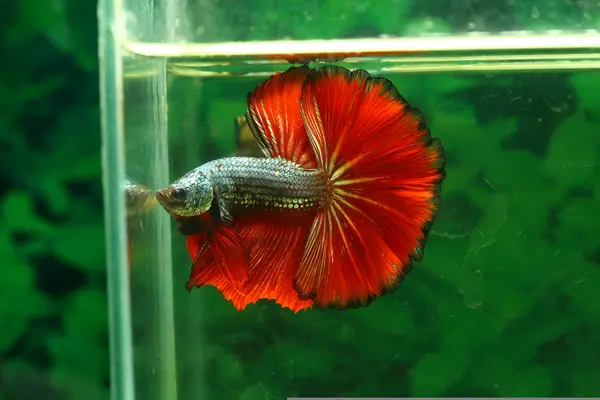
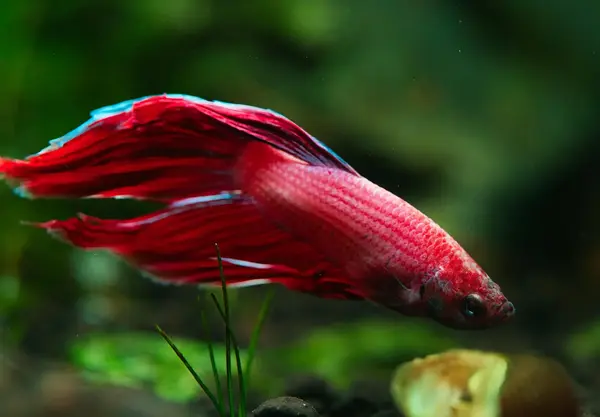
1. Betta Fish (Betta splendens)
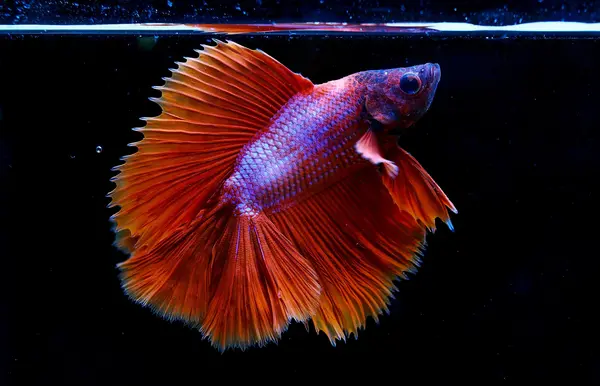
The Betta is perhaps the most misunderstood fish in the hobby. While often relegated to tiny bowls, in a filtered 5 or 10-gallon tank, they are the ultimate low-maintenance companion.
- Minimum Tank Size: 5 Gallons
- Temperament: Solitary and occasionally territorial
- Primary Benefit: Low bioload and stunning centerpiece fins
- Maintenance Profile: Because they are labyrinth breathers, Bettas can gulp air from the surface, a trait evolved for low-oxygen environments. Research on Betta husbandry suggests that maintaining stable water parameters is more important than chasing specific numbers, making them ideal for those who prefer a steady routine over constant tinkering.
- Busy Person Tip: Their long fins make them slow swimmers that dislike strong currents. You can set your filter to a low flow setting, meaning less turbulence and less evaporation to top off.
If a single betta is your choice, plan a 10-US-gallon betta setup before shopping, and mark the supplies you already own.
2. Zebra Danio (Danio rerio)
If you prefer movement and energy, Zebra Danios are your go-to. These striped dynamos are virtually indestructible and serve as excellent dither fish to make other tank inhabitants feel secure.
- Minimum Tank Size: 10 Gallons (Long footprint preferred)
- Temperament: High energy and social
- Primary Benefit: Extremely hardy and active
- Maintenance Profile: According to studies in the Journal of Thermal Biology, Zebrafish possess a broad thermal tolerance that is often oxygen-independent across various acclimation temperatures. This means you do not have to panic if your AC breaks or your room temperature fluctuates slightly.
- Busy Person Tip: They occupy the top third of the tank and will eat any food before it sinks and rots, effectively keeping your water quality higher.
3. Fancy Guppy (Poecilia reticulata)
Guppies are the old faithful of the aquarium world. They are colorful, affordable, and incredibly easy to care for, available in almost any color to match your room's decor.
- Minimum Tank Size: 10 Gallons
- Temperament: Peaceful
- Primary Benefit: Vibrant colors and ease of feeding
- Maintenance Profile: Guppies are highly adaptable to different water hardness levels. To keep things low maintenance, buy only males. This prevents population explosions that can quickly overwhelm a filter and lead to ammonia spikes, a common headache for beginners.
- Busy Person Tip: Because they are small and surface-dwelling, a group of 5-6 males creates a high-impact visual display without requiring a massive, space-consuming tank.
4. Corydoras Catfish (Corydoras sp.)
No low-maintenance community tank is complete without a school of Corys. These armored catfish are the vacuum cleaners of the aquarium.
- Minimum Tank Size: 20 Gallons
- Temperament: Peaceful and social
- Primary Benefit: Cleans the substrate of leftover food
- Maintenance Profile: They spend their days sifting through the sand, eating leftover food that would otherwise rot and spike nitrates. This natural behavior helps maintain the equilibrium of the nitrogen cycle by preventing organic buildup in the substrate.
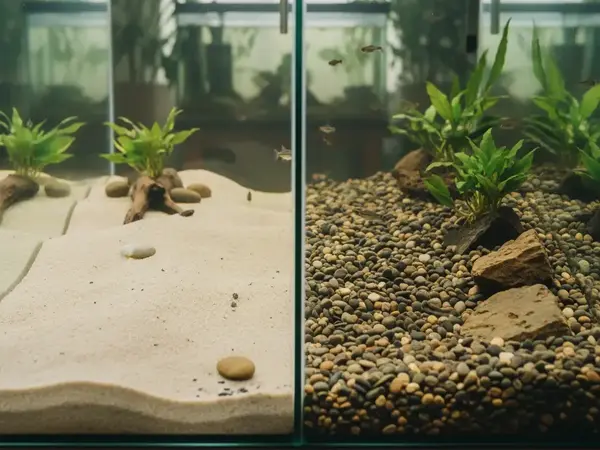
- Busy Person Tip: Keep them on a sand substrate. It stays cleaner than gravel (waste sits on top rather than sinking in) and protects their delicate barbels.
5. White Cloud Mountain Minnow (Tanichthys albonubes)
For the ultimate minimalist, consider the White Cloud. Often called the poor man’s neon tetra, they are actually far hardier than their namesake and boast a stunning metallic shimmer.
- Minimum Tank Size: 10 Gallons
- Temperament: Peaceful
- Primary Benefit: No heater required in most indoor environments
- Maintenance Profile: They thrive in cooler water (64°F–72°F), which significantly reduces the amount of equipment you need to monitor. Less equipment means fewer cables to hide and fewer points of failure.
- Busy Person Tip: Since they don't need a heater, you save on electricity and eliminate the risk of heater malfunction, one of the most common causes of tank crashes.
6. Cherry Shrimp (Neocaridina davidi)
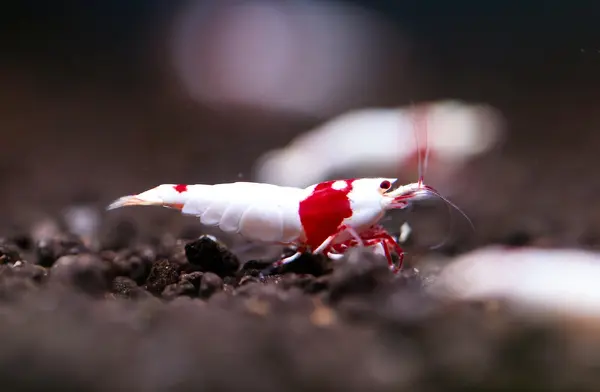
If you want something truly unique, Neocaridina shrimp like the Red Cherry Shrimp are a fantastic choice. They add a pop of bright red against green plants and are fascinating to watch.
- Minimum Tank Size: 5 Gallons
- Temperament: Peaceful
- Primary Benefit: Expert algae cleaners and biofilm grazers
- Maintenance Profile: Their bioload is almost non-existent. Research into invertebrate efficiency highlights how effectively these organisms process organic matter. In a well-planted tank, they essentially act as a self-sustaining cleaning crew, scrubbing algae off delicate leaves that you couldn't reach by hand.
- Busy Person Tip: In a mature, planted tank, they can often survive for days on natural biofilm alone, making them perfect for owners who travel frequently.
7. Neon Tetra (Paracheirodon innesi)
Neon Tetras are the quintessential aquarium fish for a reason. They are small, vibrant, and surprisingly tough once they settle into an established tank. These fish are famous for their iridescent blue and red stripes.
- Minimum Tank Size: 10 gallons
- Temperament: Peaceful and schooling
- Primary Benefit: High visual impact with a very low bioload
- Maintenance Profile: Keep them in groups of six or more to reduce stress. They are omnivores that happily accept standard flake food, making feeding a five-second task. Scientific research published in Angewandte Chemie (PubMed) has explored the unique way these fish change color through tunable photonic crystal arrays in their scales. This biological efficiency means they don’t need high-intensity light to look stunning, which helps keep algae growth down in your tank.
- Busy Person Tip: Buy them from a local breeder if possible; tank-raised Neons are significantly hardier than wild-caught ones.
8. Harlequin Rasbora (Trigonostigma heteromorpha)
If you want a fish that is practically bulletproof in terms of water chemistry, the Harlequin Rasbora is a top contender. While they naturally come from soft, acidic forest streams, captive-bred specimens have adapted to thrive in a wide range of pH levels.
- Minimum Tank Size: 15 gallons
- Temperament: Peaceful and social
- Primary Benefit: Reliable health and steady schooling behavior
- Maintenance Profile: They are not picky eaters and get along with almost any non-aggressive tank mate. Their copper-colored bodies and black triangular patches provide a sophisticated look to a planted setup. Studies on their habitat, such as those cataloged by Seriously Fish, highlight their preference for calm water, meaning you don't need heavy-duty (and high-maintenance) filtration flow to keep them happy.
- Busy Person Tip: Their distinct schooling formation makes the tank look fuller than it is, giving you a high-end look with fewer fish to care for.
9. Kuhli Loach (Pangio kuhlii)
The Kuhli Loach is the ultimate night shift worker for your aquarium. These eel-like fish spend their time scavenging the substrate for leftover food that other fish miss. Because they are nocturnal, they won't compete for space or attention during the day.
- Minimum Tank Size: 15 gallons
- Temperament: Shy and peaceful
- Primary Benefit: Natural bottom-cleaner that reaches hidden spots
- Maintenance Profile: They prefer a sandy substrate or fine gravel to prevent injury to their sensitive skin. Beyond that, they are incredibly hardy and can live for over 10 years. Research in the Jurnal Medik Veteriner has looked into the unique morphology of these loaches, noting how their elongated bodies are perfectly adapted for navigating tight spaces, making them excellent for keeping every corner of your tank clean.
- Busy Person Tip: They are experts at finding uneaten food trapped between rocks or plant roots, preventing it from spoiling the water quality.
10. Bristlenose Pleco (Ancistrus sp.)
Unlike the common pleco that grows to a monstrous size, the Bristlenose stays around 4 or 5 inches. It is arguably the best algae eater for a home aquarium. If you find yourself constantly scrubbing green film off the glass, this is the fish for you.
- Minimum Tank Size: 20 gallons
- Temperament: Peaceful but solitary
- Primary Benefit: Superior algae control
- Maintenance Profile: They are incredibly low-maintenance but do appreciate a piece of driftwood in the tank, as they use the wood fibers to aid their digestion. According to studies on herbivorous fish behavior, the Ancistrus species is highly efficient at rasping algae without damaging aquatic plants, making them much more plant-safe than other bottom dwellers.
- Busy Person Tip: A single Bristlenose can keep a 20-gallon tank glass nearly spotless, saving you from weekly scraping sessions.
11. Platy (Xiphophorus maculatus)
Platies are the choose your own adventure of the fish world because they come in almost every color imaginable. They are livebearers, meaning they give birth to free-swimming fry, and they are notoriously difficult to stress out.
- Minimum Tank Size: 10 to 15 gallons
- Temperament: Active and friendly
- Primary Benefit: Extreme environmental tolerance
- Maintenance Profile: They are trophic opportunists, meaning they will eat almost anything from flakes to small bits of algae. Platies have high invasive potential in the wild specifically because they can survive a massive range of temperatures and water qualities. In a home aquarium, this translates to a fish that can easily handle the occasional missed water change.
- Busy Person Tip: Stick to the Mickey Mouse or Sunset varieties; they tend to be genetically robust and add great color contrast to green plants.
12. Cherry Barb (Puntius titteya)
Many barbs have a reputation for being fin-nippers, but the Cherry Barb is the peaceful exception. They are hardy, colorful, and add a constant sense of motion to the middle of the tank.
- Minimum Tank Size: 15 gallons
- Temperament: Peaceful and active
- Primary Benefit: Vibrant red color without the aggression of other barbs
- Maintenance Profile: They are very adaptable to different water parameters and are generally disease-resistant. Keeping them in a ratio of two females to one male will keep the males showing off their brightest red colors. Research into their behavior shows they are much more comfortable and active in tanks with plenty of hiding spots. This makes them a great match for a set it and forget it planted tank where they can weave through the greenery.
- Busy Person Tip: Their bright red color acts as a natural indicator of water health; if they turn pale, you know instantly that something is wrong without needing a test kit.
The Set-and-Forget Setup: Essential Equipment
The secret to a low-maintenance tank is not just the fish; it is the infrastructure. If you invest a little more time and money upfront, the tank will essentially run itself.
Invest in Over-Filtration
Most aquarium kits come with a filter that is just powerful enough for the tank size. For a busy person, this is a mistake. If you have a 20-gallon tank, buy a filter rated for a 40-gallon tank.
- Why? This creates a larger buffer for waste. The extra surface area for beneficial bacteria means your water stays safer for longer, giving you peace of mind during those weeks when you are too busy for a deep clean.
The Automatic Feeder: Precision Portion Control
- Why? A high-quality automatic feeder does two things for the busy hobbyist: it ensures the exact same portion size every single day, and it allows you to take a weekend trip without hiring a pet sitter. Look for a drum-style feeder that handles flake or pellet food and set it to feed once daily.
Light Timers: Automating the Cycle
Algae growth is usually caused by inconsistent lighting. If you leave the light on when you go to work and forget to turn it off until you go to bed, you are inviting an algae bloom.
- Why? Consistency is the enemy of algae and the friend of the busy hobbyist. Buy a simple smart plug and set your lights for 6 to 8 hours a day.
The Importance of a High-Quality Lid
Evaporation is the hidden chore of fishkeeping. If your tank is open-top, you will find yourself topping it off with treated water every few days.
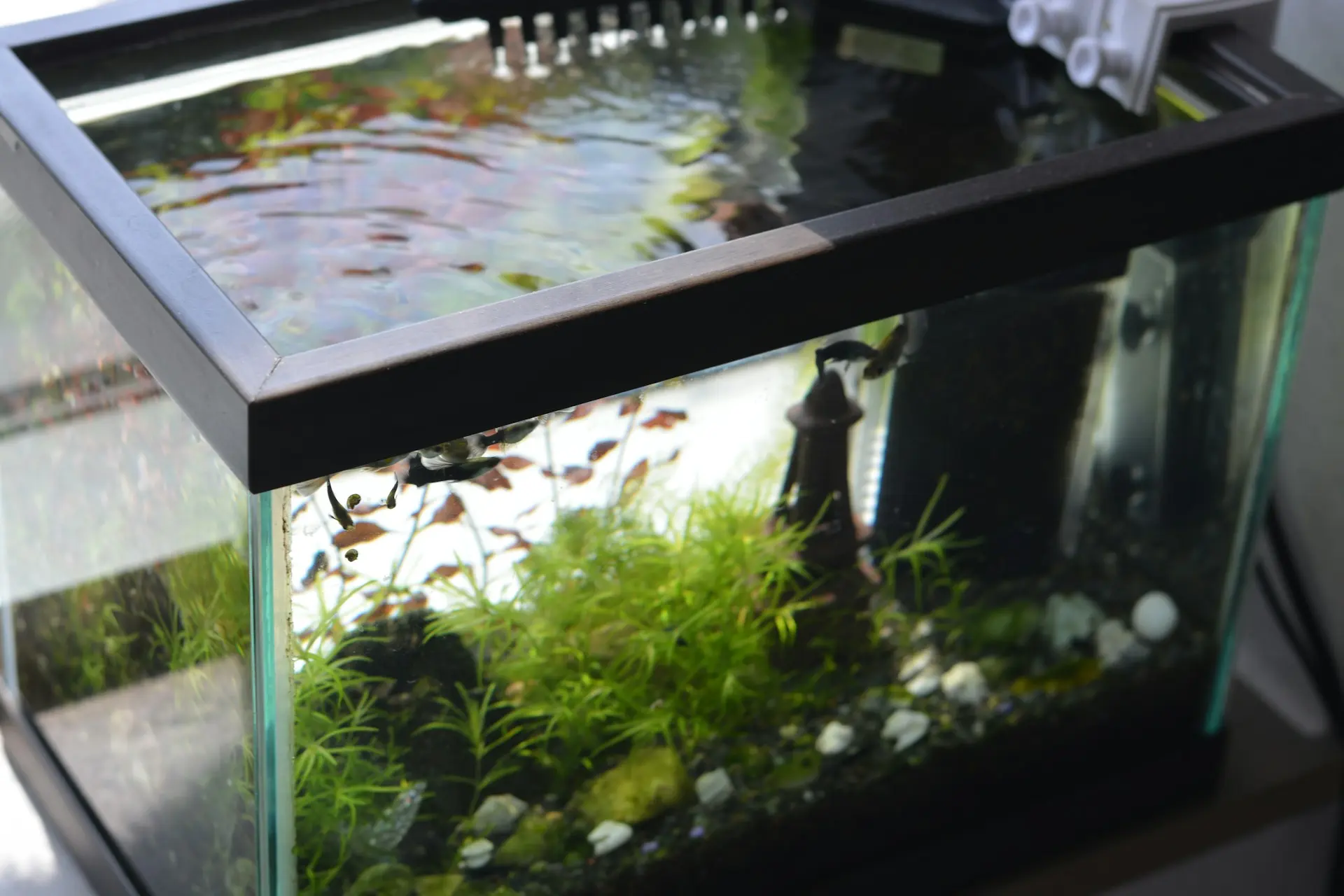
- Why? A tight-fitting glass lid keeps the water in the tank and prevents your fish from jumping out. It also helps maintain a stable temperature, reducing the work your heater has to do.
Low-Tech Plants That Complement Your Clean Aesthetic
A clean aesthetic usually involves greenery. However, high-tech planted tanks require CO2 canisters, specialized soil, and constant pruning. For the busy hobbyist, low-tech is the only way to go.
Anubias and Java Fern: The Unkillables
These plants are the succulents of the underwater world. They do not even need to be planted in soil; you simply tie or glue them to a rock or piece of driftwood. Nutrient uptake studies show that Anubias species are highly efficient at growing in low light and porous media, making them perfect for low-energy setups.
Floating Plants: Nature’s Nitrate Sponges
Plants like Amazon Frogbit or Salvinia sit on the surface and pull nutrients directly from the water column. They act as a natural secondary filter. Research in the North American Journal of Aquaculture demonstrates that aquatic plants can absorb significant amounts of nitrate and phosphate, providing a cost-effective and natural solution for keeping water levels safe between changes.
The 15-Minute Weekly Maintenance Routine
Even the most low-maintenance tank needs some love. The key is efficiency. Here is how to keep your tank pristine in the time it takes to brew a pot of coffee.
- The Quick Clean (5 minutes): Use a magnetic glass cleaner to wipe the inside of the glass. Doing this weekly prevents stubborn algae from taking hold.
- The Water Refresh (8 minutes): Use a siphon to remove 15-20% of the water. If you use a system that hooks directly to your sink (like a Python), you can skip the heavy buckets entirely.
- The Health Check (2 minutes): While the tank refills, take a moment to look at your fish. Are they active? Are they eating? This small investment of time prevents large problems later.
Pro Tip: Use a 5-in-1 Test Strip
Aquarists often debate the accuracy of test strips versus liquid drop kits. For the busy professional, the best test is the one you actually use. Dip a multi-parameter test strip once a week to check for invisible spikes in nitrates or pH shifts. It takes 30 seconds. If the strip looks "off," then break out the liquid kit for a closer look. But for weekly peace of mind, the strip is your best tool for catching issues before they become disasters.
Common Pitfalls That Create More Work
Sometimes, in an effort to be simple, beginners make choices that actually lead to more maintenance.
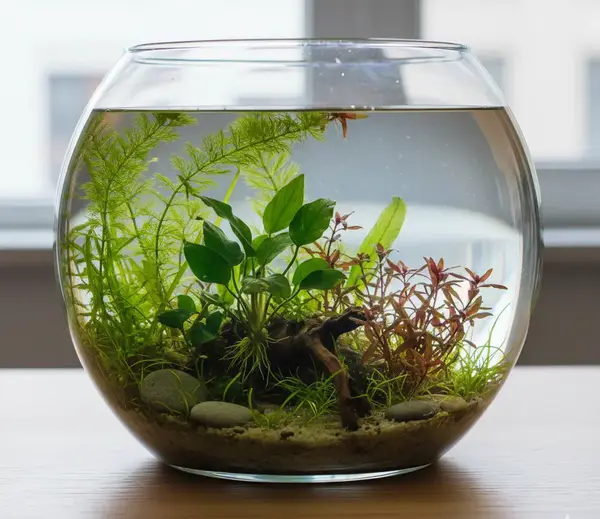
- The Danger of the Small Bowl Myth: It seems logical that a smaller tank should be less work. This is false. In a 2-gallon bowl, a single drop of ammonia is a catastrophe. In a 20-gallon tank, that same drop is diluted. Larger volumes of water are more chemically stable. If you are a busy person, start with at least a 10 or 20-gallon tank. You can read more about it in our Fish bowl guide.
- Overfeeding: We show love to our pets through food. But in an aquarium, uneaten food is poison. It rots, fuels algae, and clogs filters. Feed only what your fish can eat in 60 seconds. If food hits the bottom and stays there, you have just created a chore for yourself. As mentioned in the Equipment section above, we highly recommend the Automatic Feeder, and monitor for first few days.
Conclusion: Balancing a Hectic Life with a Peaceful Tank
Living a busy life should not mean you have to sacrifice the peace and beauty of a home aquarium. By selecting hardy, low-bioload species and pairing them with automated equipment and unkillable plants, you create a self-sustaining ecosystem that fits into your schedule. A low-maintenance tank is about being strategic. It is about creating a slice of nature that thrives on stability and simplicity, qualities we could all use a little more of in our daily lives.