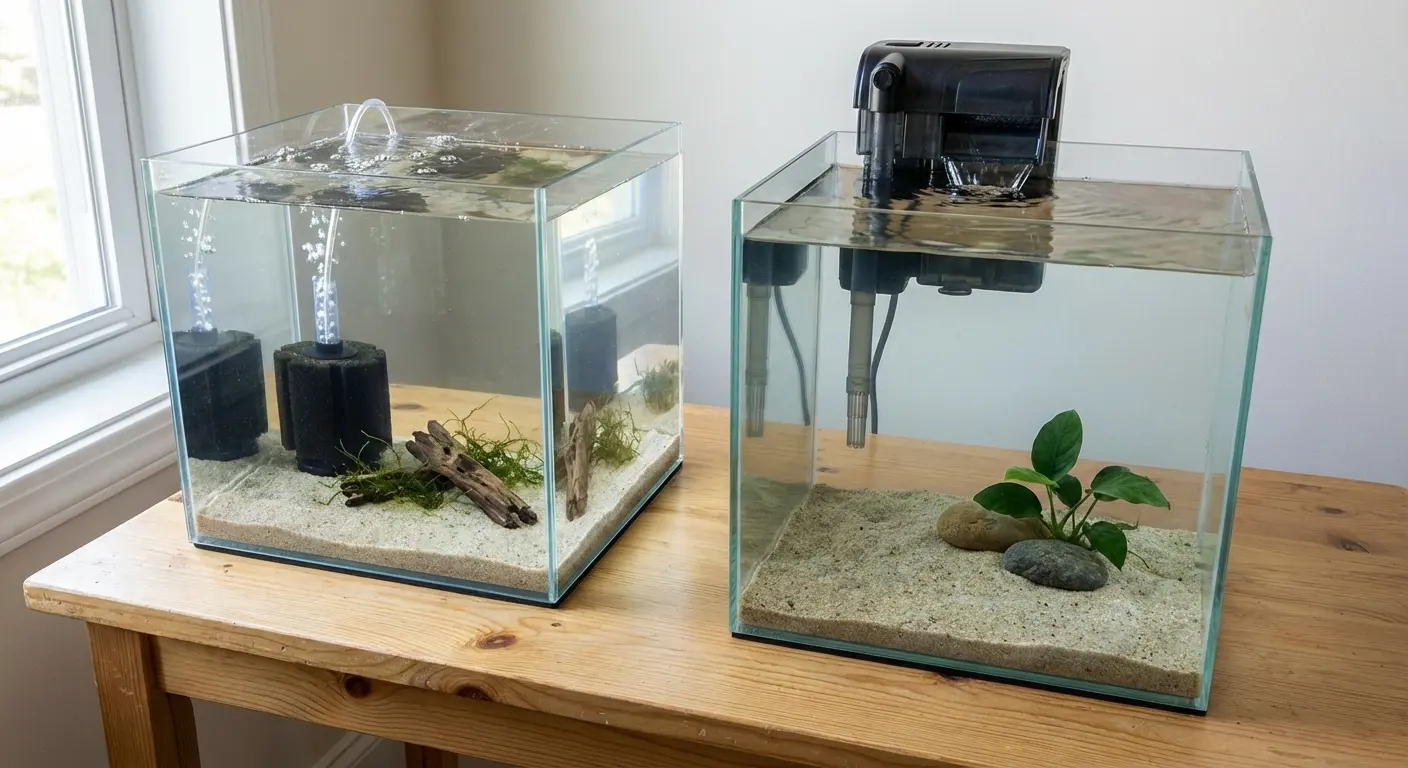
The rhythm of a home aquarium is defined by the subtle hum of its equipment. For the dedicated hobbyist, that hum is more than just background noise; it is the sound of a thriving ecosystem. However, walk into any local fish store or scroll through an online forum and you will quickly find yourself at a crossroads. In one corner, you have the sponge filter, a humble, air-driven classic that has been the backbone of fish rooms for decades. In the other, the HOB (Hang-on-Back) filter, a sleek, motorized powerhouse designed for the modern living room.
Choosing between them is not just about aesthetics. It is about choosing the primary metabolic engine of your aquarium. The right filter manages waste, stabilizes the nitrogen cycle, and ensures your fish are not just surviving, but thriving. In this guide, we are going deep into the mechanics, the pros, the cons, and the real-world experience of using both, helping you decide which life support system is right for your unique aquatic world.
Introduction: The Heart of Your Aquarium
When we talk about aquarium filtration, we often focus on clear water. But clarity is a bit of a trick. You can have crystal-clear water that is chemically toxic to fish. Real filtration is about the nitrogen cycle, the biological process where beneficial bacteria turn toxic ammonia from fish waste into nitrites, and finally into less harmful nitrates.
Why Filter Choice is More Than Just Clean Water
A filter is a multi-tasker. It provides mechanical filtration by trapping physical debris like uneaten food, biological filtration by providing a home for bacteria, and chemical filtration by using media like carbon to remove odors or medications. Your choice between a sponge and an HOB filter dictates which of these three pillars you are prioritizing. A sponge filter is a biological specialist, while an HOB is a mechanical and chemical generalist.
Defining the Contenders: What is a Sponge Filter vs. a HOB?
The sponge filter is the simplest form of filtration. At its core, it consists of a weighted base, a porous sponge, and a lift tube. It uses an external air pump to pull water through the foam. It is the low-tech hero of the hobby.
The HOB filter is a plastic box that literally hangs on the back rim of your tank. A motor pulls water up an intake tube, pushes it through various media cartridges, and lets it spill back into the tank like a miniature waterfall.
The Right Choice vs. The Right Now Choice
Newer hobbyists often flock to HOB filters because they look more like high-end equipment. Veterans often revert to sponge filters because they are virtually fail-proof. The better filter depends entirely on your tank's inhabitants, your maintenance style, and your tolerance for equipment visibility.
The Mechanics of Filtration: How They Actually Work
To choose correctly, we need to look under the hood. While both filters move water, the way they move it changes the chemistry of your tank. This process is governed by the principles of aquatic ecology and fluid dynamics.
The Microbiology
To understand filters completely we have to understand the biological aspect of filteration, especially the microbiology of nitrifying bacteria. In an aquarium, we primarily deal with two genera: Nitrosomonas, which oxidizes ammonia into nitrite, and Nitrobacter, which finishes the job by converting nitrite into nitrate.
These bacteria are aerobic, meaning they require constant oxygen to function. This is where the physics of the sponge filter shines. Because a sponge filter is powered by an air stone, the water passing through the media is constantly being enriched with oxygen. In a HOB filter, if the media is packed too tightly, you can actually create anaerobic pockets (zones without oxygen). While anaerobic bacteria are useful for removing nitrates, in a poorly managed HOB, these pockets can become stagnant and trap detritus, leading to hydrogen sulfide production, a toxic gas that smells like rotten eggs.
The sponge filter’s porous nature ensures that every square millimeter of surface area is a high-oxygen environment. This makes the biological cycle in a sponge-filtered tank incredibly resilient to sudden ammonia spikes, such as those caused by a dead fish or overfeeding.
Sponge Filters: The Power of Air and Bio-Surface Area
Sponge filters operate on the principle of displacement. As air bubbles rise through the central lift tube, they pull water along with them. This creates a gentle vacuum that draws aquarium water through the sponge material.
Because the sponge has a massive amount of internal surface area, it becomes a literal skyscraper for beneficial bacteria. According to research on nitrifying bacteria in closed aquatic systems, the availability of surface area is the primary limiting factor for bacterial colonies. Every tiny pore is a space for bacteria to move into. This makes the sponge filter an absolute powerhouse for biological stability. However, because the suction is relatively weak, it does not vacuum the water column. It relies on the bacteria to process waste as it slowly passes through.
HOB Filters: Mechanical Muscle and Versatile Media
The HOB filter uses a motorized impeller to move water. This creates significantly more pull than an air-driven sponge. The beauty of the HOB lies in its media chamber. Most HOBs allow you to stack different materials. You can have a coarse sponge for big debris, a fine pad for polishing the water to a high shine, and a bag of ceramic rings or carbon for specialized treatment. It is a high-flow system designed to strip particles out of the water quickly.
Understanding GPH vs. Biological Capacity
Hobbyists often obsess over GPH (Gallons Per Hour). A HOB filter might boast a 200 GPH flow rate, which sounds impressive. But high flow does not always mean better filtration. If the water moves too fast, the bacteria have less time to interact with the toxins. This is a concept often studied in wastewater treatment engineering, where contact time is critical for effective purification.
- Sponge Filters have low GPH but high biological efficiency.
- HOB Filters have high GPH and high mechanical efficiency.
If you have messy fish like Goldfish, GPH matters. If you have delicate fish like Shrimp, biological capacity is king.
The Case for the Sponge Filter: Simplicity and Safety
There is a reason why almost every professional fish breeder in the world uses sponge filters. They are the reliable workhorse of the aquarium world.
Why Breeders and Shrimp Keepers Swear by Them
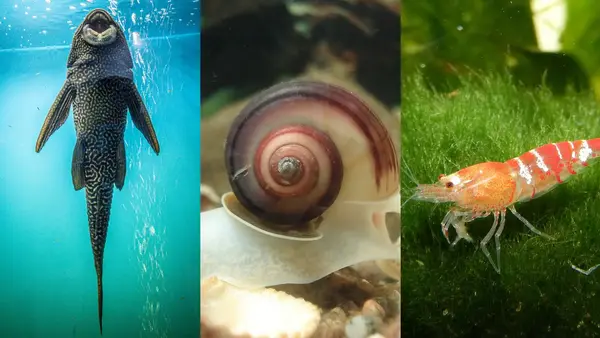
In a breeding tank, a HOB filter is often a risk. The powerful intake of a motorized filter can easily suck up tiny fish fry or baby shrimp. A sponge filter, however, provides a safe surface. In fact, shrimp and fry will often graze on the sponge itself, eating the biofilm and microorganisms that grow there. According to studies on larval fish development, gentle water movement is crucial for the survival of fragile fry.
Gentleness Matters: Ideal Flow for Bettas and Fry
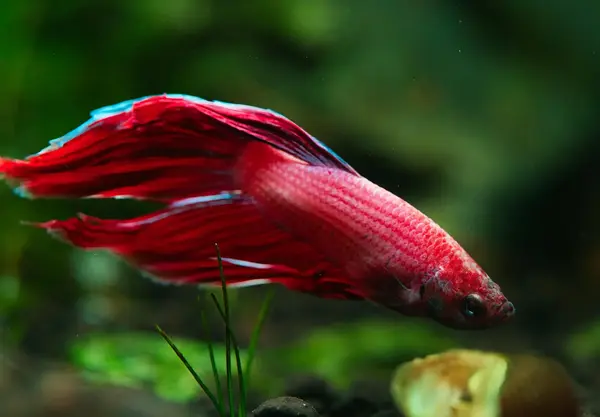
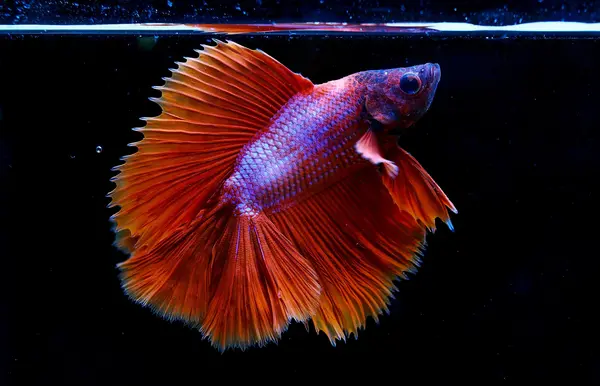
If you have ever seen a Betta fish struggling against the current of a powerful filter, you know why gentle is a virtue. Long-finned fish like Bettas or Fancy Guppies can become exhausted by the high output of a HOB filter, leading to stress-induced diseases. The sponge filter provides oxygenation and cleaning without creating a washing machine effect in the tank.
Planning a 10-US-gallon tank for one betta? Our Betta Setup Planner helps you include the filter accessories in your equipment checklist, alongside the supplies you already have.
Low Maintenance, High Reliability
There are no moving parts inside the tank with a sponge filter. If your air pump fails, you replace the pump which sits outside the tank. The filter itself never breaks. Maintenance is as simple as taking the sponge out once a month and giving it a few good squeezes in a bucket of dechlorinated water. This preserves the delicate Nitrosomonas and Nitrobacter colonies that are essential for the nitrogen cycle.
Porosity matters
Not all sponges are created equal. When shopping for a sponge filter, you will see a rating known as PPI, or Pores Per Inch. This is a critical metric for the average hobbyist to understand.
- 15–20 PPI (Coarse): These sponges have large holes. They do not clog easily and allow for high water flow. They are excellent for larger fish like cichlids that produce heavy waste, as the sponge will not require cleaning as often.
- 30–40 PPI (Medium): This is the sweet spot for most community tanks. It provides a balance between mechanical trapping and biological surface area.
- 60+ PPI (Fine): These sponges are dense. They offer the most surface area for bacteria but clog very quickly. These are specifically designed for shrimp breeders because the pores are so small that even a microscopic baby shrimp (shrimplet) cannot get stuck in the material.
If you choose a sponge with too high a PPI for a messy tank, you will find yourself cleaning it every three days, which defeats the purpose of the sponge filter’s low-maintenance reputation.
The Downsides: Bulky Aesthetics and Surface Agitation Limits
Sponge filters are not always aesthetically pleasing. They are large, usually black or green foam cylinders that sit in your visual field. While you can hide them behind plants or driftwood, they take up valuable real estate inside the tank. Furthermore, while they provide some surface agitation, they are not as efficient at breaking up protein film, that oily slick that sometimes develops on the water surface, compared to the churning action of an HOB.
The Case for the HOB Filter: Power and Polishing
If the sponge filter is a reliable tractor, the HOB is a refined SUV. It is designed to make your aquarium look like a piece of living art.
Mechanical Filtration: Getting That Crystal Clear Look
The primary reason hobbyists choose HOB filters is visual clarity. Because HOBs use high-flow motors and fine filter floss, they can remove microscopic particles that a sponge filter would let float by. If you want the fish floating in mid-air look, a HOB is your best bet.
Customizing Your Media: Carbon, Purigen, and Ceramic Rings
The true advantage of the HOB filter is its ability to act as a chemical reactor. While a sponge filter is limited to biological and basic mechanical work, the HOB allows for targeted water chemistry adjustments through various media types:
- Activated Carbon: Essential for removing dissolved organic compounds that cause yellow water or odors. It is also the primary tool for removing medications after a treatment cycle is complete.
- Ion Exchange Resins (e.g., Seachem Purigen): Unlike carbon, which traps large molecules, resins work at a molecular level to adsorb nitrogenous organic waste before it even turns into ammonia. This keeps your nitrate levels lower for longer periods.
- Phosphate Absorbers: If you are struggling with a persistent algae bloom, you can slip a bag of GFO (Granular Ferric Oxide) into your HOB filter. This pulls phosphates—the primary fuel for algae—directly out of the water column.
- Zeolite: In emergency situations where an ammonia spike is threatening your fish, zeolite can be added to the HOB to chemically bind ammonia instantly.
Most HOB filters use a basket system. This is a game-changer for the inquisitive hobbyist.
- Smelly water: Add a bag of activated carbon to adsorb organic compounds.
- Tannins: Add Seachem Purigen to remove the tea color caused by driftwood.
- Biological power: Fill the basket with porous ceramic stones to increase the surface area for bacteria.
Space-Saving Design: Keeping the Tank Interior Minimalist
Because the bulk of the filter sits outside the glass, the HOB is the preferred choice for aquascapers. When you have spent hours meticulously placing stones and plants, you do not want a giant foam cylinder ruining the lines of your composition. A thin intake tube is much easier to hide.
The Downsides: Potential Leaks, Noise, and the Intake Menace
HOB filters are not without faults. Because they sit on the rim, there is a small risk of water siphoning out if the filter becomes clogged. They can also be noisy; the waterfall sound is relaxing to some but annoying to others, and a vibrating motor can resonate through the glass. Finally, the intake tube can be dangerous for small or weak fish unless you add a pre-filter.
Head-to-Head: Filter Face-Off
To help you decide, let's break down the daily realities of owning these filters across key metrics.
Maintenance and Cleaning
With a sponge filter, you must reach into the tank and grab the sponge, which may release some debris back into the water. It is a quick two-minute job. With an HOB filter, you lift the lid and pull out the media basket. It feels cleaner because the mess stays in the box, but if you neglect it, the motor can burn out or the filter can overflow.
Noise Levels
Sponge filters rely on air pumps. While cheap air pumps vibrate, modern piezo-electric air pumps are nearly silent. The sound of bubbles popping at the surface is the main noise. HOB filters have an internal motor. If a grain of sand gets into the impeller, it creates a grinding sound. Additionally, if the water level drops, the splashing waterfall sound becomes much more pronounced.
Energy and Operating Costs
Sponge filters are incredibly cheap to run, using a low-wattage air pump. The only recurring cost is the sponge itself, which lasts for years. HOB filters use slightly more electricity. The real cost comes from replacement cartridges. We recommend using your own sponges and ceramic rings to avoid the high cost of manufacturer disposables.
The CO2 and Gas Exchange Conflict
Sponge filters are powered by air bubbles. This process is excellent for adding oxygen, but it is equally excellent at off-gassing CO2. If you are injecting pressurized CO2 to grow high-end aquatic plants, a sponge filter can actually work against you by bubbling away the expensive gas you are trying to keep in the water.
HOB filters, particularly those with an adjustable flow, allow for a more controlled surface agitation. By keeping the water level high, the waterfall effect is minimized, which preserves CO2 levels for the plants while still providing enough oxygen for the fish. However, if the water level drops, the splashing increases, and you face the same off-gassing issues as the sponge filter.
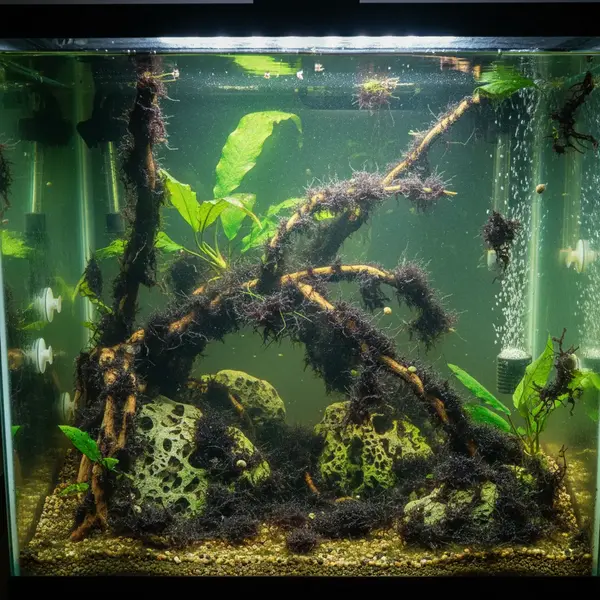
According to research in Aquatic Botany, the balance of dissolved gases is the most significant factor in preventing BBA (Black Beard Algae) outbreaks. Therefore, the HOB filter is generally the superior choice for high-tech planted aquariums.
Oxygenation and Surface Film
Oxygen enters the water through surface agitation. Sponge filters create constant large bubbles that break the surface, providing excellent gas exchange. HOB filters create a waterfall that drives oxygen deep into the water column. However, HOBs are much better at clearing surface film because of the way they pull water in and drop it back down.
Scenario-Based Recommendations
Let’s look at common aquarium setups to see which filter wins.
Desktop Nano Tanks (5–10 Gallons)
Winner: Sponge Filter.
In a small tank, a HOB filter often takes up too much visual space and creates too much flow. A small corner sponge filter tucked behind a Java Fern is often more than enough to keep a 5-gallon Betta tank perfectly cycled.
Community Tanks (20–55 Gallons)
Winner: HOB Filter.
When you have a mix of Tetras, Corydoras, and other community fish, you have more particulate waste. A HOB filter's ability to mechanically clear the water keeps the tank looking display-ready and professional.
Quarantine and Hospital Tanks
Winner: Sponge Filter.
Every hobbyist should keep a spare sponge filter running in their main tank. Because it is already colonized with bacteria, you can move it to a hospital tank for instant life support. Furthermore, sponge filters do not use carbon, which would otherwise strip out the medications used to heal sick fish.
Aquascaping and Aesthetics
Winner: HOB Filter.
If you are entering an aquascaping contest or want a Zen look, the HOB is the winner. By using transparent intake tubes, you can make the equipment almost invisible.
The Hybrid Approach: Why Using Both is Often Best
In the aquarium hobby, you do not always have to choose one over the other. If you have the capability, using both can provide a level of security that a single filter cannot match.
Many veteran keepers use a HOB filter for water clarity and a sponge filter for biological insurance. If the power goes out, the HOB might lose its prime, but the sponge filter will be ready to go the moment the air pump starts back up. This redundancy prevents bacterial crashes that can lead to New Tank Syndrome, even in established aquariums.
The Pre-Filter Hack
You can buy a small cylinder of sponge that slides over the intake tube of your HOB filter. This prevents shrimp and fry from being sucked in and acts as a first stage of biological filtration. It essentially turns your HOB filter into a high-performance hybrid.
Conclusion: Finding Your Flow
Neither the sponge filter nor the HOB filter is objectively better. They are different tools for different aquatic goals.
Choose the sponge filter if you value safety, low-cost reliability, and are keeping delicate species like shrimp or Bettas. It is the choice of the fish-first hobbyist. Choose the HOB filter if you want crystal-clear water, have a busy community tank, or care deeply about the visual aesthetic of your aquascape.
Whichever you choose, make sure to choose the right size for you tank, and remember that a filter is only as good as its maintenance. Listen to your tank, watch your fish, and let their health be the final judge of your choice.