In the landscape of freshwater aquaria, few fish command as much cult status as the dwarf pea puffer, scientifically known as Carinotetraodon travancoricus. Affectionately dubbed the murder bean by the hobbyist community, these tiny, hovering helicopters of the aquatic world offer a level of intelligence and interaction rarely seen in fish five times their size. Unlike the schooling tetras that zip mindlessly back and forth, a pea puffer actually looks back at you. It observes its environment with independently rotating eyes, investigates every crevice of driftwood with surgical precision, and hunts with the focus of a miniature apex predator.
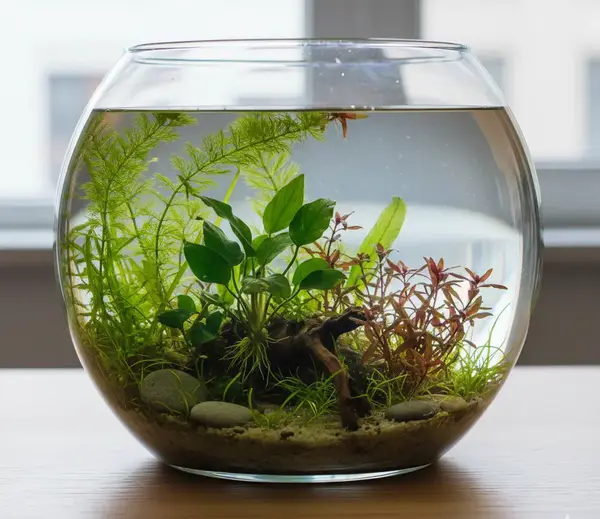
Because they are purely freshwater and stay under an inch long, many beginners believe they are suitable for tiny desktop bowls. This is perhaps the most dangerous misconception in the hobby. Pea puffers are rewarding but demanding. They require a specific diet, a carefully scaped environment, and an understanding of their complex social dynamics. This guide is your definitive roadmap to moving past the beginner mistakes and creating a thriving, lush ecosystem for your very own shoal of murder beans.
Understanding the Dwarf Pea Puffer: Tiny Fish, Big Personality
To master their care, you must first understand the biological reality of this species. The pea puffer is a unique entity that defies many of the standard rules of tropical fish keeping, from their social structure to their physical vulnerabilities.
Natural Origins: From the Western Ghats to Your Home
The dwarf pea puffer is endemic to the Western Ghats of Southwest India, specifically the Pamba River and Lake Vembanad. According to the IUCN Red List, this species is currently classified as vulnerable due to habitat loss and overharvesting for the aquarium trade. This status highlights the importance of keeping them correctly and, ideally, seeking out captive-bred specimens when available.
Their natural habitat consists of slow-moving, heavily vegetated waters with a slightly acidic to neutral pH. These areas are often characterized by a high degree of organic matter, providing a rich "micro-zoo" of tiny crustaceans and insect larvae. In the wild, they occupy areas with dense floating plants and submerged roots. Recreating this jungle environment is the single best way to reduce stress. When a pea puffer feels secure among plants, its colors—vibrant gold with dark, iridescent patches—will truly shine. Research into the mitochondrial genome of Carinotetraodon travancoricus has confirmed their total evolutionary adaptation to inland waters, meaning they do not require salt at any stage of their life cycle.
Physical Traits and Murder Bean Anatomy
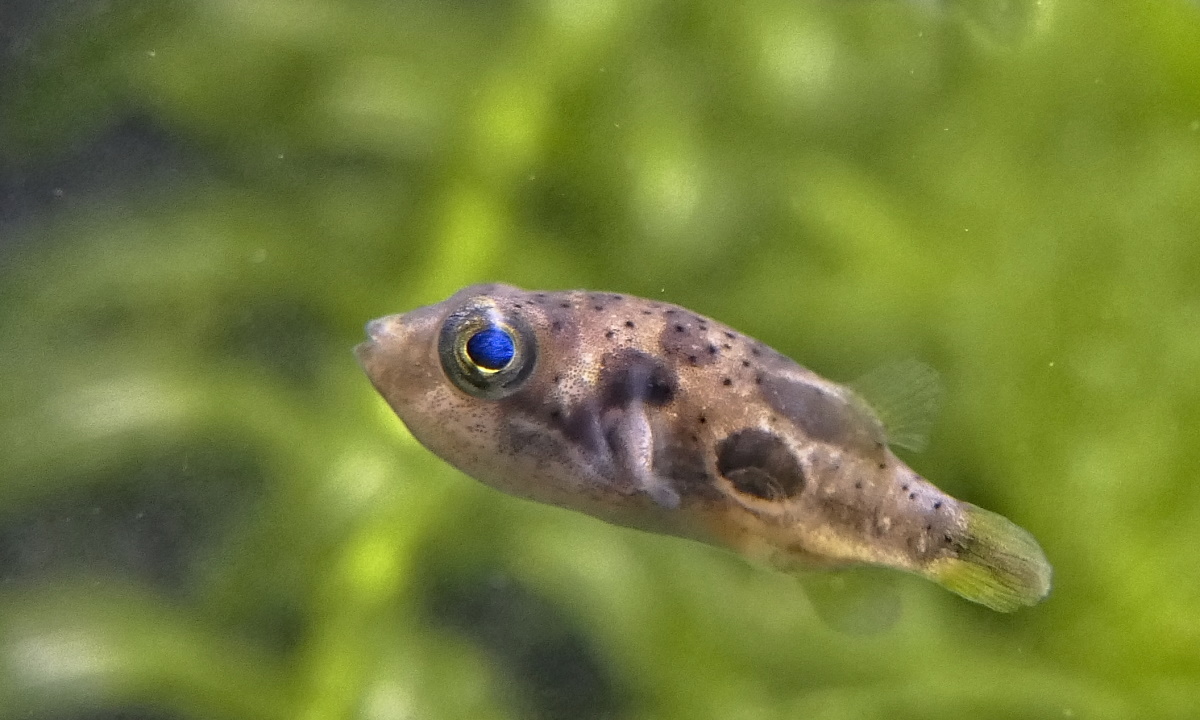
The name murder bean comes from their physical shape and predator attitude. Pea puffers rarely exceed one inch or 2.5 centimeters in length. Their bodies are rounded, and they move using their pectoral and dorsal fins in a way that resembles a hummingbird or a drone. This allows them to hover in place and move backward or vertically with ease.
One of their most fascinating features is their eyes. Like chameleons, their eyes can move independently. This allows them to track a snail on the substrate while keeping an eye on a rival puffer approaching from above. Unlike most other fish, they do not have a thick layer of scales. They are scale-less fish, which makes them incredibly sensitive to water quality and certain medications. While they can puff up by swallowing water, it is a high-stress defense mechanism that can be fatal if they swallow air. You should never try to trigger this behavior. This lack of scales also means they are more prone to external parasites and skin irritations if the water chemistry fluctuates.
Deciphering Gender: Identifying Males vs. Females
If you want a peaceful tank, you must learn to tell the boys from the girls. In juveniles, it is nearly impossible, but as they reach sexual maturity around six months of age, the differences become clear. Males usually have a dark ventral stripe running down their belly and distinctive iridescent wrinkles or lines around their eyes. They are often more slender and noticeably more territorial. Females tend to be more rounded in the belly and lack the dark belly stripe and eye wrinkles. For a successful community, you generally want a ratio of one male to every two or three females. This prevents a single female from being relentlessly pursued, which can lead to exhaustion and death.
The Behavioral Science of the Shoal
The social structure of the pea puffer is far more complex than that of your average community fish. While many fish school for protection, pea puffers shoal for social interaction and resource management. This distinction is vital for the hobbyist to understand. In a true school, fish move in unison. In a puffer shoal, individuals move independently but remain in close proximity to one another.
Researchers have observed that these fish exhibit distinct social hierarchies. In a group of six or more, you will notice a dominant individual, often a male, who claims the prime hunting spot or the most comfortable resting leaf. This alpha does not necessarily bully the others into submission but rather maintains a loose order. When you keep them in groups smaller than six, this social order collapses. Without enough individuals to diffuse the alpha’s attention, the second-most dominant fish becomes a constant target for aggression. This leads to chronic stress, which suppresses the immune system and makes the fish susceptible to opportunistic infections like ich or velvet.
Furthermore, their intelligence is tied to their environmental curiosity. They are one of the few small fish that exhibit play behavior. You may see them investigating bubbles from a filter or following a snail across the glass for minutes before deciding to strike. This cognitive complexity is why a barren tank is so detrimental. Without puzzles to solve and territory to navigate, pea puffers often become lethargic, a condition often misdiagnosed as illness when it is actually profound boredom.
The Ideal Pea Puffer Tank Setup: Beyond the 5-Gallon Myth
The idea that a pea puffer can live comfortably in a five gallon tank is one of the most persistent myths in the hobby. While a single puffer can survive in a five gallon for a time, they will not thrive, and the water quality will be nearly impossible to maintain.
Tank Size and Dimensions: Why Volume Matters
Recent observations from expert keepers and research shared by Pufferfish Enthusiasts Worldwide suggest that pea puffers are actually social animals that prefer to live in shoals of six or more. To house a proper shoal, a 20 gallon long tank is the gold standard.
A longer tank provides more horizontal floor space for them to claim their own patch of moss or driftwood. In a cramped five gallon tank, the dominant puffer will likely bully the others, leading to a high-stress environment where the weaker fish cannot escape the sightline of the aggressor. In a 20 gallon long, there is enough room for visual separation and diplomacy. More water volume also means a larger buffer against spikes in ammonia or nitrite, which is vital for these sensitive fish.
Filtration and Water Flow: Balancing Cleanliness with Comfort
Pea puffers are messy eaters. They do not swallow their food whole; they crunch, shake, and spit, leaving tiny particles of snail meat or bloodworms to rot in the corners of the tank. This means you need robust filtration that can handle a high organic load.
However, they are not strong swimmers in the traditional sense. High-velocity powerheads or strong filter outflows will blow them around like leaves in a storm, causing constant exhaustion. The best solution is a large sponge filter or a hang-on-back filter with a baffled intake and outflow. You want a high turnover rate—ideally five to ten times the tank volume per hour—but with a diffused current. This keeps the water oxygenated and clean without turning the tank into a washing machine.
Substrate and Hardscape: Creating Visual Breaks
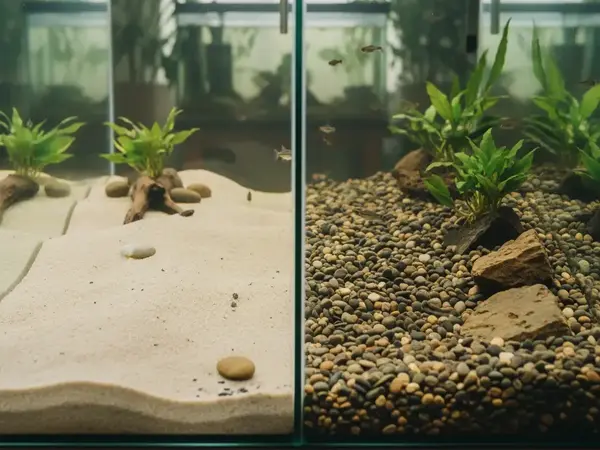
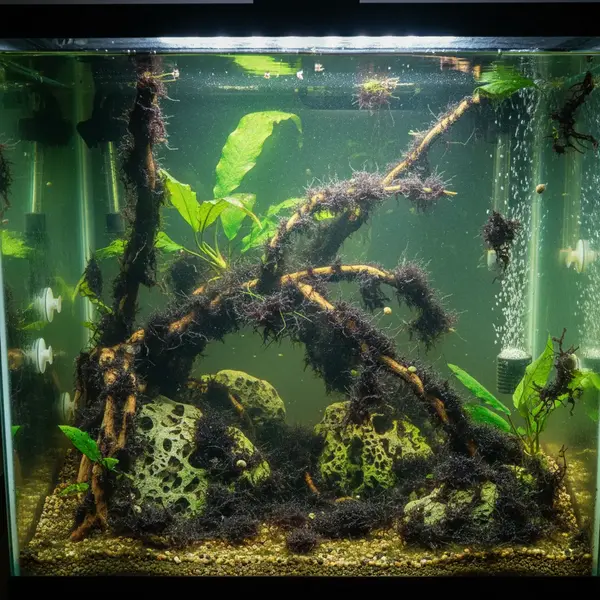
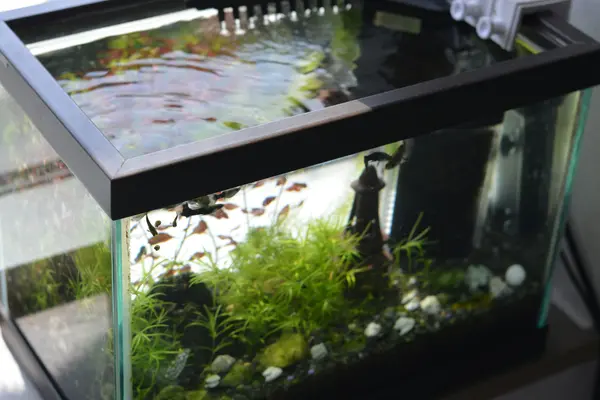
A sterile, minimalist tank with just sand and a few rocks is a recipe for disaster with pea puffers. They need a complex environment with visual breaks to manage their social hierarchy. Use a dark, nutrient-rich substrate to help your plants thrive and make the puffers feel secure; dark colors generally help fish feel less exposed.
For hardscape, use branchy driftwood like spider wood or manzanita to create a labyrinth of paths. Stones should be stacked to create caves and tunnels. The goal is to design the tank so that a puffer can swim from one side to the other without being in the direct line of sight of every other puffer. If they cannot see each other constantly, the frequency of nipping and chasing drops significantly.
Perfecting Water Parameters and Chemistry
Because they lack scales, pea puffers act as the canary in the coal mine. They will be the first to show signs of distress if your water chemistry fluctuates. Consistency is much more important than chasing a perfect number.
Temperature, pH, and Hardness: The Golden Ratios
To keep your puffers healthy, aim for stable parameters within these ranges. The temperature should stay between 74 and 82 degrees Fahrenheit, or 24 to 28 degrees Celsius. They generally prefer the warmer end of the spectrum as it aids their high metabolism and immune system.
The pH should be between 6.5 and 7.5. While they are adaptable, a steady pH is vital because sudden shifts can damage their sensitive skin and gills. General hardness should be between 5 and 15 dGH. They appreciate slightly harder water than some other tropical fish, as the minerals help the snails they eat maintain healthy shells and support the puffer’s own biological functions.
The Nitrogen Cycle and Sensitivity to Ammonia
You should never put pea puffers in an uncycled tank. They have zero tolerance for ammonia or nitrite. Even a reading of 0.25 ppm can cause permanent gill damage or suppress their immune system, leading to secondary infections.
Ensure your tank has been running for at least four to six weeks with a steady source of ammonia before adding your puffers. Once they are introduced, aim to keep your nitrates below 20 ppm. Because of their high-protein diet, nitrates can spike quickly, making a high-quality liquid testing kit a non-negotiable tool for any puffer owner.
Osmoregulation and Scale-less Sensitivity
The lack of scales on a pea puffer is not just an aesthetic trait; it is a major physiological factor in how they interact with their environment. Scales on most fish act as a literal suit of armor, protecting the delicate skin and underlying tissues from fluctuations in water chemistry and pathogens. Without this armor, the pea puffer’s skin is a semi-permeable membrane that is highly active in osmoregulation.
This means that everything in your water goes directly into the fish. If there is a trace amount of heavy metal, such as copper or lead, from old plumbing, a scaled fish might not show symptoms for weeks, while a pea puffer could suffer neurological damage within hours. This is also why they are so sensitive to medications. Common treatments for aquarium diseases often contain malachite green or copper sulfate. These are often lethal to pea puffers even at half the recommended dosage.
If you must treat a pea puffer tank for an illness, always look for puffer-safe alternatives or herbal-based treatments first. If you must use traditional medicine, it is often safer to dose the food rather than the water. By soaking bloodworms in a medication, you deliver the cure directly to the fish’s internal system without exposing their sensitive skin to the harsh chemicals in the water column.
Maintenance Consistency: The Secret to Longevity
A regular maintenance schedule is the difference between a puffer that lives for two years and one that lives for five or more. Weekly water changes of 25 to 30 percent are the industry standard for these fish.
Gravel vacuuming is essential because puffer leftovers, such as empty snail shells and half-eaten bloodworms, sink into the substrate and create toxic gas pockets. Use a siphon to deep-clean the open areas of the substrate every week. Always use a high-quality water conditioner to neutralize heavy metals and chlorine, as even trace amounts can be lethal to scale-less species.
Aquascaping for Puffers: The Jungle Effect
An aquascape for a pea puffer is not just about aesthetics; it is a tool for behavioral management. A bored puffer is an aggressive puffer, and a puffer in an open tank is a scared puffer.
Top Live Plant Recommendations for Shelter
Plants are the foundation of a healthy puffer tank. Java fern and anubias are excellent choices because they are hardy epiphytes that you can attach to driftwood, providing broad leaves for puffers to rest on. It is a common and charming sight to see a pea puffer perched on an anubias leaf like a bird on a branch.
Cryptocoryne species provide dense, bushy cover at the mid-ground level. Fast-growing stem plants like rotala, bacopa, or limnophila sessiliflora create thick underwater forests for the puffers to hunt through. These plants help absorb excess nutrients and provide the complex environmental enrichment these intelligent fish require to stay active and healthy.
Floating Plants: Diffusing Light and Managing Nitrates
Floating plants like amazon frogbit, red root floaters, or salvinia minima are perfect for mimicking their natural riverine home. Their long, trailing roots provide an overhead canopy that makes the puffers feel less exposed to predators from above. This is especially important for wild-caught fish that are naturally wary of birds. Floating plants are also incredible nitrate sponges, helping keep the water pristine despite the heavy organic load from high-protein feedings.
Using Mosses to Encourage Micro-Prey Populations
Java moss, christmas moss, or flame moss is vital for a natural puffer setup. Thick mats of moss serve as a breeding ground for tiny critters like copepods, scuds, and seed shrimp. Pea puffers will spend hours foraging through the moss, which provides mental stimulation and a supplemental snack between their main meals. This natural foraging behavior is a key component of their daily enrichment and helps prevent the glass surfing behavior often seen in bored or stressed fish.
The Pea Puffer Diet: Feeding a Micro-Predator
This is where most hobbyists struggle. Pea puffers are specialized predators and will almost never eat flakes, pellets, or any form of dried food. If you are not prepared to handle live or frozen food daily, this is not the fish for you.
The Snail Strategy: Why Live Food is Non-Negotiable
In the wild, a significant portion of their diet consists of small gastropods. In your tank, you should provide a steady supply of bladder snails or small ramshorn snails. A study on the feeding ecology of Carinotetraodon travancoricus found that while they are omnivorous in their very early stages, adults show a strong preference for insects and crustaceans.
Hunting live snails is vital for their instinctual health. Unlike larger puffers, pea puffers don't always need snails to grind down their teeth—which grow much slower than other species—but the act of hunting provides essential mental stimulation. They typically suckle the snail out of the shell rather than crunching the entire thing.
Frozen and Live Alternatives: Bloodworms and Brine Shrimp
If you cannot find snails, your next best bet is frozen bloodworms. Most pea puffers love them, but you must be careful because they can become addicted to bloodworms and refuse other, more nutritionally balanced foods.
Live blackworms are perhaps the best alternative as they stay alive in the substrate, allowing the puffers to hunt them naturally over several days. Frozen brine shrimp or mysis shrimp are also good for variety and providing necessary fiber. Always thaw frozen food in a small container of tank water before feeding to prevent temperature shock to the fish's digestive system.
Preventing Overfeeding and Managing Waste
A healthy pea puffer should have a slightly rounded belly, similar to a pea, but not a distended, golf-ball-like stomach. Overfeeding leads to fatty liver disease and massive spikes in tank pollution. Feed small amounts once or twice a day. Using a pipette or long tweezers to place food directly in front of each fish ensures everyone gets their share and significantly reduces the amount of waste that sinks into the substrate to rot.
Social Dynamics and Tank Mates: The Peacekeeper’s Guide
Can pea puffers have roommates? This is a topic of much debate in the aquarium world, but the consensus is shifting toward social grouping rather than isolation.
The Shoal Mentality: Why Six is the Magic Number
For years, the standard advice was to keep one puffer alone in a small tank. We now know this often leads to a lethargic, shy, or overly reactive fish. When kept in a group of six or more, they establish a social hierarchy. While there may be occasional chasing, the aggression is spread out across the group. This social interaction is critical for their well-being and mirrors their behavior in the wild, where they are often found in loose, large shoals rather than as solitary hunters.
Identifying and Managing the Alpha
Managing the social dynamics of a pea puffer shoal requires a keen eye for fish behavior. Within the first month of establishing your group, an alpha male will likely emerge. This individual will be the first to the food and will claim the most central part of the tank as his own.
In a well-balanced tank, the alpha’s job is mostly posturing. He may flare his fins or perform a brief chase to remind others of his status. However, if you notice an individual that is constantly being chased to the top corners of the tank or whose fins are starting to look ragged, you have a social imbalance.
This often happens if you have too many males in one group. If two males are fighting for the alpha spot, the rest of the shoal will be caught in the crossfire. In this scenario, the best move is not to remove the aggressor, but to add more visual breaks or even add more females to the group to shift the focus. If the bullying persists, you may need to relocate the subdominant male to a different tank. Observing these interactions during feeding time is the best way to gauge the health of your shoal. A peaceful group will eat together with minimal bickering, while a stressed group will have individuals hiding even when food is present.
Compatible Clean-Up Crew Options
If you must have tank mates, choose ones that do not look like prey or rivals. Otocinclus catfish are generally the safest option. They are fast, lack the flowing fins that puffers like to nip, and they eat the algae that puffers ignore.
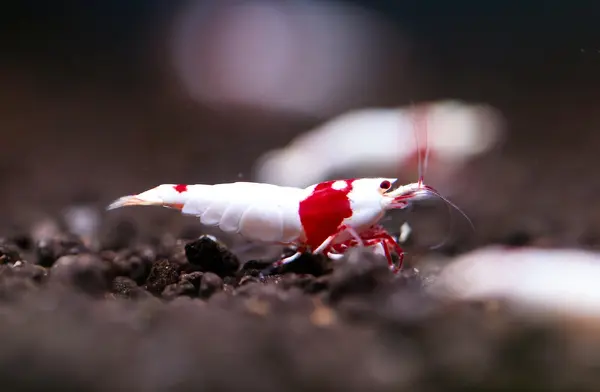
Large amano shrimp might survive because they are often too large and intimidating for a one inch puffer to tackle. However, smaller cherry shrimp will almost certainly become an expensive snack. Keep in mind that individual puffer personalities vary wildly; some puffers are remarkably peaceful, while others are essentially tiny terrors that will attack anything that moves.
Species-Only vs. Community Tanks: Making the Right Choice
For most hobbyists, a species-only tank is the best and most rewarding choice. Pea puffers are notorious fin-nippers and see the flowing fins of guppies, bettas, or angels as an invitation to bite. Even fast fish like danios can be stressed by the puffer’s constant predatory focus. A dedicated pea puffer tank allows you to focus entirely on their specific water and feeding needs without compromise, resulting in a much more successful long-term experience.
Common Health Issues and Disease Prevention
Because many pea puffers are wild-caught, they often carry internal parasites that must be addressed immediately to ensure they survive the transition to aquarium life.
The Sunken Belly Syndrome: Dealing with Internal Parasites
If your puffer is eating ravenously but still looks skinny or has a caved-in stomach, it likely has internal parasites such as nematodes or tapeworms. This is incredibly common with wild-caught specimens. Experts recommend a proactive de-worming protocol using medications like levamisole or praziquantel. Follow a methodical treatment plan, often involving two rounds of medication spaced two weeks apart, to ensure all life cycles of the parasites are eliminated. Detailed protocols can be found in the pufferfish keeper's guide to worming.
Recognizing Stress: Color Changes and Glass Surfing
A stressed puffer will lose its vibrant gold and black contrast, often turning a dull, uniform grey. Glass surfing, where the fish swims frantically up and down the glass, is a sign of either poor water quality or a lack of mental stimulation. If you see this, check your ammonia and nitrate levels first. If the water is clean, consider adding more plants or rearranging the hardscape to break up their routine and provide a new environment to explore.
Quarantine Procedures for New Arrivals
Never add a new puffer directly to your main tank. A two to four week quarantine period in a separate, simple setup allows you to observe them for disease and ensure they are eating well. This is the best time to perform the de-worming protocol. Quarantining prevents the introduction of pathogens to your established shoal and gives the new fish a chance to recover from the stress of transport in a quiet, controlled environment before they have to compete for territory.
Conclusion: Is the Pea Puffer Right for You?
Keeping pea puffers is a journey into the world of micro-fishkeeping that requires a shift in perspective. It is about viewing the tank as a complex, living puzzle rather than just a decoration. These fish require more work than your average tetra or barb, but the payoff is a group of tiny, intelligent companions that will learn to recognize you when you walk into the room.
If you are willing to provide the right social structure, a steady diet of live foods, and a lush, jungle-like environment, these intelligent little murder beans will reward you with years of fascinating behavior.