Whether you are a seasoned aquascaper or a first-time fish keeper, there is one plant that almost certainly has a place in your tank: Java Moss. Scientifically known as , this versatile, hardy, and vibrant green moss is the backbone of the freshwater hobby. From providing a safe haven for delicate shrimplets to acting as a natural bio-filter that sponges up toxins, its benefits are as numerous as its fronds.
In this comprehensive guide, we will dive deep into everything you need to know about how to grow, plant, and maintain Java Moss. We will explore evidence-backed reasons why this plant is essential for your ecosystem and provide a step-by-step roadmap to turning a small clump into a lush, underwater plant eco-system.
Understanding the Biology of Taxiphyllum barbieri
Before you can master the growth of Java Moss, it is important to understand what it actually is. For decades, the hobbyist community misidentified this plant as . However, botanical studies have since clarified that the common Java Moss found in most pet stores is actually .
The Origins of Java Moss
Native to Southeast Asia, Java Moss is commonly found on moist riverbanks, rocks, and fallen trees in tropical climates. It is a bryophyte, a group of non-vascular plants that do not have true roots. Instead of roots, Java Moss utilizes rhizoids, small, hair-like filaments, to anchor itself to surfaces. This evolutionary trait is what makes it so incredibly easy to "plant" in an aquarium, as it doesn't need to be buried in substrate.
Submerged vs. Emersed Growth
One of the most fascinating aspects of is its amphibious nature. In the wild, it often grows both above and below the water line. When grown emersed (above water in high humidity), the moss tends to be denser and a darker shade of green. Submerged in your aquarium, the fronds become more delicate and feathery. This adaptability makes it a favorite for both traditional aquariums and humid paludariums.
The Growth Pattern and Structure
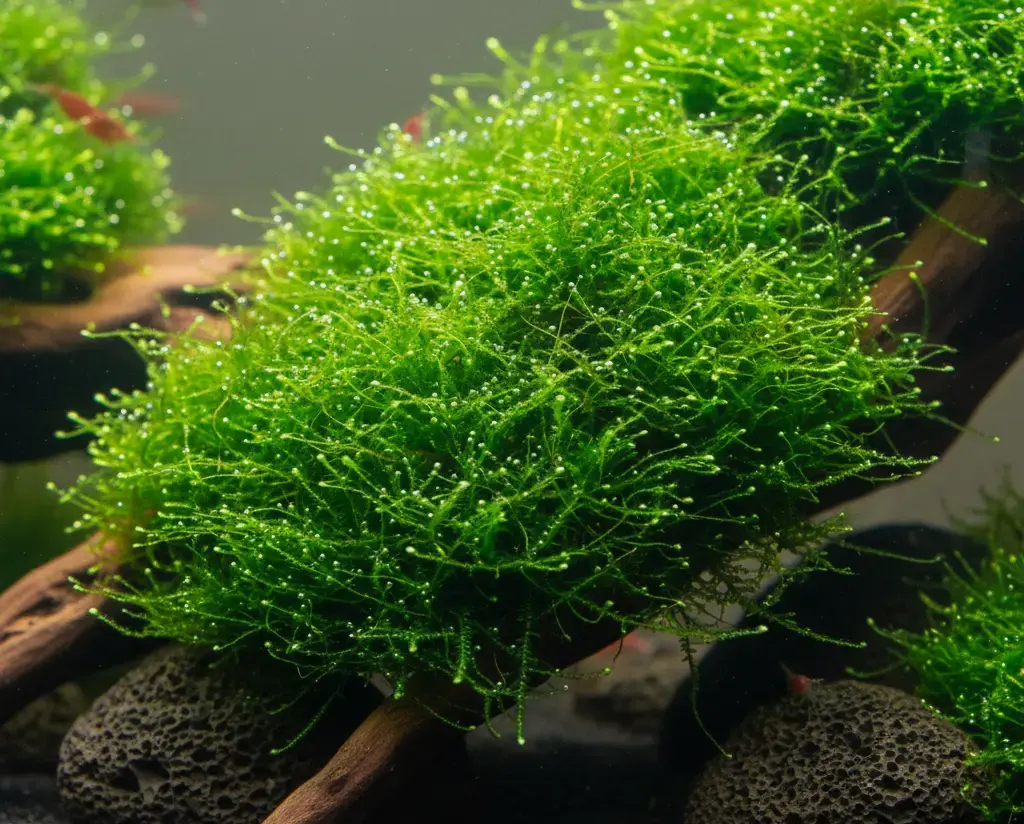
Java Moss grows in an irregular, branching pattern. Unlike Christmas Moss ( ), which grows in a distinct fir tree shape, Java Moss is more chaotic and wild in its appearance. This makes it perfect for creating naturalistic, overgrown looks. Research on the growth of suggests that while it is classified as a slow-to-medium grower, its biomass can increase significantly when provided with optimal nutrients and photoperiods.
Why It Is the Perfect Beginner Plant
The primary reason Java Moss is recommended to every beginner is its resilience. It can survive in a wide range of water conditions, from cold water tanks to tropical setups. It is also remarkably hard to kill, often surviving in low-light environments where other plants would quickly melt away.
Benefits of Java Moss
Java Moss is not just a decoration; it is a functional powerhouse. Incorporating it into your tank improves the biological stability of the entire environment.
Natural Water Filtration and Nutrient Uptake
Aquatic plants are known for their ability to absorb waste products, and Java Moss is no exception. A study published in ResearchGate highlights how effectively contributes to the reduction of nitrates () and phosphates () in the water column. By competing with algae for these nutrients, Java Moss helps keep your tank cleaner and reduces the frequency of water changes.
Java Moss is so efficient at cleaning water that it is actually being studied for use in outer space. In a study on "Space Moss", researchers identified Java Moss ( ) as a top candidate for recycling air and water on long-term space missions. Because it is incredibly good at absorbing waste and pumping out oxygen in a small, enclosed space, it acts like a high-tech bio-filter for your aquarium. If it’s good enough to keep astronauts safe, it’s more than capable of keeping your shrimp and fish healthy!
Heavy Metal Bio-Remediation
Beyond just nitrogenous waste, Java Moss has been scientifically proven to act as a bio-filter for heavy metals. Research published in MDPI Plants explores the mechanisms of copper () toxicity and tolerance in , demonstrating how the moss can accumulate and sequester heavy metals from the water. This makes it an invaluable asset in protecting sensitive inhabitants like shrimp from trace metal poisoning.
A Foraging Ground for Micro-Organisms
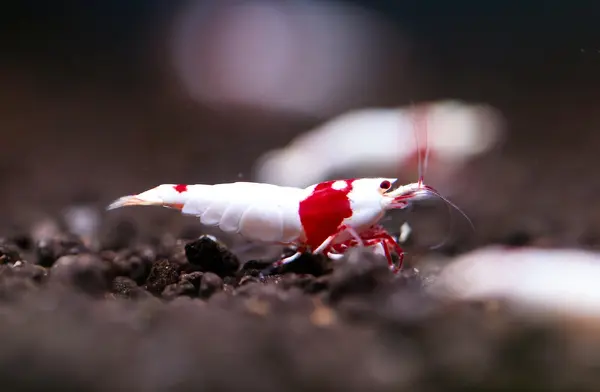
For breeders of freshwater shrimp or egg-scattering fish, Java Moss is indispensable. Its dense, tangled structure creates a massive surface area for the growth of biofilm and infusoria, microscopic organisms that serve as the primary food source for newly hatched fry and shrimplets. According to the Shrimp Farm, providing these natural foraging grounds can significantly increase the survival rates of young aquatic life.
Oxygenation and Gas Exchange
Like all photosynthetic organisms, Java Moss consumes carbon dioxide () and releases oxygen () during the day. In a heavily planted moss tank, this extra oxygenation can support a higher bio-load and ensure that your fish remain active and healthy. Even in low-tech tanks without pressurized , the constant gas exchange provided by moss mats contributes to a more balanced ecosystem.
Creating the Ideal Environment for Quick Growth
While Java Moss can survive in almost any condition, there is a difference between surviving and thriving. If you want that deep, vibrant green carpet, you need to dial in your parameters.
Choosing the Right Lighting
Java Moss is highly tolerant of low light, which is why it is popular for low-tech setups. However, under low light, the moss will grow very slowly and the strands will be leggy or thin. To achieve a dense, compact look, moderate lighting is preferred. Be cautious with high-intensity lighting; because Java Moss is a slow grower, it is prone to being overtaken by hair algae if the light is too strong and nutrients are not balanced.
Optimal Water Parameters
One of the strengths of is its wide range of tolerance:
- Temperature: It thrives between and ( to ), though it can survive as low as ().
- pH: It is comfortable in a pH range of 5.0 to 8.0, making it suitable for both acidic shrimp tanks and slightly alkaline community tanks.
- Hardness: It prefers soft to moderately hard water but is adaptable to most tap water conditions.
The Role of and Fertilization
Do you need for Java Moss? The short answer is no. However, if you are looking for rapid growth and a pearling effect (where oxygen bubbles form on the leaves), injection will make a massive difference. Additionally, while the moss gets most of its nutrients from fish waste, a weekly dose of liquid micro-nutrients (specifically iron and potassium) will prevent the moss from turning yellow or brown.
Water Flow and Cleanliness
In the wild, Java Moss is often found in moving water. In an aquarium, it benefits from a gentle current that brings nutrients to its fronds and carries away debris. Because the moss is so dense, it can act as a mechanical filter, trapping fish waste and uneaten food. If this debris isn't removed, it can rot and cause the moss to die from the inside out. Using a turkey baster to gently blow out the moss during water changes is a pro-tip for keeping it healthy.
Aim for The Sweet Spot
If you want to see your moss take off, there is actually a sweet spot for growth. Recent research has mapped out exactly how much Java Moss can grow in a single day. Scientists found that with the right balance of light and liquid nutrients, the moss can increase its mass by nearly 2.5% every single day. The key takeaway for your tank? You don’t need the brightest lights in the world, in fact, the moss actually develops a deeper, healthier green pigment when light levels are moderate rather than intense.
How to Plant Java Moss: Proven Techniques
Since Java Moss doesn't have roots, you don't plant it in the traditional sense. Instead, you attach it. Here are the most effective ways to do so.
Attaching to Driftwood and Rocks
This is the most popular way to use Java Moss. To attach it, take a small clump of moss and spread it thinly over the surface of the wood or stone. If you clump it too thick, the bottom layer will die because it won't receive light. Secure the moss using:
- Cotton Thread: This will eventually rot away after the moss has naturally anchored itself with its rhizoids.
- Fishing Line: A permanent solution that is nearly invisible underwater.
- Cyanoacrylate Glue (Super Glue Gel): Ensure the glue is safe for aquariums. A small dab will hold the moss in place instantly.
Creating a Lush Java Moss Carpet
A moss carpet provides a stunning visual lawn for your aquarium. The easiest way to achieve this is the "Sandwich Method." Place a layer of moss between two pieces of stainless steel mesh and secure the edges. Drop the mesh onto the substrate. Over time, the moss will grow through the holes in the mesh, completely hiding it and creating a uniform, green carpet. This method is much more effective than trying to weigh the moss down with gravel.
Building a Java Moss Wall
A moss wall can transform the back of your aquarium into a living tapestry. Similar to the carpet method, you use two large pieces of plastic or stainless steel mesh. Spread the moss across the mesh, sandwich it, and secure it to the back glass using suction cups. This not only looks beautiful but also provides a massive amount of surface area for biological filtration.
The Floating Moss Ball
If you don't want to attach the moss to anything, you can create moss balls (not to be confused with Marimo balls). Simply wrap a clump of Java Moss around a piece of lava rock or a plastic bio-ball and secure it with thread. These can be moved around the tank easily and are great for providing instant cover in quarantine or breeding tanks.
Maintenance, Pruning, and Propagation
Maintenance is the key to preventing your Java Moss from becoming a dirt magnet or an overgrown mess.
The Art of Trimming
Regular trimming is essential for two reasons: it maintains the desired shape and it encourages denser growth. When Java Moss grows too thick, the inner layers are shaded from the light and eventually turn brown and die. Use sharp aquascaping scissors to trim the top layer every few weeks.
Warning: Small fragments of moss will float away and start growing elsewhere in your tank. To prevent this, many aquarists turn off their filters during trimming and use a siphon to suck up the clippings as they cut.
Cleaning Your Moss
Because of its structure, Java Moss is notorious for trapping detritus. If you notice your moss looking dusty or brown, it is likely covered in waste. During your weekly water change, gently shake the moss or use a siphon to hover just above the surface to pull out the trapped particles. A clean moss is a healthy moss.
Dealing with Algae
Hair algae is the arch-nemesis of Java Moss. Because they have similar structures, it can be nearly impossible to manually remove hair algae without pulling out the moss itself. The best defense is a good offense: maintain a balance of light and nutrients. If algae does appear, introducing algae-eaters like Amano Shrimp or Siamese Algae Eaters can help keep the moss clean.
Another ways to prevent an algae breakout is to let your Java Moss do the heavy lifting. Beyond just stealing nutrients from algae, some plants release natural compounds that actually stop algae from growing—a process known as allelopathy. Evidence suggests that fast-growing aquatic plants help maintain a biological balance that keeps your water clear. By maintaining the health of Java Moss, you’re essentially creating a natural shield that makes it much harder for ugly hair algae to get a foothold in your tank.
Easy Propagation
Propagating Java Moss is as simple as it gets. Any piece of moss that you trim off can be moved to a new location, attached to a new rock, or given to a friend. As long as the fragment has a few leaves, it will eventually grow into a brand-new colony. This makes Java Moss one of the most cost-effective plants in the hobby; you only ever need to buy it once!
Advanced Aquascaping with Java Moss
Once you've mastered the basics, you can start using Java Moss to create truly breathtaking underwater scenes.
The Bonsai Moss Tree
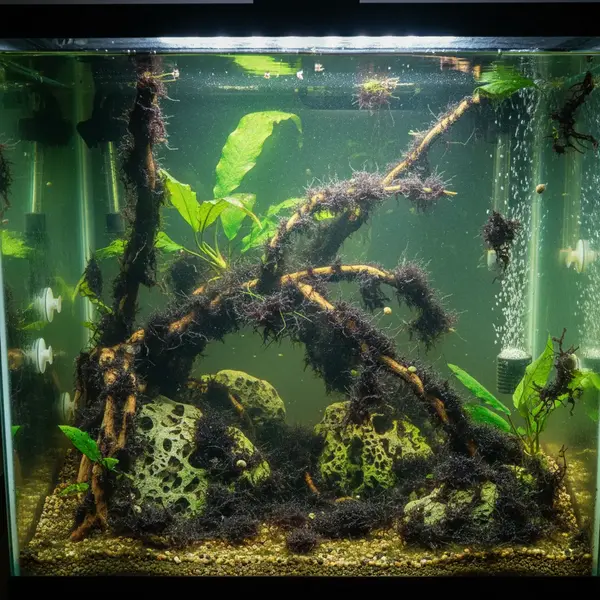
One of the most iconic looks in modern aquascaping is the underwater tree. This is created by taking a piece of driftwood that resembles a tree trunk and attaching clumps of Java Moss to the branches. As the moss grows and is trimmed into rounds, it looks exactly like the canopy of a miniature tree. This technique is often used in "Iwagumi" or "Forest" style layouts to add a sense of scale and age.
Hiding Ugly Equipment
Aquariums are often filled with unsightly heaters, filter intakes, and pipes. Java Moss is the perfect tool for camouflaging these items. By attaching moss to a mesh sleeve and sliding it over a filter intake, you can turn a piece of black plastic into a green, living pillar. Just be sure the moss doesn't get sucked into the impeller!
Texture and Layering
In a professional aquascape, contrast is key. The fine, messy texture of Java Moss provides an excellent contrast to the broad leaves of plants like or . Using Java Moss in the midground to transition between the hardscape (rocks/wood) and the background plants creates a sense of depth and realism that is hard to achieve with other species.
Java Moss in Nano and Shrimp Tanks
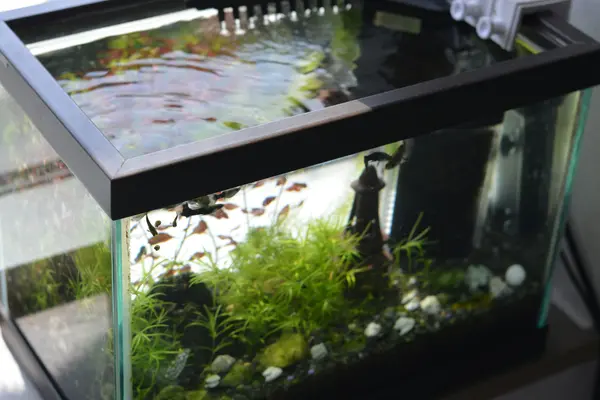
In small tanks (under 10 gallons), Java Moss often becomes the centerpiece. Because it can be kept small with regular pruning, it doesn't overwhelm the limited space. For shrimp hobbyists, a tank stuffed with Java Moss is the gold standard, as it ensures the shrimp feel secure enough to breed and display their brightest colors.
Troubleshooting Common Java Moss Problems
Even the unkillable plant can sometimes struggle. Here is how to fix the most common issues.
Why is my Java Moss turning brown?
Browning is usually caused by one of three things:
- Lack of Light: If the moss is too thick, the bottom layers turn brown. Solution: Trim it.
- Debris Build-up: If fish waste is clogging the moss, it suffocates. Solution: Clean it.
- High Temperatures: While it can handle heat, prolonged exposure to temperatures above () can cause it to melt or turn brown.
Melting After Introduction
It is common for Java Moss to experience a stalling period when first introduced to a new tank. It needs time to adjust to your specific water chemistry. During this phase, some parts might turn yellow or transparent. As long as there is some green left, be patient; it will usually bounce back within two weeks once it establishes its rhizoids.
Java Moss vs. Christmas Moss: Which is better?
Choosing between the two depends on your goal. Java Moss is hardier, faster-growing, and better for a wild look. Christmas Moss ( ) is more aesthetic with its weeping, triangular fronds, but it is more demanding in terms of light and . For a beginner or a shrimp breeder, Java Moss is almost always the better choice.
Is Java Moss a Pest?
Some aquarists eventually view Java Moss as a weed, because it grows so well. If you don't stay on top of your trimming, it can take over the tank, choking out other plants and getting stuck in filter grates. The key is active management. If you treat it like a garden hedge and trim it regularly, it will remain a beautiful asset rather than a nuisance.
How do I plant Java Moss in gravel?
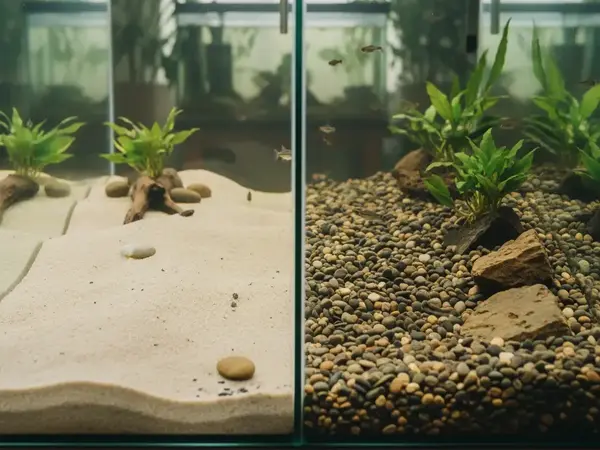
You should never fully bury Java Moss in gravel because the lack of light and water flow will cause the bottom to rot. Instead, use a small piece of mesh or a flat rock. Attach the moss to the rock, and then nestle that rock into the gravel. This gives the appearance of a carpet growing out of the substrate without killing the plant.
How do I put moss on a bonsai aquarium tree?
To create a "bonsai look", use Super Glue Gel (cyanoacrylate). Apply small dots of glue to the tips of the driftwood branches and press small, thin clumps of moss onto them. Within a few weeks, the moss will anchor itself, and you can trim it into a round canopy shape.
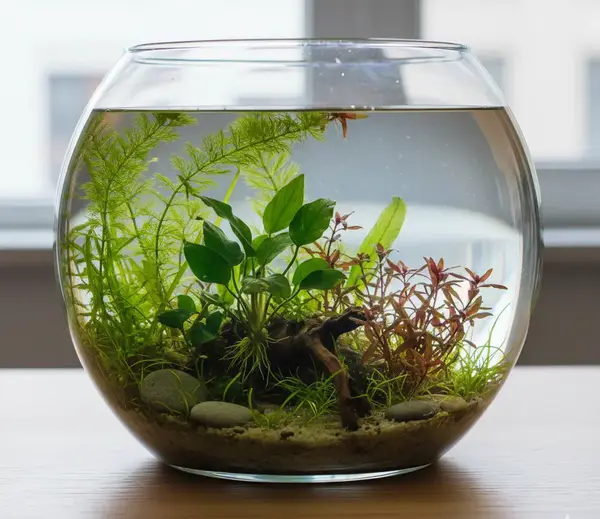
Can I grow Java Moss in a jar or bowl?
Yes! Because Java Moss is a lead candidate for resource regeneration in closed systems, it is one of the few plants that can thrive in small, unfiltered setups like Walstad bowls, provided you perform regular small water changes.
Conclusion: The Essential Greenery
Java Moss ( ) is more than just a plant; it is a foundational element of a healthy, thriving aquarium. Whether you are using it for its scientifically proven water-purifying properties, its ability to protect the next generation of shrimp, or simply its raw aesthetic beauty, it remains the most versatile tool in the aquarist's kit.
By following the tips in this guide, focusing on clean water, moderate light, and regular trimming, you can transform your aquarium into a lush, green sanctuary. So, grab a clump of moss, some fishing line, and start building your underwater masterpiece today.