Whether you are a seasoned aquascaper or a beginner setting up your first planted tank, there is a certain sinking feeling that comes when you notice your vibrant green foliage losing its luster. Specifically, when you see your anubias leaves turning yellow, it feels like a personal failure. After all, Anubias is supposed to be the indestructible plant of the aquarium world.
The truth is, while Anubias species like Anubias barteri or Anubias nana are incredibly hardy, they are slow-growing organisms that communicate their distress in slow motion. If your aquarium plant is turning yellow, it is a distress signal that has likely been building up for weeks.
Quick Diagnosis: Why is my Anubias yellow?
If you are looking for a fast answer, check these common culprits:
- Buried Rhizome: The thick green horizontal stem is under the sand or gravel (the most common cause of death).
- Nitrogen Deficiency: Older leaves are turning yellow from the tips inward ( levels are near ).
- Iron Deficiency: New leaves are emerging pale yellow or white while veins remain green.
- Excessive Light: The plant is being bleached by high-intensity LEDs without enough shade.
- Acclimation: The plant was recently moved from a nursery (emersed) to your tank (submerged).
The Mystery of the Yellowing Anubias
To effectively treat a problem, one must first understand the subject. Anubias is a genus of aquatic and semi-aquatic flowering plants in the family Araceae, native to tropical central and western Africa. They primarily grow in rivers and streams, sometimes submerged and sometimes emersed.
Why Anubias is the King of Hardiness
Anubias has earned its reputation as a beginner-friendly plant because of its thick, leathery leaves and robust rhizome system. Unlike delicate stem plants that can melt away in a matter of days if parameters shift, Anubias can withstand a wide range of water conditions. This resilience, however, can be a double-edged sword. Because the plant grows so slowly, symptoms of poor health take a long time to manifest. By the time you notice aquarium plants yellowing, the underlying cause has likely been present for quite a while.
Deciphering the Visual Language of Your Plants
Plants do not have voices, but they communicate through their pigments. A healthy Anubias should be a deep, waxy green. When anubias turning yellow occurs, the plant is telling you that it is failing to produce or maintain chlorophyll. This can be due to a lack of raw materials, environmental stress, or biological attack. Learning to read these signs is the first step toward becoming a master aquarist.
The Anatomy of a Healthy Anubias
Before diagnosing a sick plant, you must know what a healthy one looks like. The rhizome should be firm and bright green. The roots should be creamy white or light brown and firm to the touch. The leaves should have a consistent dark green color across the entire surface. If the rhizome is soft or the roots are mushy, the yellowing is likely secondary to a rot issue rather than a simple nutrient deficiency.
Nutritional Deficiencies and the Science of Plant Health
When plants in aquarium turning yellow, the most common culprit is hunger. Even in a tank with fish, the natural waste might not provide the full spectrum of minerals your plants require for photosynthesis.
Nitrogen: The Foundation of Leaf Vitality
Nitrogen is the primary building block for plant tissue and a major component of chlorophyll. If your tank has a very low bioload or you are over-filtering, your Anubias may run out of nitrates. The classic sign of nitrogen deficiency is an overall pale green appearance, followed by the older leaves turning yellow, starting specifically at the tips and moving toward the stem. Since nitrogen is a mobile nutrient, the plant will literally cannibalize its old leaves to send nitrogen to the new growth. Aim for a nitrate level of 10-20 ppm.
The Role of Iron in Chlorophyll Synthesis
Iron is essential for the enzymes that create chlorophyll. Unlike nitrogen, iron is immobile. If you see tiny new leaves emerging that are pale yellow while the veins remain green, you are looking at iron chlorosis. As noted by the University of Minnesota Extension, iron uptake is heavily dependent on water chemistry; when pH levels rise too high, iron becomes insoluble and unavailable to the plant, regardless of how much fertilizer you add. This is common in high-tech tanks where faster-growing plants are outcompeting the slow-growing Anubias for minerals. Without sufficient iron, the plant simply cannot build the machinery needed to capture light.
Potassium and Magnesium: The Supporting Cast
Potassium deficiency is unique; it often starts as small yellow spots that eventually turn into pinholes with yellow or brown rims. This is a very common issue in tanks that only use basic fish food as a fertilizer. Magnesium deficiency looks similar to iron deficiency but usually strikes the older leaves first. If you notice the areas between the veins turning yellow while the rest of the leaf stays green, it is time to check your water’s General Hardness ().
How to Differentiate Mobile vs. Immobile Nutrients
Understanding the difference between mobile and immobile nutrients is a game-changer for plant diagnosis. According to research from the University of Florida IFAS Extension, plants redistribute mobile nutrients like Nitrogen, Phosphorus, Potassium, and Magnesium from older leaves to support new growth. Therefore, deficiencies appear in old leaves first. Immobile nutrients such as Iron, Calcium, and Sulfur cannot be moved, so deficiencies appear in the new growth. If your anubias leaves yellowing is happening at the base, look for mobile nutrients. If it is happening at the tip of the rhizome, look for immobile nutrients.
Lighting Requirements: Balancing Energy and Algae
Light is the engine of photosynthesis, but for an Anubias, too much of a good thing can be disastrous.
The Dangers of High-Intensity Lighting
Anubias are naturally found in the shaded streams of West Africa. While they can adapt to higher light, their slow metabolism does not allow them to use that energy as fast as a stem plant would. High-intensity lighting can lead to bleaching, a physiological state known as photoinhibition. Studies published in the Journal of Experimental Botany show that when plants are exposed to light energy beyond their photosynthetic capacity, it causes oxidative stress and the breakdown of chlorophyll pigments, leading to that sickly yellow-white appearance.
Dappled Light and the Natural Habitat
In the wild, Anubias often grow under the canopy of rainforest trees or tucked under overhanging riverbanks. They thrive in low to medium light. To replicate this in your aquarium, you can place Anubias under the shade of larger plants or pieces of driftwood. This protects the leaves from the direct sunburn of high-output LED fixtures.
Managing Photoperiods for Slow-Growing Species
For most hobbyists, a photoperiod of 6-8 hours is the sweet spot. If you are seeing yellowing and algae, consider reducing your light intensity or adding floating plants like Frogbit or Salvinia to provide dappled shade. Consistency is key; using a timer to ensure the lights go on and off at the same time every day will reduce stress on the plant.
Combating Algae Smothering and Leaf Suffocation
Because Anubias leaves are slow-growing and long-lived, they are prime real estate for algae. Yellow algae in aquarium setups or Green Spot Algae can form a layer over the leaf surface. This layer blocks light and prevents the leaf from breathing or exchanging gases with the water, leading to localized yellowing and eventual leaf death. Keeping the leaves clean is just as important as providing the right light.
Proper Planting Techniques and Physical Health
If your aquarium plants yellowing is accompanied by leaves falling off the stem easily, you aren't looking at a nutrient issue; you are looking at a structural failure.
The Golden Rule: Respect the Rhizome
The rhizome is the thick, horizontal green stalk that the leaves grow out of. By purpose, rhizome is more than just a support stem; it is a vital storage organ. Research into aquatic plant ecology highlights that submerged rhizomes require constant water flow to facilitate gas exchange and prevent the buildup of anaerobic bacteria, which is why burying the rhizome in dense substrate causes it to suffocate and almost always results in rot. This rot manifests as yellowing leaves that eventually just float away from the plant.
Innovative Ways to Attach Anubias to Hardscape
The best way to keep Anubias healthy is to attach it to rocks or driftwood. You can use aquarium-safe super glue, which is cyanoacrylate based, to stick the roots (not the rhizome) to a surface. Alternatively, use black cotton thread or fishing line to tie the plant down. Over time, the roots will wrap around the object and anchor the plant naturally, ensuring the rhizome is always exposed to fresh, oxygenated water.
Recognizing and Treating the Infamous Anubias Rot
Anubias Rot is a mysterious disease where the rhizome becomes mushy, foul-smelling, and discolored. It can spread quickly through a colony. If you touch the rhizome and it feels like a soft sponge, your plant is in serious trouble. This is often triggered by poor water flow or the plant being buried. To save it, you must cut away the rotting sections until only firm, healthy green tissue remains.
Substrate Traps: Why Sand and Gravel Can Be Deadly
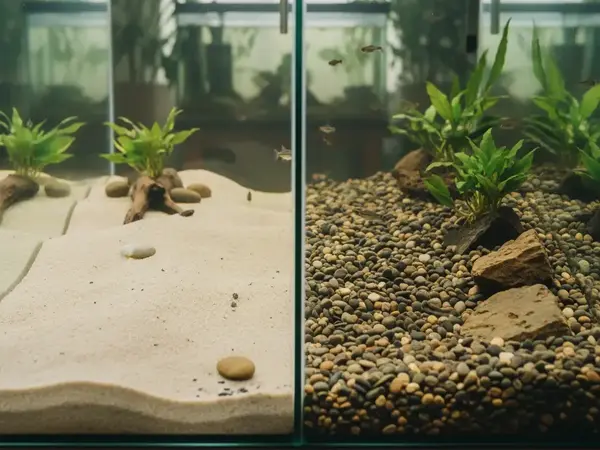
While the roots can be buried in substrate, the rhizome must remain above. Sand is particularly dangerous because its fine particles can pack tightly around the rhizome, creating an anaerobic environment that encourages bacteria to eat away at the plant. If you must plant in substrate, ensure only the thin feeder roots are covered, and keep the thick green bar above the ground level.
Water Chemistry: The Invisible Environment
Sometimes the problem isn't what is in the tank, but what is missing from the water's invisible composition.
pH Stability and Its Effect on Nutrient Uptake
Anubias prefer slightly acidic to neutral water, typically between pH 6.5 and 7.5. When the pH becomes too high or swings wildly, the chemical form of nutrients in the water changes. For example, iron becomes much harder for plants to absorb in alkaline water. If your aquarium plant leaves turning yellow, check your pH to ensure it is stable and within the appropriate range.
CCarbon Dioxide: Is Supplementation Necessary?
While Anubias is a low-tech favorite, it still requires carbon. In tanks with very high light but no supplementation, the plant’s growth can stall. When growth stalls, the plant's older tissues may begin to break down, leading to yellowing. While you do not need a pressurized system for Anubias, ensure there is enough surface agitation to allow for natural gas exchange.
The Impact of General and Carbonate Hardness
General Hardness () measures the amount of calcium and magnesium in your water. If your is zero, your plants will lack the minerals needed for cell wall stability and photosynthesis. Carbonate Hardness () acts as a buffer for your . A stable ensures that your doesn't crash, which can cause sudden yellowing and melting of even the hardiest Anubias.
Understanding Nitrate Levels in a Balanced Ecosystem
In the aquarium hobby, we are often told that nitrates are bad. However, for a planted tank, nitrates are food. If your nitrate levels are 0 ppm, your plants are starving. This is a common issue in heavily planted tanks with very few fish. Aim for a stable level of 10 - 20 ppm to ensure your anubias plant turning yellow doesn't become a recurring problem.
Maintenance Routines for a Vibrant Green Aquarium
Fixing a yellowing aquatic plant turning yellow requires a systematic approach to maintenance.
Pruning Strategies for Revitalizing Stagnant Growth
Do not be afraid to use the scissors. Yellow leaves consume energy but contribute very little. By pruning away damaged leaves, you encourage the plant to focus its energy on the rhizome and new leaf buds. Always use sharp, sterilized scissors and cut the leaf stem as close to the rhizome as possible without nicking the rhizome itself.
Water Change Habits that Promote Stability
Large, infrequent water changes can shock plants. It is better to perform smaller, weekly water changes of 20-30%. This keeps the nutrient levels consistent and prevents the buildup of organic waste that can trigger algae blooms. Always remember to dechlorinate your water, as chlorine can damage the delicate outer layer of the leaves.
Cleaning Leaves without Damaging Plant Tissue
Since Anubias leaves last for years, they accumulate dust and biofilm. During your water change, gently rub the leaves between your fingers to clear off any debris. Some hobbyists use a soft toothbrush to gently scrub away green spot algae. This physical cleaning helps the plant breathe better and maximize its light absorption.
Long-Term Success: Monitoring and Adjustment
Keep a tank journal. Note when you add fertilizer, when you change the lights, and when you see new growth. Because Anubias is so slow, you might forget what it looked like a month ago. Photos are a great way to track if the "my aquarium plants are turning yellow" problem is getting better or worse over time.
Conclusion: From Yellow to Emerald Green
Seeing your anubias turning yellow can be frustrating, but it is also an opportunity to learn the delicate balance of your aquarium’s ecosystem. By observing whether the yellowing affects old or new growth, checking your planting depth, and ensuring a steady supply of nutrients, you can transform your tank back into a lush, underwater oasis.
Remember, Anubias is a marathon runner, not a sprinter. Be patient with your changes; it may take a few weeks to see the results, but that first new, deep-green leaf emerging from the rhizome will be well worth the effort.
Frequently Asked Questions (FAQ)
Can yellow Anubias leaves turn green again?
No. Once a leaf has lost its chlorophyll and turned yellow, the cellular structure has permanently changed. It is best to prune these leaves so the plant can focus its energy on growing new, healthy green foliage.
Will Anubias grow in sand?
Yes, Anubias can grow in sand, provided that you do not bury the rhizome. You can push the thin feeder roots into the sand for stability, but the main horizontal green stalk must remain on top of the substrate.
How much light does Anubias need?
Anubias is considered a low-light plant. It typically thrives with 10-30 micromoles of at the leaf level. If you have high-powered lights, ensure the plant is shaded by hardscape or taller stem plants.
Why are my aquarium plant leaves turning yellow and transparent?
Yellow and transparent (see-through) leaves are usually a sign of melting. This occurs when a plant is acclimating to new water parameters or transitioning from emersed growth to submersed growth. It can also indicate a severe lack of nutrients or .