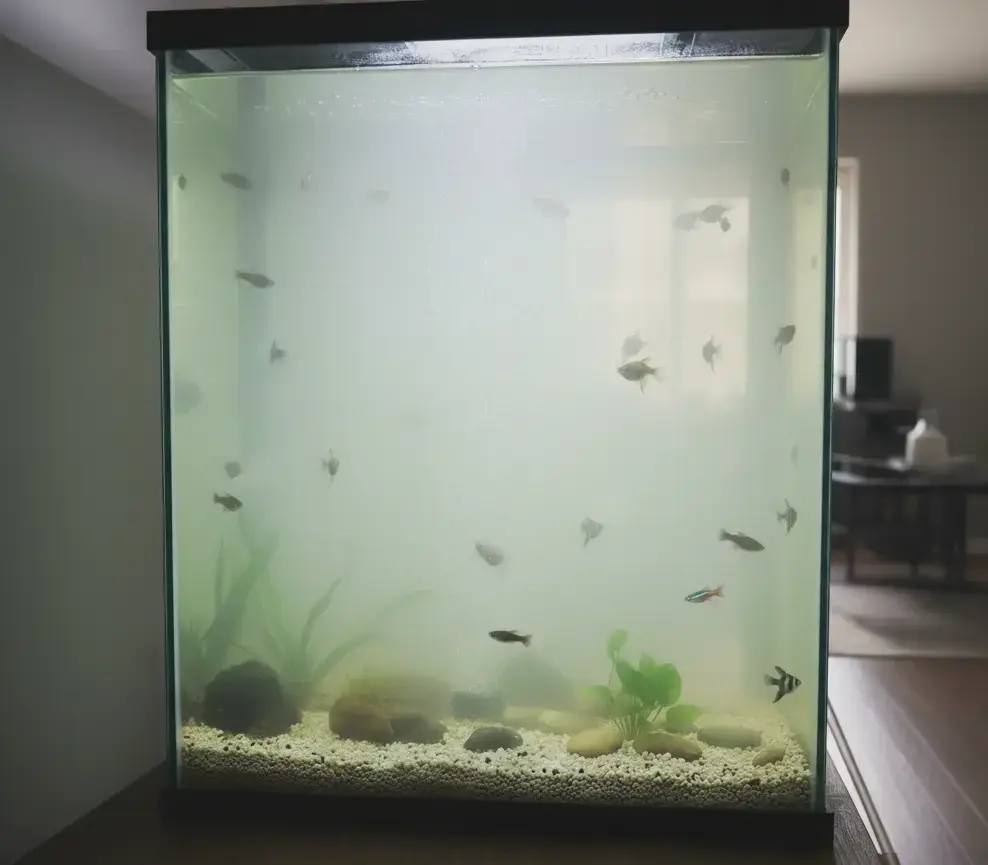
You have spent the better part of your afternoon carefully siphoning gravel, scrubbing the glass, and conditioning new water. You sit back, expecting to see a crystal clear underwater paradise, but instead, your aquarium turned cloudy overnight. It is a common, yet deeply frustrating experience for every hobbyist. Whether your fish tank water looks smokey, milky, or just plain off, you are not alone.
In this guide, we will dive deep into why your cloudy tank after water change happened, the science behind the fog, and most importantly, how to fix it. We are not just looking for a temporary band-aid; we are looking to understand the ecosystem of your tank so you can enjoy a milky free aquarium for the long haul. Research into aquarium microbiome dynamics shows that these systems are far more complex than simple glass boxes, often reacting to disturbances in ways that even experienced keepers find surprising.
Identifying the Cause: Why Your Fish Tank Water Looks Smokey or Milky
Before you reach for the chemicals, you need to play detective. Not all cloudiness is created equal. The solution for a brand new aquarium with cloudy water is very different from the solution for an established tank that suddenly went murky. Understanding the root cause is the first step toward restoration.
Distinguishing Between Mechanical and Biological Cloudiness
When your fish tank water looks dusty, you are likely dealing with mechanical cloudiness. This is caused by physical particles like bits of fish waste, uneaten food, or fine substrate dust floating in the water column. However, if your fish tank looks milky or has a ghostly, white haze, you are likely witnessing a biological event known as a bacterial bloom.
Mechanical cloudiness often looks like bits floating in the light, whereas biological cloudiness looks like someone poured a teaspoon of milk into the water, creating a milky fish aquarium effect. Scientific observations of newly established betta aquaria suggest that the composition of these particles and the bacteria feeding on them are highly dependent on the initial environmental setup. If the water has a slight shimmer when you move the light, it is mechanical; if it looks like a thick fog regardless of the light angle, it is biological.
Why Your Fish Tank Water Went Cloudy Overnight
It is incredibly common for a hobbyist to wake up and find their fish tank water went cloudy overnight. This rapid shift usually points to a white bacterial bloom in the aquarium. These bacteria can double their population every twenty minutes under the right conditions. If you disturbed the mulm (the brown gunk in the gravel) during your water change, you essentially provided an all-you-can-eat buffet for these bacteria, causing them to explode in numbers and turn the water smokey or foggy by morning.
This overnight phenomenon is often linked to the Tyndall Effect, a physics principle where light scatters off microscopic particles. Even a relatively small increase in bacterial density can cause a massive change in how light travels through the water, making a clear tank look like pea soup in just a few hours.
The Science of the Bacteria Bloom After a Water Change
To achieve a crystal clear tank, we have to understand the microscopic world. The most frequent culprit of cloudy water after a water change is the bacterial bloom.
What is a White Bacterial Bloom in an Aquarium?
A white bacterial bloom in an aquarium is caused by heterotrophic bacteria. Unlike the beneficial nitrifying bacteria that live on your filter media, these heterotrophs live in the water column and feed on organic waste. When you perform a water change and accidentally stir up waste, or if you over-clean your filter, these bacteria multiply so fast that they become visible to the naked eye, leading to a cloudy aquarium water bacterial bloom.
While many hobbyists use the term bacteria as a catch-all, the reason your fish tank water looks milky lies in the competition between two distinct groups: autotrophic and heterotrophic bacteria. Understanding this biological war is key to solving aquarium cloudy water while cycling.
The Biological War: Heterotrophs vs. Autotrophs
Heterotrophic bacteria are the primary cause of a bacteria bloom after a water change. These organisms are the decomposers of your tank. They do not create their own food; instead, they scavenge for organic matter like fish waste, decaying plant leaves, and uneaten flakes. Most importantly, they reproduce at a staggering rate. When you stir up the substrate during a cleaning, you release a massive amount of fuel, leading to an aquarium turned cloudy overnight.
In contrast, Autotrophic Bacteria are your beneficial nitrifying bacteria like Nitrosomonas and Nitrospira. They are much more complex, converting ammonia into nitrite and then into nitrate. However, they are fragile and slow growing, taking fifteen to twenty-four hours just to double. This is why a new aquarium bacteria bloom is so common; the fast moving heterotrophs outcompete the slow stabilizers, creating a milky fish aquarium before the beneficial colony can establish itself.
Why Water Changes Can Trigger a Bloom in New Tanks
In a new aquarium, a bacteria bloom is almost a guarantee. When you perform a water change in a tank that has not fully cycled, you might be removing the very microorganisms trying to stabilize the environment. This imbalance triggers the heterotrophs to take over, leading to cloudy water during cycling. Even in established tanks, a bacterial bloom after cleaning the filter happens because you have removed too much of the good bacteria, forcing the system to reset.
New Tank Syndrome: Why New Aquariums Turn Murky During Cycling
New tank syndrome cloudy water is the term for the instability of a fresh setup. If you have a new fish tank with cloudy water and no fish, it is actually a good sign. It means the nitrogen cycle is starting. The water may look murky or foggy for a few days as ammonia and nitrites spike and then settle. Studies on dissolved oxygen thresholds emphasize that these bacterial shifts can significantly alter the oxygen profile of your tank, making aeration during this phase more important than most realize.
Physical Culprits: Substrate, Sand, and Filter Maintenance
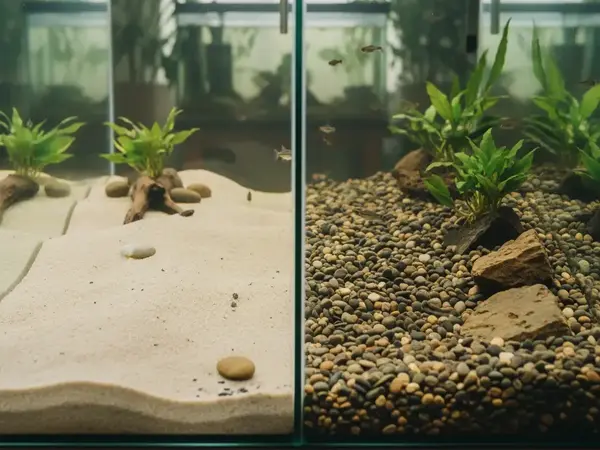
Sometimes the issue is not biological; it is purely physical. If your fish tank is cloudy after adding sand, you are dealing with fines, tiny particles that are too light to sink.
New Sand and Substrate: How to Prevent Cloudy Water
If you did not rinse your substrate thoroughly, new sand in aquarium cloudy water is inevitable. This creates a dusty look that does not settle easily. If your aquarium water looks dusty rather than milky, you are likely battling these microscopic particles of stone or sand.
To prevent this, you should use the Bucket and Hose method. Fill a five gallon bucket one quarter full of sand and run a high pressure hose into it. Let the water overflow. The cloud you see escaping the bucket is exactly what would have caused your new aquarium murky water. Continue this until the overflow water is one hundred percent transparent. If the tank is already filled, you must employ advanced mechanical filtration like a fifty micron polishing pad.
Stirring Up the Deep: Why Your Fish Tank is Dirty After a Day
Have you ever noticed your fish tank water is dirty after a day of cleaning? This happens when you vacuum the gravel too aggressively. You release months of trapped detritus into the water. This leads to aquarium water looking dusty and can even trigger a secondary bacteria bloom after water change events as the bacteria rush to consume the newly available nutrients.
A key tip for planted tanks is the Sand Cap method. By placing a layer of fine sand over a nutrient rich soil, you seal the detritus beneath the surface, preventing the foggy fish water that occurs when you move plants or clean the glass.
The New Canister Filter Effect
Installing a new canister filter can ironically lead to cloudy water. If the filter media is not rinsed, or if the flow is so strong that it constantly stirs up the bottom of the tank, you will see cloudy aquarium water after a new filter installation. Always rinse your media in dechlorinated water before use to prevent that smokey look from mechanical debris.
Chemical and Environmental Factors: Brown or Green Water
Not all clouds are white. If your fish tank water is turning brown or green, the cause is likely environmental or chemical.
Why Fish Tank Water Turns Brown After a Change
If your fish tank water is turning brown, you are likely seeing tannins from driftwood or a high concentration of organic waste (mulm) that was stirred up. While murky water in a new fish tank can look alarming, brown water caused by tannins is actually beneficial for many tropical fish. These humic substances play a crucial role in forming the chemical environment that determines the health of your biological community.
Algae Bloom vs. Bacteria Bloom: Recognizing the Difference
An algae bloom after water change usually presents as a green tint to the water. This happens when a water change introduces new nutrients like nitrates or phosphates, or if the tank is near a window. Unlike a white bacterial bloom, which looks like milk, an algae bloom looks like pea soup. Reducing light and managing nutrient input are the standard fixes here. If you have an algae bloom after a water change, it is often because the new water removed some of the competing bacteria, giving the algae free rein over the nutrients.
Mineral Precipitation and pH Spikes
In some cases, your fish tank has gone white cloudy because of a chemical reaction. If your tap water has a very different pH or mineral content than your tank water, minerals like calcium can precipitate out of the water, creating a milky fish aquarium look almost instantly. This is more common in areas with hard water or when using certain types of decorative rock like Seiryu stone, which slowly leaks minerals into the water.
Saltwater and Reef Tank Specifics: Dealing with Cloudiness
Saltwater hobbyists face a unique set of challenges. A bacteria bloom in a reef tank can be more dangerous than in freshwater due to the extreme sensitivity of corals and marine invertebrates.
Bacteria Bloom in Reef Tanks and Saltwater Systems
In high end reef keeping, many aquarists use carbon dosing (adding vodka, vinegar, or sugar) to lower nitrates and phosphates. While effective, this is the most common trigger for a bacteria bloom reef tank event. When you add a carbon source, you are fueling the heterotrophic bacteria. If the dose is even slightly too high, the population explodes.
A bacteria bloom in a saltwater aquarium can be lethal because saltwater holds less oxygen than freshwater. As bacteria multiply, they consume massive amounts of dissolved oxygen. If you see your saltwater tank cloudy after a water change, you may see your corals retracting their polyps and your fish gasping. Professional reefers often recommend skimming wet (adjusting your protein skimmer to produce more watery waste) during a bloom to physically export the bacteria.
Saltwater Tank Cloudy After a Water Change
If your saltwater tank is cloudy after a water change, it might be that your salt was not fully dissolved. Mixing salt directly in the tank or adding cloudy freshly mixed saltwater can cause a reef tank to be cloudy after a water change. Always mix your saltwater at least twenty-four hours in advance to allow for full chemical stabilization and aeration.
Managing Microbubbles and Protein Skimmer Issues
Sometimes, what looks like a bacterial bloom in a saltwater aquarium is actually millions of tiny microbubbles. Check your protein skimmer or return pump for leaks. If the water looks like it is fizzing rather than milky, bubbles are your culprit. These can irritate fish gills and corals if left unchecked.
The 7-Day Clear Water Protocol: A Step-by-Step Recovery
If you are currently staring at a tank foggy after a water change, follow this proven schedule to restore clarity without crashing your cycle.
- Day 1: The Diagnosis. Test your water. If Ammonia and Nitrite are 0, do nothing. If they are elevated, add a double dose of a water conditioner like Seachem Prime to detoxify the levels without removing the food the beneficial bacteria need to grow.
- Day 2: Aerate. A bacteria bloom after adding fish consumes oxygen. Add an air stone or point your filter output at the surface to create surface agitation. This keeps your tropical fish safe while the water is smokey.
- Day 3: The Blackout. If the cloudiness has a green tint (indicating an algae bloom after water change), turn off the lights entirely. Wrap the tank in a blanket for forty-eight hours. Algae needs light; bacteria do not.
- Day 4: Fine Mechanical Filtering. Add a fifty micron polishing pad to your canister filter. This will help remove the bits making the fish tank look dusty.
- Day 5: Observe. By now, the new aquarium foggy water should be thinning. Do not perform a water change! Adding new water provides new minerals that refresh the bloom.
- Day 6: Chemical Support. If the water is still milky, add a bag of Seachem Purigen or high grade activated carbon. This removes the dissolved organic carbons (DOCs) that feed the bloom.
- Day 7: The Final Rinse. Once the water is clear, gently rinse your mechanical sponges (not the bio-media!) in old tank water to remove the dead bacteria trapped during the process.
Long-Term Prevention: Maintaining Crystal Clear Water
Prevention is better than a cure. You can avoid the cloudy fish tank after 3 days syndrome by changing your maintenance habits and focusing on system stability.
How to Perform Water Changes Without Triggering a Bloom
To prevent after water change water cloudy issues, try the low impact method. Do not clean your filter and your gravel on the same day. By staggering these tasks, you ensure that you never remove too much beneficial bacteria at once, preventing a bacterial bloom in an established tank. This maintains the essential microbiome balance necessary for clarity.
Preventing Waste Buildup: Feeding and Cleaning Best Practices
A fish tank that is dirty after a week is often a sign of overfeeding. Excess food decays and feeds the heterotrophic bacteria. If you find your fish tank water is dirty after a day, evaluate how much you are feeding and ensure you are using a high quality, low waste pellet or flake. High levels of dissolved organic carbon are the primary drivers of these opportunistic bacterial blooms.
Monitoring the Nitrogen Cycle for Permanent Clarity
Understanding the cycle is the ultimate defense against new tank syndrome cloudy water. Keep a test kit handy. If you see ammonia or nitrite, you know your cloudy tank is a biological warning sign. By keeping these levels at zero through consistent, moderate maintenance, you will naturally avoid the milky and smokey water that plagues so many hobbyists.
Is Cloudy Water Dangerous for Tropical Fish and Guppies?
Generally, a tropical fish cloudy water event is more of an aesthetic issue than a lethal one. However, you must watch your fish closely. If you have a guppy tank with cloudy water and the fish are gasping at the surface, the bloom is consuming too much oxygen.
While the fog itself is not toxic, the underlying cause, like a spike in ammonia, can be. If your fish eyes are cloudy after a water change, this could indicate a reaction to water chemistry shifts or poor water quality, requiring immediate attention. The Royal Veterinary College notes that maintaining stable water parameters (especially nitrogen levels), is vital for preventing the severe stress that leads to these conditions.
Conclusion
Having a cloudy aquarium after a water change is a rite of passage for many hobbyists. Whether it is new tank syndrome, a bacteria bloom, or just some dusty sand, the solution usually involves a mix of better maintenance and a little bit of patience.
Frequently Asked Questions (FAQ)
Will cloudy water kill my fish?
Usually no, but if your fish are gasping or you see cloudy water and fish dying, check your ammonia levels and increase aeration immediately.
How long does a bacteria bloom last?
Most blooms clear up within two to five days if the source of excess nutrients is removed and the tank is left alone.
Why is my turtle tank cloudy after a water change?
Turtles are high waste animals. A turtle tank cloudy after a water change is almost always a massive bacteria bloom feeding on the waste stirred up during the cleaning process.
Can I use a UV sterilizer for cloudy water?
Yes. A UV sterilizer is highly effective at killing the free floating bacteria and algae that cause foggy water, though it does not address the underlying nutrient issue.
Why does my aquarium water look dusty?
This is usually mechanical. Fine particles of substrate or waste are being caught in the water column. Upgrading your filter media to a finer pad will solve this.