Introduction: The Glass Tap Moment
Every aquarium hobbyist knows the feeling. You walk into the room and your Oscar, a large and intelligent cichlid, instantly stops what he is doing. He swims to the front of the glass, wiggles his body, and follows your finger. Is he happy to see you? Or is he just a biological machine programmed to recognize a food source?
For decades, the common consensus was that fish lived in a permanent present. We were told they had three-second memories and lacked the brain architecture to feel anything beyond basic reflexes. However, the more we watch them and the more science peers beneath the scales, the more we realize that the silent world is actually brimming with emotion, personality, and social complexity.
In this guide, we are going to dive deep into the question: Do fish have feelings? We will explore the biological reality of fish pain, the surprising depth of fish memory, and how you can use this knowledge to provide a truly enriched life for your wet pets. To understand the fish of today, we have to let go of the myths of yesterday.
The Biological Foundation: Can Fish Feel Pain and Pleasure?
To understand feelings, we first have to look at the hardware. In humans, we process emotions and pain in the neocortex. Because fish lack a neocortex, skeptics once argued they could not feel anything. Modern science has since debunked this theory, showing that different brain structures can perform the same complex emotional tasks. Evolution often finds different paths to the same functional destination.
The Anatomy of Sentience: Nociceptors and Brain Function
While fish brains are structured differently than ours, they possess the same essential building blocks for sensing the world. The discovery of nociceptors in fish was a turning point. These are specialized sensory neurons that respond to potentially damaging stimuli like heat, chemicals, or physical pressure.
Groundbreaking research published in the Proceedings of the Royal Society B by Dr. Victoria Braithwaite and her team proved that fish have these receptors in abundance, particularly around their mouths and heads. Furthermore, fish use the pallium, a part of their brain that serves as a functional equivalent to the mammalian neocortex. This allows them to process pain not as a simple reflex, but as a conscious, negative experience.
The fish brain is a masterpiece of efficiency. While it lacks the bulk of the human forebrain, it is highly compartmentalized. The cerebellum in many fish is relatively large, aiding in complex movements and spatial awareness. When we ask if they feel, we are really asking if their nervous system creates a subjective experience. The presence of the same neurotransmitters we use to process sensation suggests the answer is a definitive yes.
Stress Responses and Cortisol Levels
As hobbyists, we often talk about stress, but what does that look like biologically? When a fish is in a sub-optimal environment, such as a tank that is too small or has high ammonia, their body releases cortisol. This is the same stress hormone found in humans and other mammals.
Long-term exposure to cortisol is devastating. It suppresses the immune system, stunts growth, and alters behavior. If fish were merely unfeeling machines, they would not suffer from the physiological wear and tear that chronic stress causes. Their bodies react to emotional and environmental pressure in almost the exact same way ours do. A fish in a high-stress environment is not just physically unwell; it is experiencing a state of distress that we can measure through blood chemistry and behavioral observation.
The Dopamine Hit: Understanding Fish Joy
On the flip side of pain is pleasure. Fish are highly motivated by rewards. Research into fish cognition and welfare suggests that fish seek out stimulating, feel-good experiences. This is driven by dopamine, the same neurotransmitter that handles the reward system in the human brain.
Observing a Goldfish sifting through sand or a Loach dancing in the bubbles of an air stone reveals a creature seeking out engagement. This is not just a survival tactic; it is the biological root of what we perceive as a happy fish. They are capable of experiencing positive affective states, which is a hallmark of sentience. In fact, many species will choose to swim in a current or interact with a moving object even when there is no food reward involved, suggesting they find the activity itself rewarding.
Emotional Intelligence: Beyond Survival Instincts
If feelings are the internal weather of a fish, intelligence is the navigation system. For an aquarium hobbyist, witnessing intelligence is often the most rewarding part of the hobby. It moves the animal from a decoration to a companion.
Do Fish Recognize Their Owners?
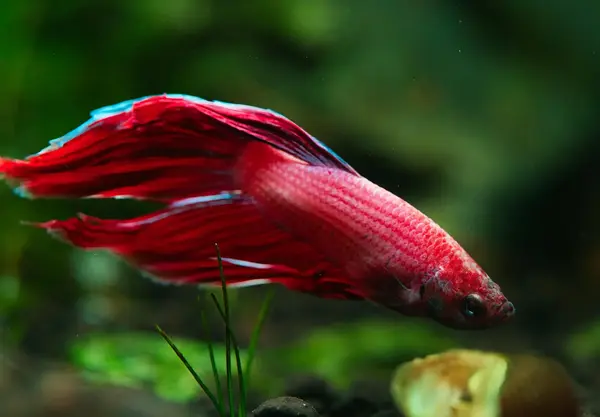
Ask any Betta owner if their fish recognizes them, and the answer is usually a resounding yes. We now have scientific proof that fish can distinguish between human faces. A study published in Scientific Reports demonstrated that Archerfish could be trained to recognize a specific human face from a gallery of dozens of others with a high degree of accuracy.
In an aquarium setting, your fish associates your specific silhouette, movement patterns, and perhaps even the sound of your voice with safety and food. They do not just see a human; they see their human. This recognition forms the basis of a primitive yet meaningful bond. Some larger species, like Oscars or large Catfish, have even been known to refuse food from strangers while enthusiastically accepting it from their primary keeper.
Fear, Anxiety, and Depression in the Aquarium
We tend to think of depression as a uniquely human struggle, but learned helplessness is a documented state in fish. If a fish is constantly bullied by a dominant tank mate or kept in a barren environment, it can enter a state of chronic anxiety. This is not just a temporary mood; it is a shift in their baseline psychology.
Signs of a depressed fish include:
- Hiding for extended periods despite healthy water parameters.
- Paling or dulling of colors that usually remain vibrant.
- A complete lack of interest in surroundings or food.
- Repetitive, purposeless movements, often called stereotypies.
The scientific community now recognizes these as depression-like states, often triggered by a lack of environmental control or social isolation. When a fish realizes that no matter where it swims it cannot find safety, it eventually stops trying. This is a profound emotional failure that every hobbyist should strive to prevent.
Curiosity and the Drive to Play
One of the most compelling arguments for fish feelings is the play factor. Play serves no immediate survival purpose and is done for the sake of engagement. Cichlids have been observed moving pebbles around not for nesting, but seemingly for the sake of rearranging their space.
Research by Professor Culum Brown at Macquarie University has shown that fish are capable of complex problem-solving. Some species have even been seen playing with objects like floating balls or riding the current from a filter outlet, similar to a human on a water slide. This behavior suggests a level of cognitive complexity that requires an internal life capable of boredom and the desire for amusement. If they can be bored, they can be entertained. If they can be entertained, they have an emotional landscape.
Social Lives: Bonds, Grief, and Cooperation
The image of a lonely goldfish in a bowl is a tragedy. In reality, fish are deeply social creatures with complex communal lives that involve long-term memory and social learning. They are not solitary actors; they are part of a web of interactions.
Pair Bonding and the Grief Phenomenon
Many species, particularly those in the Cichlidae family, are monogamous. They choose a mate and work together to defend a territory and raise young. These bonds are not purely hormonal. They involve a level of individual recognition and preference.
When one half of a bonded pair dies, the remaining fish often shows signs of distress. They may stop eating, become lethargic, or fruitlessly search the tank for their partner. This decline can last for weeks, and in some cases, the surviving fish never fully recovers its previous vitality. While we must be careful not to over-anthropomorphize, the physiological decline of a lonely pair-bonding fish is a reality every experienced keeper has seen. It suggests that these animals form social attachments that have a profound impact on their well-being.
Interspecies Cooperation and Friendships
In the wild, the relationship between the Grouper and the Moray Eel is the gold standard of fish cooperation. A study in PLOS Biology detailed how Groupers use physical signals to recruit Moray Eels for joint hunting missions. They utilize each other's unique strengths to flush out prey, a behavior once thought to be limited to high-level mammals.
In your home aquarium, you might see odd couple friendships. These social connections reduce stress and provide a sense of security. For example, some bottom-dwelling fish will follow larger, more active fish to take advantage of the food they stir up, but they also seem to seek out the company of those fish for protection. Social intelligence is a vital part of the fish experience, and ignoring it can lead to a shorter, more stressful life for your inhabitants.
Social Hierarchies: The Pecking Order
Anyone who has kept a group of Discus or African Cichlids knows the Alpha is more than just the biggest fish. The social hierarchy is maintained through subtle body language and color changes. Submissive colors signal that a fish is not a threat, while dominant displays, such as flaring gills or lateral displays, communicate an emotional state without the need for a physical fight.
This hierarchy requires fish to remember who is who. They must recall past interactions to know which individuals to avoid and which to challenge. This long-term social memory is a clear sign of a sophisticated mind. They aren't just reacting to what is in front of them; they are reacting to the history of their relationships.
The Ethics of the Modern Hobbyist
If we accept that fish feel pain, experience boredom, and form bonds, the way we keep them must change. The hobby is no longer about collecting objects; it is about stewardship. We are creating a world for a sentient being, and that carries a heavy responsibility.
Enrichment: Mental Stimulation for a Happy Fish
An empty tank is a sensory deprivation chamber. To support your fish's emotional health, you need to provide enrichment. Research into environmental enrichment in aquaculture shows that adding complexity to an environment significantly improves welfare and even brain development in young fish.
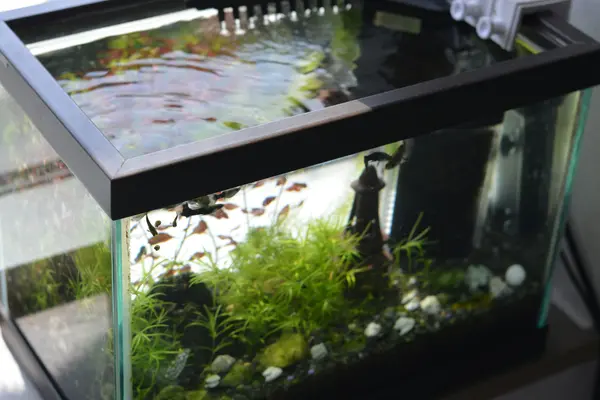
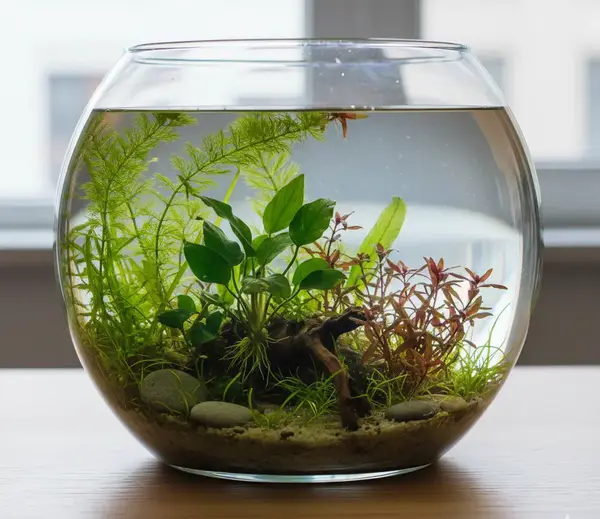
- Structural Enrichment: Use driftwood, caves, and live plants. A complex environment allows a fish to make choices about where to hide and explore. A fish that can choose its environment is a more confident and less stressed fish.
- Dietary Enrichment: Avoid a monotonous diet. Use frozen foods, live blackworms, or veggie clips. Foraging for food provides mental stimulation that surface-gulping does not. You can even hide food inside objects to force the fish to figure out how to get it.
- Social Enrichment: Research your species thoroughly. Does your fish need a school of six to feel safe? Or is it a solitary predator that feels invaded by others? For schooling fish, the presence of their own kind is the ultimate form of enrichment.
Humane Husbandry and Ethical Tank Sizing
The old one inch of fish per gallon rule is an outdated relic. It ignores the emotional and behavioral needs of the animal. A small, active fish like a Danio might be tiny, but it needs a long tank to satisfy its urge to sprint. Similarly, a highly intelligent fish like a Puffer requires a much larger space than its size would suggest simply because it needs more room to explore and stay mentally engaged.
Clean water is also the foundation of mental health. High nitrates do not just hurt gills; they cause a dulling of the senses and chronic lethargy. If you want your fish to exhibit their full range of "feelings" and personality, you must provide them with the pristine water they evolved for. A clean tank is a happy tank, but a complex tank is a meaningful home.
Common Myths About Fish Emotions Debunked
To truly understand our aquatic pets, we have to unlearn years of anecdotal misinformation. These myths have often been used to justify poor keeping conditions, but science tells a different story.
Myth 1: Fish Have a Three-Second Memory
This is perhaps the most persistent myth in the hobby. If fish had three-second memories, they would be unable to learn where food is, recognize their owners, or navigate complex reef systems. Research published in Animal Cognition has shown that fish can remember specific tasks, predators, and social partners for months or even years.
Myth 2: Fish Cannot Feel Pain Because They Do Not Scream
Humans are hardwired to recognize vocalizations of distress. Because fish live in a silent world and lack vocal cords, we historically assumed they were not suffering. However, the physiological response to a hook or a wound is identical to that of a mammal. Just because the response is silent does not mean it is absent.
Myth 3: Cold-Blooded Animals Are Emotionally Cold
Being ectothermic (cold-blooded) simply means an animal regulates its body temperature through the environment. It has nothing to do with the complexity of the nervous system or the ability to process chemicals like dopamine and oxytocin. In fact, many cold-blooded species show higher levels of social cooperation than some mammals.
Conclusion: The Reward of a Feeling Aquarium
So, do fish have feelings? The evidence, from the nociceptors in their skin to the coordinated hunting of the Grouper, points to a clear yes. They may not experience the world exactly as we do, but they feel the sting of pain, the fog of boredom, and the spark of recognition. They are not merely biological machines; they are subjective observers of their underwater worlds.
When you start treating your fish as sentient beings, the hobby changes. You stop looking at the tank as furniture and start seeing it as a community of individuals. You will notice the personality of your Betta, the bravery of your lead Tetra, and the contentment of your well-fed catfish. By focusing on enrichment and social needs, you are not just an aquarium owner; you are a guardian of aquatic well-being. This shift in perspective makes the hobby more challenging, but infinitely more rewarding.
FAQ: Your Questions on Fish Sentience
Do fish feel love for their owners?
While fish might not experience love in the complex, romanticized way humans do, they certainly experience attachment and preference. They can identify their primary caregiver and show signs of excitement and safety in their presence. This bond is built on trust and the consistent positive reinforcement of feeding and care.
Can a fish be lonely?
For schooling species like Neon Tetras or Corydoras, the answer is yes. Social isolation causes a measurable spike in stress hormones. While they may not feel the existential loneliness humans do, they feel a deep sense of vulnerability and anxiety when they are not surrounded by their own kind.
Do fish have unique personalities?
Absolutely. Scientific studies on fish personality (often called behavioral syndromes) show that individuals within the same species consistently rank differently in terms of boldness, aggression, and curiosity. You might have one Guppy that is a brave explorer and another that is shy and prefers the cover of plants.
Do fish remember being caught or moved?
Yes. Fish exhibit learned avoidance. If a fish has a negative experience with a net or a specific area of the tank, it will often avoid that object or location for a long period. This indicates that the memory of the stressful event is stored and used to guide future behavior.
How can I tell if my fish is bored?
Boredom in fish usually manifests as glass surfing (swimming up and down the glass repeatedly) or total lethargy. If your water quality is perfect and your fish still seems listless, it is likely lacking mental stimulation. Adding new decor, changing the flow pattern, or introducing live food can often cure this.