
While not a true aquatic plant, the sweet potato is widely used in the hobby for aquaponics and extreme nitrate reduction. The tuber or a cutting is suspended at the water's surface, allowing an extensive, dense root system to grow down into the water column while the leafy vines grow entirely emersed above the tank. The massive root network provides excellent refuge for fry and shrimp while rapidly absorbing excess nutrients.
Sweet Potato At a Glance
Sweet Potato Care and Setup
Layout Fit
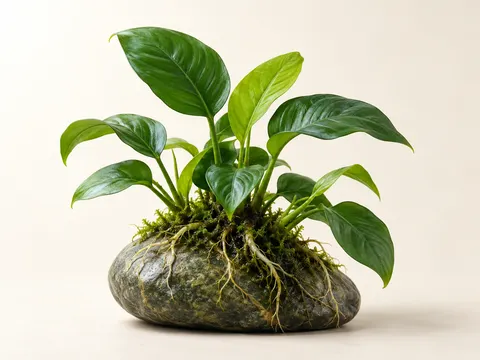
Sweet Potato usually works best attached to wood or stone in the background and needs enough room to mature at about 60 cm tall and 30 cm wide.
Water Window
Aim for freshwater conditions with gentle water movement, plus 20 to 30 °C, pH 5.5 to 7.5, and 2 to 15 dGH.
Upkeep Rhythm
Expect fast growth with moderate maintenance. Plan to trim and thin it regularly so it does not crowd slower plants.
Sweet Potato Care Guide Summary
The Sweet Potato is a specialty aquarium plant that usually works best attached to wood or stone in the background. Give it room to reach about 60 cm tall and 30 cm wide, so the mature plant still fits the layout. It tends to look its best when the light, feeding, and trimming routine stay predictable from week to week. In day-to-day care, it responds best to moderate light, freshwater conditions, and gentle water movement. It usually grows well without added CO2. Keep this species within a comfortable range of 20 to 30 °C, pH 5.5 to 7.5, and 2 to 15 dGH.
Sweet Potato Planting, Feeding & Maintenance
The Sweet Potato does best when the setup matches the way it naturally grows. It should be tied or wedged to wood or stone until the roots grip securely. Most of its nutrition comes from the water column, so steady liquid fertilization matters more than heavy root feeding. It does not need a nutrient substrate to stay viable in an aquarium. Keep the routine steady: moderate light and high nutrient demand usually give better results than big swings from week to week. This plant can also adapt to emersed growth, which is useful for growers who propagate outside the display tank.
Supplies for Sweet Potato
We may earn from qualifying purchases

Best Use Case for Sweet Potato
Sweet Potato is usually at its best when you want a background and attached to hardscape plant with moderate light demands and a moderate maintenance rhythm that fits into a real weekly routine. It is especially useful when you want a plant that keeps doing its job even in a busier community tank.
Sweet Potato Compatibility
Use these signals as quick context, not hard rules. They help you judge how well Sweet Potato is likely to stay in place, tolerate curious fish, and contribute real cover in a mixed planted tank.
Aquarium Benefits
The Sweet Potato can work very well in a mixed tank, but its value depends on how well it handles fish pressure and how much usable cover it really provides. It is less likely to be chewed by curious fish, and its standard leaves usually help it hold up in calm community tanks. Once rooted or attached, it is relatively dependable and easier to keep in place around more active fish. It creates meaningful shelter for fry, shrimp, and cautious fish. Its canopy can shade neighboring plants, so leave space around lower growers that need direct light. Aquarists also lean on it for shelter for fry, shelter for shrimp, surface cover, breaking up sight lines, and a useful spawning site, not just for appearance.
Sweet Potato Propagation
This species is usually propagated by stem cuttings and bulb division. With fast growth and moderate upkeep, it can overtake nearby space if you let maintenance slide. That gives you a better sense of whether simple trimming is enough or whether it is smarter to plan division, replanting, or thinning before the layout closes in.
Frequently Asked Questions About Sweet Potato
Is Sweet Potato a good beginner aquarium plant?
It sits somewhere in the middle. As a beginner species with moderate maintenance needs, it is a better fit once you already have the basics of light, feeding, and trimming under control.
Where should Sweet Potato be placed in an aquarium?
This plant usually looks best attached to wood or stone in the background. At full size it can reach about 60 cm tall by 30 cm wide, so leave room for it to mature. It is best tied or wedged onto wood or stone.
Does Sweet Potato need strong light or CO2?
For the best results, provide it with moderate lighting. Additionally, it usually grows well without added CO2.
What water conditions suit Sweet Potato?
Aim for freshwater conditions, gentle water movement, and a range around 20 to 30 °C, pH 5.5 to 7.5, and 2 to 15 dGH to keep this species inside its comfort zone.
How does Sweet Potato spread or help the aquarium?
It is usually propagated by stem cuttings and bulb division. In the display tank, aquarists value this plant for shelter for fry, shelter for shrimp, surface cover, breaking up sight lines, and a useful spawning site.
Plant care products
We may earn from qualifying purchases


Guidarium Editorial Desk
Reviewed against Guidarium care, stocking, and compatibility standards. Read the editorial policy.
- Last reviewed
- April 21, 2026
- Last updated
- April 21, 2026
- Issues or corrections?
- Contact the editorial team
Plants That Grow Well With Sweet Potato
These plants share compatible water parameters and growth habits with Sweet Potato, making them reliable companions in a shared aquascape.
Amazon Frogbit
Limnobium laevigatum
Asian Watergrass
Hygroryza aristata
Asian Watermoss
Salvinia cucullata
Floating Fern
Salvinia natans
Floating Water Sprite
Ceratopteris cornuta
Red Root Floater
Phyllanthus fluitans
Side-by-side comparisons for Sweet Potato
These guides compare Sweet Potato directly with another plant, helping you choose between similar roles, care needs, and layout tradeoffs.
Congo Anubias
Anubias heterophylla
Pothos
Epipremnum aureum
Afzel's Anubias
Anubias afzelii
Anubias Barteri
Anubias barteri
Gillet's Anubias
Anubias gilletii
Java Fern
Leptochilus pteropus
Fish That Suit Sweet Potato
These fish pair well with Sweet Potato based on shared water preferences and temperament, helping you build a balanced tank around this plant.
Rhomb Barb
Desmopuntius rhomboocellatus
Red Dwarf Rasbora
Microrasbora rubescens
Steindachner Dwarf Cichlid
Apistogramma steindachneri
Rio Negro Dwarf Cichlid
Ivanacara adoketa
Red Breasted Acara
Laetacara dorsigera
Freshwater Toadfish (Prehistoric Monster Fish)
Thalassophryne amazonica
Related plant profiles
These cards open plant profiles directly. They are chosen by overall care, layout, and growth-pattern similarity, rather than a side-by-side comparison guide.
Hornwort
Ceratophyllum demersum
An incredibly fast-growing, fully aquatic, rootless stem plant. Hornwort acts as a massive nutrient sponge, absorbing compounds directly from the water column. Because it completely lacks true roots, it is biologically a floating plant and will rot at the base if buried in substrate. While it can be wedged into hardscape or weighted down, it is most successfully utilized left free-floating. It is highly valued in breeding setups, as its dense, needle-like foliage provides an exceptional refuge for fry and shrimp. It is sensitive to sudden changes in water parameters and may temporarily shed its needles if shocked, but usually recovers quickly.
Spatterdock
Nuphar japonica
Nuphar japonica is a striking aquatic plant known for its beautiful, translucent, arrow-shaped submerged leaves. Grown from a thick, fleshy rhizome or tuber, it requires a nutrient-rich substrate to thrive. If left unpruned, it may send floating lily pads to the surface, but pruning these surface leaves encourages a lush, bushy, submerged growth form. Its delicate leaves are highly palatable and prone to being eaten by herbivorous fish and large snails.
Banana Plant
Nymphoides aquatica
The Banana Plant is a unique, eye-catching aquarium plant famous for its cluster of thick, banana-shaped root tubers that store nutrients. It initially produces light green, heart-shaped submerged leaves and will rapidly shoot lily-like pads to the water surface if allowed. To maintain bushy submerged growth, surface-reaching leaves should be routinely trimmed.
Pothos
Epipremnum aureum
A highly popular trailing vine widely used in the aquarium hobby as a riparium or emergent plant. While its leaves will rot if kept submerged permanently, the plant thrives when its roots are suspended in the aquarium water column (often placed in hang-on-back filters or clipped to the rim). It acts as an incredibly powerful natural filter by rapidly consuming excess nitrates, while its dense aquatic root system provides excellent cover for fry and shrimp.
Floating Fern
Salvinia natans
Salvinia natans is a fast-growing, rootless floating fern characterized by small, oval leaves covered in water-repellent hairs. It is excellent for absorbing excess nutrients from the water column and providing a secure canopy for shy fish and fry, but it requires regular culling to prevent it from completely blocking light to submerged plants.
Anacharis
Egeria densa
Egeria densa, commonly known as Anacharis or Brazilian Waterweed, is a very fast-growing and extremely popular stem plant. It is widely recommended for beginners due to its hardiness, vigorous nutrient absorption, and excellent water oxygenation capabilities. While usually planted in bunches in the substrate, it draws almost all of its nutrients from the water column. It thrives in cooler water, making it a staple for unheated tanks, though its delicate leaves make it highly palatable to goldfish, turtles, and other herbivorous species.