
Violet Goby (Dragon Goby)
Gobioides broussonnetii
Often misunderstood due to its terrifying 'Dragon' appearance and sharp teeth, the Violet Goby is actually a gentle, nearly blind scavenger and filter feeder. It uses its teeth to scrape algae, not to bite fish. It requires brackish water to thrive long-term and fine sand to sift through for food. It is not a predator.
Violet Goby (Dragon Goby) At a Glance
Violet Goby (Dragon Goby) Tank Requirements
Will Violet Goby (Dragon Goby) fit in your tank?
Care guides tell you what Violet Goby (Dragon Goby) needs, the next question is whether your tank can safely provide it. Test Violet Goby (Dragon Goby) against your tank size, maintenance needs, and the fish you already keep before you buy.
Violet Goby (Dragon Goby) Water Parameters
Violet Goby (Dragon Goby) Temperament & Compatibility
Violet Goby (Dragon Goby) Varieties
Each variety inherits the species defaults above. Only differences are highlighted.
Adult (Standard)
The full-grown adult form. Requires specific brackish conditions (SG 1.005-1.010) and a large footprint. Despite its size, it is peaceful towards even small fish (Guppies/Mollies), though it may accidentally suck up tiny fry while sifting.
Differs in 1 trait from base species
Juvenile (Grow-out)
The size typically sold in stores (10-15cm). Often kept in freshwater at the store, but must be transitioned to brackish water for long-term health. Grows steadily.
Differs in 5 traits from base species
Also known as: Baby Dragon Goby
Violet Goby (Dragon Goby) Care Guide Summary
The Violet Goby (Dragon Goby), scientifically known as Gobioides broussonnetii, belongs to the Gobies & Gudgeons family group. Adults reach a maximum size of approximately 50 cm and have a eel body shape with a moderate growth rate. Classified as peaceful, this species primarily occupies the bottom zone of the aquarium and produces a medium level of biological waste.
To thrive, the Violet Goby (Dragon Goby) requires a brackish required aquarium with a minimum volume of 200 litres and a tank length of at least 120 cm. Water temperature should be maintained between 23°C and 28°C, with a pH range of 7.5–8.5 and a general hardness of 12–25 dGH. A moderate water flow is preferred.
Due to its specialist needs, the Violet Goby (Dragon Goby) is best suited for fishkeepers who can provide a carefully planned setup. This species is available in 2 varieties: Adult (Standard) and Juvenile (Grow-out). Each may differ slightly in size, temperament, or care needs, so it is worth checking the specific requirements of the variety you plan to keep.
Violet Goby (Dragon Goby) Habitat Setup
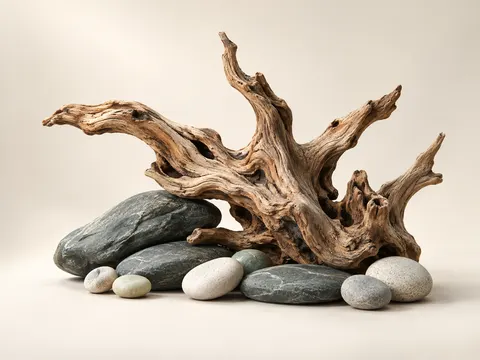
When setting up an aquarium for the Violet Goby (Dragon Goby), a moderate water flow best suits their natural preferences. Because this species occupies the bottom zone, the aquarium layout should prioritise sufficient floor space with hiding spots among rocks, wood, or dense planting. Useful additions include a sand substrate to accommodate their sifting behaviour, driftwood, which can serve as both a hiding place and a dietary supplement, and shells for breeding and shelter. Keepers should note that expect substrate disturbance, so lightweight décor should be secured.
Supplies for Violet Goby (Dragon Goby)
We may earn from qualifying purchases

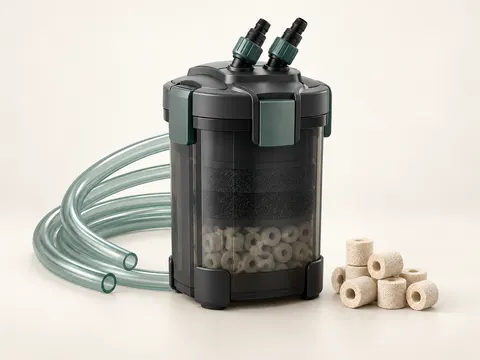

Violet Goby (Dragon Goby) Compatibility Notes
Classified as peaceful, the Violet Goby (Dragon Goby) is adaptable and can be kept singly or in a small group, offering flexibility when planning a community tank. When choosing tankmates, boisterous or fast-moving tankmates may cause this species undue stress. Selecting tankmates that favour different water layers from the bottom zone can help reduce competition and territorial overlap.
Who Violet Goby (Dragon Goby) Is Actually For
Violet Goby (Dragon Goby) is best for a fishkeeper who wants a species that can settle into a calmer community setup and can provide someone who understands its individual space requirements. It makes the most sense for a hobbyist who will actually build around its needs, especially sand.
The most common mistake is treating Violet Goby (Dragon Goby) like any other community fish and skipping the soft sand it needs to forage safely. Another frequent problem is forcing it into an over-busy community when it would do better with more room or more deliberate tankmate choices.
Violet Goby (Dragon Goby) Recommended Tank Sizes
Standard aquarium sizes that meet the minimum volume and length requirements for Violet Goby (Dragon Goby).
55 Gallon Standard
60 Gallon Breeder
75 Gallon Standard
90 Gallon Standard
125 Gallon Standard
150 Gallon High
Frequently Asked Questions About Violet Goby (Dragon Goby)
How big does Violet Goby (Dragon Goby) get?
Violet Goby (Dragon Goby) (Gobioides broussonnetii) typically reaches a maximum adult size of approximately 50 cm. They have a eel body shape and a moderate growth rate.
What tank size does Violet Goby (Dragon Goby) need?
A minimum aquarium volume of 200 litres and a tank length of at least 120 cm are recommended for Violet Goby (Dragon Goby). This ensures enough swimming space and helps maintain stable water conditions.
What water parameters does Violet Goby (Dragon Goby) need?
Violet Goby (Dragon Goby) thrives in brackish required conditions with a temperature range of 23–28°C, a pH between 7.5 and 8.5, and a general hardness of 12–25 dGH. A moderate water flow is preferred.
Is Violet Goby (Dragon Goby) peaceful or aggressive?
Violet Goby (Dragon Goby) is classified as peaceful with an aggression score of 2 out of 10. They are generally well-suited to peaceful community tanks.
Can Violet Goby (Dragon Goby) live alone?
Yes, Violet Goby (Dragon Goby) can be kept singly or in a group. They are flexible and adapt well to both setups.
Does Violet Goby (Dragon Goby) have any special tank requirements?
Yes. Violet Goby (Dragon Goby) benefits from sand (sifters), shells (breeding/hiding), and driftwood (digestion/hiding) in the aquarium. These features help replicate their natural habitat and promote overall health and well-being.
Useful setup supplies
We may earn from qualifying purchases




Guidarium Editorial Desk
Reviewed against Guidarium care, stocking, and compatibility standards. Read the editorial policy.
- Last reviewed
- April 28, 2026
- Last updated
- April 28, 2026
- Issues or corrections?
- Contact the editorial team
Top Tank Mates for Violet Goby (Dragon Goby)
These fish are strong compatibility matches for Violet Goby (Dragon Goby) based on water preferences, temperament, adult size, and tank behavior.
Lesser Spiny Eel
Macrognathus aculeatus
Ideal Tank MatesFreshwater Flounder
Trinectes maculatus
Ideal Tank MatesHorned Nerite Snail
Clithon corona
Ideal Tank MatesLeast Killifish (Heterandria)
Heterandria formosa
Ideal Tank MatesBumblebee Goby (Brackish)
Brachygobius xanthozonus
Ideal Tank MatesPlants That Suit Violet Goby (Dragon Goby)
These plants pair well with Violet Goby (Dragon Goby) based on shared water preferences, layout fit, and how likely they are to hold up in the same aquarium.
Java Fern
Leptochilus pteropus
Java Moss
Taxiphyllum barbieri
Dwarf Sagittaria
Sagittaria subulata
Italian Val
Vallisneria spiralis
Jungle Val
Vallisneria americana
Lemon Bacopa
Bacopa caroliniana
Fish Similar to Violet Goby (Dragon Goby)
Peacock Gudgeon
Tateurndina ocellicauda
A stunning, peaceful freshwater sleeper goby from Papua New Guinea. Known for their vibrant blue, red, and yellow colors, they are excellent nano-tank inhabitants. They are not true gobies (they lack fused pelvic fins) and are exclusively freshwater. They prefer slow-moving water, dense vegetation, and small caves (like PVC pipes or smooth stones) for spawning.
Bumblebee Goby (Brackish)
Brachygobius xanthozonus
A miniature, bottom-dwelling goby famous for its striking black and yellow stripes. While they are often sold as freshwater fish and can survive in it temporarily, they are highly susceptible to fungal infections in fresh water and truly require a brackish setup (SG 1.002-1.005) to thrive long-term. They are notoriously picky eaters, often ignoring flakes in favor of live or frozen foods (like bloodworms or brine shrimp).
Asian Arowana
Scleropages formosus
A highly prized, CITES-protected 'monster fish' known as the Dragon Fish. They are powerful, surface-dwelling predators that require massive aquariums and pristine water quality. Notorious jumpers, they require heavy, secure lids. Because of intense territoriality, they must be kept strictly solitary or in large 'comm' (community) groups of 5+ to disperse aggression.
Marble Goby
Oxyeleotris marmorata
The Marble Goby (Soon Hock) is one of the largest freshwater gobies in the world. As a strictly carnivorous, nocturnal ambush predator, it is incredibly inactive during the day but will swallow any tankmate that fits into its massive mouth. Due to its enormous adult size, it is strictly a 'monster fish' and requires highly specialized care and heavy filtration.
Neon Blue Goby
Stiphodon atropurpureus
A stunning, specialized freshwater goby native to fast-flowing hill streams in Asia. Males display brilliant neon blue metallic coloration, while females are striped. They are specialized biofilm grazers ('Aufwuchs' eaters) and require mature tanks with established algae/biofilm stones. They are obligate stream dwellers requiring high oxygen and strong flow.
Knight Goby
Stigmatogobius sadanundio
A distinct, high-bodied goby found in estuaries across South Asia. Unlike most bottom-dwelling gobies, the Knight Goby frequently hovers in the water column. While often sold as freshwater fish, they thrive best in slightly brackish water (SG 1.003-1.005) or very hard, alkaline freshwater. They are territorial and notorious fin-nippers, making them poor tankmates for Guppies or Bettas.