
Upside Down Catfish
Synodontis nigriventris
A fascinating West African catfish famous for its unique habit of swimming, feeding, and resting upside down under broad leaves or driftwood. It is a peaceful, schooling species that is most active at dusk and night. They must be kept in groups to feel secure. Note: Ensure you are buying true S. nigriventris (max 10cm) and not misidentified juvenile Featherfin Squeakers (S. eupterus), which grow over 20cm.
Upside Down Catfish At a Glance
Upside Down Catfish Tank Requirements
Will Upside Down Catfish fit in your tank?
Care guides tell you what Upside Down Catfish needs, the next question is whether your tank can safely provide it. Test Upside Down Catfish against your tank size, maintenance needs, and the fish you already keep before you buy.
Upside Down Catfish Water Parameters
Upside Down Catfish Temperament & Compatibility
Upside Down Catfish Varieties
Each variety inherits the species defaults above. Only differences are highlighted.
Standard
The standard true Upside Down Catfish. Their bellies are darker than their backs (countershading reversal), an evolutionary adaptation to their upside-down lifestyle. Must be kept in groups with plenty of broad-leafed plants (like Anubias) or driftwood overhangs.
Differs in 1 trait from base species
Also known as: Wild Type
Upside Down Catfish Care Guide Summary
The Upside Down Catfish, scientifically known as Synodontis nigriventris, belongs to the Catfish family group. Adults reach a maximum size of approximately 9.6 cm and have a fusiform body shape with a moderate growth rate. Classified as peaceful, this species primarily occupies the mid-level and bottom zones of the aquarium and produces a medium level of biological waste.
To thrive, the Upside Down Catfish requires a freshwater only aquarium with a minimum volume of 75 litres and a tank length of at least 60 cm. Water temperature should be maintained between 22°C and 26°C, with a pH range of 6–7.5 and a general hardness of 4–15 dGH. A moderate water flow is preferred.
Due to its specialist needs, the Upside Down Catfish is best suited for fishkeepers who can provide a carefully planned setup. The Upside Down Catfish is typically available in one standard form.
Upside Down Catfish Habitat Setup
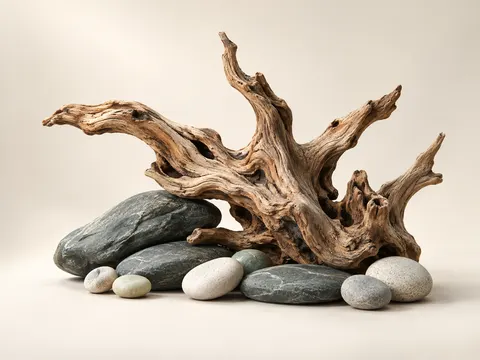
When setting up an aquarium for the Upside Down Catfish, a moderate water flow best suits their natural preferences. Because this species occupies the mid-level and bottom zones, the aquarium layout should prioritise open swimming space in the centre of the tank for free movement and sufficient floor space with hiding spots among rocks, wood, or dense planting. Useful additions include driftwood, which can serve as both a hiding place and a dietary supplement, dense planting to provide cover, break sightlines, and reduce stress, and floating plants to diffuse overhead light and create shaded areas.
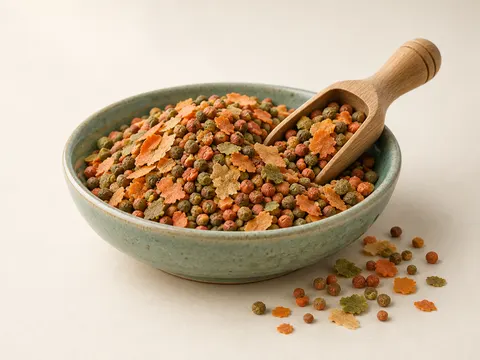
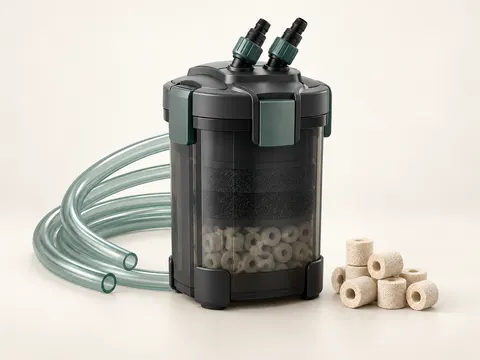
Supplies for Upside Down Catfish
We may earn from qualifying purchases

Upside Down Catfish Compatibility Notes
Classified as peaceful, the Upside Down Catfish is a social species that requires the company of its own kind to thrive. When choosing tankmates, boisterous or fast-moving tankmates may cause this species undue stress. Selecting tankmates that favour different water layers from the mid-level and bottom zones can help reduce competition and territorial overlap.
Who Upside Down Catfish Is Actually For
Upside Down Catfish is best for a fishkeeper who wants a species that can settle into a calmer community setup and can provide a keeper who can commit to a proper group of at least 4. It makes the most sense for a hobbyist who will actually build around its needs, especially driftwood.
The most common mistake is buying Upside Down Catfish for looks first and only later discovering how its adult size, behavior, or bioload changes the whole tank plan. Another frequent problem is underestimating its social needs. A token pair or trio often behaves very differently from a real group.
Upside Down Catfish Recommended Tank Sizes
Standard aquarium sizes that meet the minimum volume and length requirements for Upside Down Catfish.
20 Gallon High
20 Gallon Long
29 Gallon Standard
30 Gallon Breeder
36 Gallon Bowfront
40 Gallon Breeder
Show 17 more tank sizes
Frequently Asked Questions About Upside Down Catfish
How big does Upside Down Catfish get?
Upside Down Catfish (Synodontis nigriventris) typically reaches a maximum adult size of approximately 9.6 cm. They have a fusiform body shape and a moderate growth rate.
What tank size does Upside Down Catfish need?
A minimum aquarium volume of 75 litres and a tank length of at least 60 cm are recommended for Upside Down Catfish. This ensures enough swimming space and helps maintain stable water conditions.
What water parameters does Upside Down Catfish need?
Upside Down Catfish thrives in freshwater only conditions with a temperature range of 22–26°C, a pH between 6 and 7.5, and a general hardness of 4–15 dGH. A moderate water flow is preferred.
Is Upside Down Catfish peaceful or aggressive?
Upside Down Catfish is classified as peaceful with an aggression score of 2 out of 10. They are generally well-suited to peaceful community tanks.
Can Upside Down Catfish live alone?
No, Upside Down Catfish should be kept in groups of at least 4 to reduce stress and encourage natural behaviour.
Does Upside Down Catfish have any special tank requirements?
Yes. Upside Down Catfish benefits from driftwood (digestion/hiding), plants - densely covered, and plants - floating in the aquarium. These features help replicate their natural habitat and promote overall health and well-being.
Useful setup supplies
We may earn from qualifying purchases




Guidarium Editorial Desk
Reviewed against Guidarium care, stocking, and compatibility standards. Read the editorial policy.
- Last reviewed
- May 11, 2026
- Last updated
- May 11, 2026
- Issues or corrections?
- Contact the editorial team
Top Tank Mates for Upside Down Catfish
These fish are strong compatibility matches for Upside Down Catfish based on water preferences, temperament, adult size, and tank behavior.
Marbled Hatchetfish
Carnegiella strigata
Ideal Tank MatesClown Killifish
Epiplatys annulatus
Ideal Tank MatesSpotted Hillstream Loach
Gastromyzon punctulatus
Ideal Tank MatesTrapdoor Snail
Cipangopaludina chinensis
Ideal Tank MatesWhite Cheeked Goby
Rhinogobius duospilus
Ideal Tank MatesTiger Pleco (L002)
Panaqolus sp. L002
Ideal Tank MatesPlants That Suit Upside Down Catfish
These plants pair well with Upside Down Catfish based on shared water preferences, layout fit, and how likely they are to hold up in the same aquarium.
Afzel's Anubias
Anubias afzelii
Amazon Sword
Echinodorus amazonicus
Anacharis
Egeria densa
Anubias Barteri
Anubias barteri
Baby Tears
Lindernia rotundifolia
Balansae
Cryptocoryne crispatula
Fish Similar to Upside Down Catfish
Common Synodontis (False Upside Down Catfish)
Synodontis nigrita
A robust and adaptable African catfish often mistaken for the true Upside-Down Catfish (Synodontis nigriventris). Unlike its smaller cousin, S. nigrita grows quite large (up to 20-22cm) and adults rarely swim inverted. They are nocturnal scavengers that are generally peaceful towards larger tank mates, but their predatory nature means they will consume small schooling fish (like Neon Tetras) at night.
Asian Upside Down Catfish
Mystus leucophasis
A fascinating but highly aggressive bagrid catfish from Myanmar that spends almost its entire life swimming inverted. Unlike the peaceful African Synodontis upside-down catfish, the Asian variety grows large, is fiercely territorial, and will predate on smaller tank mates. They require ample driftwood or caves to rest underneath during the day.
Domino Synodontis
Synodontis notatus
A large, unusually active and diurnal upside-down catfish from the Congo Basin. They are characterized by a grey-brown body with one or more prominent dark spots. While peaceful with robust community fish, they are highly territorial toward other Synodontis species and will opportunistically eat small fish. They are more active in the mid-water column than most of their relatives.
Midnight Catfish
Auchenipterichthys coracoideus
A secretive, nocturnal driftwood catfish native to the Amazon. Aptly named for its dark blue-grey body speckled with white 'stars', it is completely peaceful towards suitably sized tank mates. However, it is an opportunistic predator at night and will consume small fish (like Neon Tetras) and shrimp that fit into its mouth. It requires subdued lighting and ample hiding spots, particularly hollow driftwood.
Twig Catfish
Farlowella vittata
A highly specialized, peaceful Loricariid that perfectly mimics a submerged twig to hide from predators. Extremely slender and heavily reliant on grazing natural algae and biofilm from driftwood and plant leaves. They are highly sensitive to fluctuating water parameters and are easily outcompeted for food by faster tank mates.
Twig Catfish (Farlowella)
Farlowella acus
The Twig Catfish is an extremely elongated, master-of-camouflage suckermouth catfish from South America. True to its name, it mimics a dead twig perfectly, spending most of its time motionless on branches or plant leaves. It is a specialized aufwuchs and algae grazer that requires a mature tank, high oxygenation, and plenty of driftwood. They are completely peaceful but highly sensitive to fluctuating water parameters.