
Glass Catfish
Kryptopterus vitreolus
A highly unique, completely transparent catfish from Thailand. Unlike most catfish, they are mid-water swimmers that require being kept in schools to feel secure. They are incredibly peaceful and easily outcompeted for food. They require stable water parameters and dim lighting or shaded areas provided by floating plants.
Glass Catfish At a Glance
Glass Catfish Tank Requirements
Will Glass Catfish fit in your tank?
Care guides tell you what Glass Catfish needs, the next question is whether your tank can safely provide it. Test Glass Catfish against your tank size, maintenance needs, and the fish you already keep before you buy.
Glass Catfish Water Parameters
Glass Catfish Temperament & Compatibility
Glass Catfish Varieties
Each variety inherits the species defaults above. Only differences are highlighted.
Standard
The standard transparent Glass Catfish. Highly gregarious; it must be kept in a group of at least 5 (preferably 6+) to prevent extreme stress and wasting away. Often faces directly into the flow of the filter output.
Differs in 1 trait from base species
Also known as: Wild Type
Glass Catfish Care Guide Summary
The Glass Catfish, scientifically known as Kryptopterus vitreolus, belongs to the Catfish family group. Adults reach a maximum size of approximately 8 cm and have a compressed body shape with a moderate growth rate. Classified as peaceful, this species primarily occupies the mid-level zone of the aquarium and produces a low level of biological waste.
To thrive, the Glass Catfish requires a freshwater only aquarium with a minimum volume of 110 litres and a tank length of at least 90 cm. Water temperature should be maintained between 24°C and 28°C, with a pH range of 6–7 and a general hardness of 1–10 dGH. A moderate water flow is preferred.
The Glass Catfish is a rewarding species to keep, provided its core environmental needs are met. The Glass Catfish is typically available in one standard form.
Glass Catfish Habitat Setup
When setting up an aquarium for the Glass Catfish, a moderate water flow best suits their natural preferences. Because this species occupies the mid-level zone, the aquarium layout should prioritise open swimming space in the centre of the tank for free movement. Useful additions include dense planting to provide cover, break sightlines, and reduce stress and floating plants to diffuse overhead light and create shaded areas.
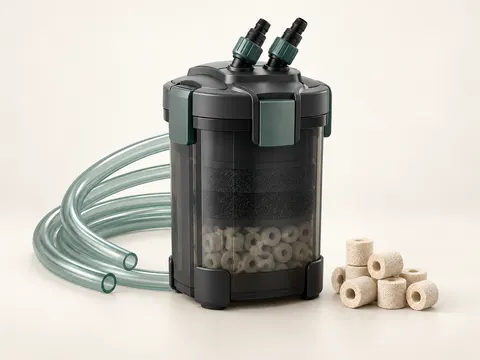
Supplies for Glass Catfish
We may earn from qualifying purchases



Glass Catfish Compatibility Notes
Classified as peaceful, the Glass Catfish is a social species that requires the company of its own kind to thrive. When choosing tankmates, boisterous or fast-moving tankmates may cause this species undue stress. Selecting tankmates that favour different water layers from the mid-level zone can help reduce competition and territorial overlap.
Who Glass Catfish Is Actually For
Glass Catfish is best for a fishkeeper who wants a species that can settle into a calmer community setup and can provide a keeper who can commit to a proper group of at least 5. It makes the most sense for a hobbyist who will actually build around its needs, especially plants.
The most common mistake is buying Glass Catfish for looks first and only later discovering how its adult size, behavior, or bioload changes the whole tank plan. Another frequent problem is underestimating its social needs. A token pair or trio often behaves very differently from a real group.
Glass Catfish Recommended Tank Sizes
Standard aquarium sizes that meet the minimum volume and length requirements for Glass Catfish.
30 Gallon Breeder
40 Gallon Breeder
55 Gallon Standard
60 Gallon Breeder
75 Gallon Standard
90 Gallon Standard
Show 10 more tank sizes
Frequently Asked Questions About Glass Catfish
How big does Glass Catfish get?
Glass Catfish (Kryptopterus vitreolus) typically reaches a maximum adult size of approximately 8 cm. They have a compressed body shape and a moderate growth rate.
What tank size does Glass Catfish need?
A minimum aquarium volume of 110 litres and a tank length of at least 90 cm are recommended for Glass Catfish. This ensures enough swimming space and helps maintain stable water conditions.
What water parameters does Glass Catfish need?
Glass Catfish thrives in freshwater only conditions with a temperature range of 24–28°C, a pH between 6 and 7, and a general hardness of 1–10 dGH. A moderate water flow is preferred.
Is Glass Catfish peaceful or aggressive?
Glass Catfish is classified as peaceful with an aggression score of 1 out of 10. They are generally well-suited to peaceful community tanks.
Can Glass Catfish live alone?
No, Glass Catfish should be kept in groups of at least 5 to reduce stress and encourage natural behaviour.
Does Glass Catfish have any special tank requirements?
Yes. Glass Catfish benefits from plants - densely covered and plants - floating in the aquarium. These features help replicate their natural habitat and promote overall health and well-being.
Useful setup supplies
We may earn from qualifying purchases




Guidarium Editorial Desk
Reviewed against Guidarium care, stocking, and compatibility standards. Read the editorial policy.
- Last reviewed
- April 28, 2026
- Last updated
- April 28, 2026
- Issues or corrections?
- Contact the editorial team
Top Tank Mates for Glass Catfish
These fish are strong compatibility matches for Glass Catfish based on water preferences, temperament, adult size, and tank behavior.
Tiger Pleco (L002)
Panaqolus sp. L002
Ideal Tank MatesStarlight Bristlenose Pleco (L183)
Ancistrus dolichopterus
Ideal Tank MatesSpotted Raphael Catfish
Agamyxis pectinifrons
Ideal Tank MatesParallel Cory
Corydoras parallelus
Ideal Tank MatesPurple Zebra Shrimp
Potamalpheops sp.
Ideal Tank MatesPeppermint Pleco
Parancistrus nudiventris
Ideal Tank MatesPlants That Suit Glass Catfish
These plants pair well with Glass Catfish based on shared water preferences, layout fit, and how likely they are to hold up in the same aquarium.
Afzel's Anubias
Anubias afzelii
Amazon Sword
Echinodorus amazonicus
Anacharis
Egeria densa
Anubias Barteri
Anubias barteri
Baby Tears
Lindernia rotundifolia
Balansae
Cryptocoryne crispatula
Fish Similar to Glass Catfish
False Glass Catfish
Kryptopterus macrocephalus
A fascinating, semi-transparent schooling catfish from Southeast Asia. Unlike the more common Ghost Catfish, this species has distinct stripes or mottling along its body. They are incredibly peaceful but timid, requiring heavily planted blackwater setups with dim lighting and a large shoal to feel secure.
Indian Glassfish
Parambassis ranga
The Indian Glassfish is a fascinating schooling fish famous for its completely transparent body, allowing you to see its skeletal structure and internal organs. Originally from South Asia, they are highly adaptable but thrive best in hard, alkaline freshwater or low-end brackish setups. They are timid and must be kept in groups. Note: Artificially injected 'Painted Glassfish' suffer severely reduced immune systems and lifespans; supporting the natural, clear form is strongly recommended.
Debauwi Catfish (Three-Striped Glass Catfish)
Pareutropius buffei
A highly active, diurnal schooling catfish native to West African rivers. Unlike most bottom-dwelling catfish, they continuously swim in the mid-to-upper water column. While often sold in the trade as 'P. debauwi', virtually all specimens are actually 'P. buffei' (distinguished by having three lateral stripes instead of one). They are peaceful, require highly oxygenated water with moderate flow, and absolutely must be kept in groups.
Ghost Shrimp
Palaemonetes paludosus
A completely transparent freshwater shrimp native to the southeastern United States. While frequently sold as inexpensive feeder animals, they make fascinating, active scavengers for nano and peaceful community tanks. They tirelessly consume uneaten food and detritus but have a relatively short lifespan of 1 to 2 years.
Pungas Catfish
Pangasius pangasius
A colossal riverine catfish native to the Indian subcontinent. While highly important for aquaculture, they are disastrous for home aquariums. They grow rapidly to enormous sizes (up to 150-300cm), are easily spooked (often resulting in them ramming the tank glass at high speeds), and will swallow any tank mate that fits in their massive mouths.
Colombian Shark Catfish (Brackish)
Ariopsis seemanni
A highly active, shark-like catfish that undergoes a dramatic physiological change during its life. While often sold as freshwater fish, juveniles require brackish water and adults MUST be transitioned to high-brackish or full marine conditions to survive and prevent disease. They are predatory and will eat any fish small enough to fit in their mouths. Caution: Their dorsal and pectoral spines are venomous.