
Can Freshwater Angelfish and Ramshorn Snail Live Together?
Freshwater Angelfish and Ramshorn Snail are not recommended as tank mates due to piscivorous fish will prey on nano-sized tank mates.. Housing these species together is likely to result in stress, health problems, or direct harm to one or both fish.
At a Glance
Can your tank handle Freshwater Angelfish and Ramshorn Snail?
Compatibility is only part of the answer. Test both fish with your real tank size, current stock, and maintenance needs to see if you have enough space and a safe stocking level before you add them.
Behaviour & Temperament
Freshwater Angelfish is a moderately assertive species (6/10), while Ramshorn Snail is peaceful (0/10). This notable difference means Freshwater Angelfish may occasionally assert dominance over Ramshorn Snail.
Large aggression gap (6 points) between Freshwater Angelfish and Ramshorn Snail increases stress risk for the more peaceful fish.
Freshwater Angelfish and Ramshorn Snail both frequent the Middle (Open Water) and Top (Surface) region of the setup. This overlap can increase competition for space, so providing ample room and cover is important to keep both species comfortable.
There is a critical concern: the Piscivore (Eats small/nano fish) behaviour of one fish directly conflicts with the Nano / Bite-sized (Predation Risk) trait of the other — piscivorous fish will prey on nano-sized tank mates..
Additional behavioural considerations to keep in mind: Shrimp eaters may also prey on very small nano fish.
Water Parameters
The safe temperature window for both species falls between 24°C and 30°C. Aim for the midpoint of this range (around 27.0°C) for optimal comfort.
Both fish can tolerate a pH between 7 and 7.8. Maintaining a stable value within this band is more important than hitting an exact number.
For general hardness, the shared comfort zone is 8–15 dGH. Regular testing will ensure conditions stay within this range.
Tank Setup
To house Freshwater Angelfish and Ramshorn Snail together, plan for an aquarium of at least 150 litres with a minimum length of 90 cm. This recommendation combines the stricter species minimums with a community-load allowance so the pairing has realistic long-term space and filtration headroom.
Providing a mix of open swimming space and sheltered areas with rocks, driftwood, or plants will keep both species comfortable and allow natural behaviour.
Specific environmental needs for this combination include: Plants - Densely covered, Driftwood (Digestion/Hiding), Plants - lighly covered, Established Algae (Otocinclus). Meeting these requirements will help both species thrive.
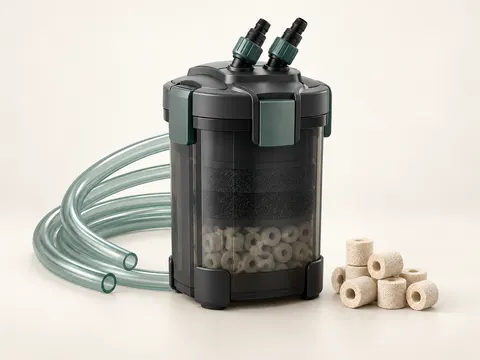
Both species do well with low (still water) water movement, so a standard filtration setup rated for the tank volume should suffice.
Why This Pairing Usually Fails in Practice
Freshwater Angelfish and Ramshorn Snail are the kind of pair that can look acceptable in a shop but become a maintenance problem at home. The main risk is not a single number in the chart; it is the way incompatible behavior, water needs, or pressure on space compounds over time once both fish are established in the same tank.
Supplies for Freshwater Angelfish & Ramshorn Snail
We may earn from qualifying purchases



Suitable Tank Sizes
Standard aquarium sizes large enough for both Freshwater Angelfish and Ramshorn Snail.
40 Gallon Breeder
55 Gallon Standard
60 Gallon Breeder
75 Gallon Standard
90 Gallon Standard
125 Gallon Standard
Show 9 more tank sizes
Diet & Feeding
Feeding time deserves special attention with this pairing. Freshwater Angelfish is a known shrimp eater and may prey on small invertebrates or nano fish like Ramshorn Snail.
Frequently Asked Questions
Can Freshwater Angelfish and Ramshorn Snail live together?
No. This combination is not recommended. Key incompatibilities — such as critical behavioural conflicts — make cohabitation unsafe.
What size tank do Freshwater Angelfish and Ramshorn Snail need?
A minimum of 150 litres (tank length at least 90 cm) is recommended. This provides enough space for both species to establish their own areas and reduces the likelihood of territorial disputes.
What water temperature is best for Freshwater Angelfish and Ramshorn Snail together?
Keep the aquarium between 24°C and 30°C. A target of around 27.0°C sits comfortably within both species' preferred ranges.
Are Freshwater Angelfish or Ramshorn Snail aggressive?
Freshwater Angelfish is moderately assertive (6/10) and Ramshorn Snail is peaceful (0/10). The gap in aggression levels means the calmer fish may experience stress from the more assertive one.
What pH do Freshwater Angelfish and Ramshorn Snail need?
Both species overlap in the 7–7.8 pH range. Consistency is key — avoid sudden swings, and test regularly to stay within this window.
Will Freshwater Angelfish nip Ramshorn Snail's fins?
Freshwater Angelfish is a known fin nipper. If Ramshorn Snail has long or flowing fins, there is a real risk of fin damage. Keeping Freshwater Angelfish in a larger group can help redirect nipping behaviour toward conspecifics.
How do I manage Freshwater Angelfish's territorial behaviour?
Provide line-of-sight breaks using rocks, driftwood, and dense planting. A larger tank gives Freshwater Angelfish space to claim a territory without encroaching on the other fish's area. Adding décor that divides the tank into distinct zones works especially well.
Shared setup supplies
We may earn from qualifying purchases




Guidarium Editorial Desk
Reviewed against Guidarium care, stocking, and compatibility standards. Read the editorial policy.
- Last reviewed
- April 28, 2026
- Last updated
- April 28, 2026
- Issues or corrections?
- Contact the editorial team
Related Comparisons
Freshwater Angelfish & Festivum
·
Freshwater Angelfish & Aequidens diadema (Diadem Cichlid)
·
Freshwater Angelfish & Aequidens sp. Atabapo
·
Freshwater Angelfish & Altum Angel
·
Freshwater Angelfish & Apistogramma Broad-banded
·
Freshwater Angelfish & Apistogramma macmasteri
·
Ramshorn Snail & Apple Snail
·
Ramshorn Snail & Bladder Snail (Pest Snail)
·
Ramshorn Snail & Mystery Snail
·
Ramshorn Snail & Zebra Apple Snail
·
Ramshorn Snail & Bee Shrimp (Crystal Red / Black)
·
Ramshorn Snail & Blue Pearl Shrimp
·