
Is Red Root Floater a Good Plant for Malawi Eyebiter?
Red Root Floater can work with Malawi Eyebiter, but this is a possible with caution pairing. The plant may need a protected position, stronger anchoring, or companion plants before it feels reliable in day-to-day use. The match depends on anchoring and placement more than the water numbers alone.
Red Root Floater
Phyllanthus fluitans
Malawi Eyebiter
Dimidiochromis compressiceps
Quick Decision
A plant can be technically compatible with a fish and still fail in the actual tank if the fish digs, chews, needs denser cover, or uses a different part of the layout.
74/100
Possible, but the scape needs more care.
Workable overlap
Shared range: 23-28°C, pH 7.8-8, 10-15 dGH.
Moderate
Red Root Floater needs thoughtful placement and anchoring.
High cover
Red Root Floater helps with provides surface cover, breaks lines of sight, good refuge for shrimp, good refuge for fry, and good grazing surface.
Plant and Fish Fit Notes
Use these signals to decide whether the plant is doing useful work for the fish, or whether it is only surviving beside it.
Overlap: 23-28°C.
Overlap: pH 7.8-8.
Overlap: 10-15 dGH.
Flow expectations are close enough for one layout.
Plant pressure: Moderate.
Shared Tank Conditions
Red Root Floater fits inside the water range normally used for Malawi Eyebiter. The shared window is about 23 to 28 °C, pH 7.8 to 8, and 10 to 15 dGH, which gives you enough room to aim for stable middle-ground conditions.
Their flow expectations are close enough to combine: Red Root Floater prefers gentle, low-flow water, while Malawi Eyebiter prefers moderate flow.
Both are suited to freshwater, so salinity does not add an extra planning problem.
Fish Pressure and Plant Resilience
Malawi Eyebiter can still be rough on plants, but this pairing becomes more realistic when the plant is anchored well and used as part of a larger layout.
Red Root Floater has high cover density, low uproot resistance, and delicate leaves. It can also help with surface cover, breaking up sight lines, shrimp refuge, fry refuge, and grazing surfaces.
This plant adds the denser cover that Malawi Eyebiter usually appreciates.
The point to watch is fast, forceful fish movement can be rough on a plant that anchors lightly.
Layout Fit
Red Root Floater is a floating plant usually used floating.
Malawi Eyebiter is an African cichlid, so the pairing works best when the planting style supports how that fish uses space and cover.
Red Root Floater reaches about 4 cm tall by 6 cm wide and is usually free-floating with no substrate required. That makes placement and anchoring more important than simply adding a larger bunch of stems or leaves.
In this pairing, the useful plant values are surface cover, line-of-sight breaks, shrimp refuge, fry refuge, and grazing surfaces. Place it where Malawi Eyebiter can actually use that structure instead of hiding the plant where it cannot do much.
Supplies for Red Root Floater & Malawi Eyebiter
We may earn from qualifying purchases
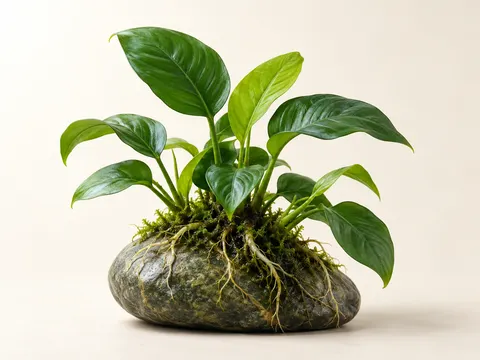


Practical Recommendation
Treat this as a managed pairing. Plant it securely, give it time to root or attach, and use other plants or hardscape if the fish needs more shelter than one species can provide.
The decision should center on this signal: Fast, forceful fish movement can be rough on a plant that anchors lightly.
Best Use Case
Red Root Floater can work with Malawi Eyebiter, but only if you are honest about the pressure the fish puts on the layout. This is the kind of pairing that succeeds when the plant is chosen for a reason, protected by placement, and supported by a maintenance routine that anticipates damage or crowding.
Frequently Asked Questions About Red Root Floater and Malawi Eyebiter
Is Red Root Floater a good plant for Malawi Eyebiter?
Red Root Floater can work with Malawi Eyebiter, but this is a possible with caution pairing. The plant may need a protected position, stronger anchoring, or companion plants before it feels reliable in day-to-day use. The match depends on anchoring and placement more than the water numbers alone.
Can Malawi Eyebiter damage Red Root Floater?
Fast, forceful fish movement can be rough on a plant that anchors lightly.
Red Root Floater and Malawi Eyebiter share a workable water window around 23 to 28 °C, pH 7.8 to 8, and 10 to 15 dGH. Keep the tank near the middle of that overlap for the best long-term result.
What does Red Root Floater add to a tank with Malawi Eyebiter?
This plant adds the denser cover that Malawi Eyebiter usually appreciates.
What is the main risk in this plant and fish pairing?
Fast, forceful fish movement can be rough on a plant that anchors lightly.
Plant and fish setup supplies
We may earn from qualifying purchases



Guidarium Editorial Desk
Reviewed against Guidarium care, stocking, and compatibility standards. Read the editorial policy.
- Last reviewed
- May 4, 2026
- Last updated
- May 4, 2026
- Issues or corrections?
- Contact the editorial team
Other Fish for Red Root Floater
Rhomb Barb
Desmopuntius rhomboocellatus
Redline Rasbora
Rasbora pauciperforata
Red Dwarf Rasbora
Microrasbora rubescens
Steindachner Dwarf Cichlid
Apistogramma steindachneri
Red Breasted Acara
Laetacara dorsigera
Rainbow Snakehead
Channa bleheri
Other Plants for Malawi Eyebiter
Afzel's Anubias
Anubias afzelii
Anubias Barteri
Anubias barteri
Balansae
Cryptocoryne crispatula
Broadleaf Crinum
Crinum natans
Broadleaf Sword
Echinodorus bleheri
Compact Aponogeton
Aponogeton ulvaceus