
Is Buce Motleyana a Good Plant for African Lungfish?
Buce Motleyana can work with African Lungfish, but this is a possible with caution pairing. The plant may need a protected position, stronger anchoring, or companion plants before it feels reliable in day-to-day use. The match depends on anchoring and placement more than the water numbers alone.
Buce Motleyana
Bucephalandra motleyana
African Lungfish
Protopterus annectens
Quick Decision
A plant can be technically compatible with a fish and still fail in the actual tank if the fish digs, chews, needs denser cover, or uses a different part of the layout.
74/100
Possible, but the scape needs more care.
Workable overlap
Shared range: 24-28°C, pH 6-7.5, 5-12 dGH.
Moderate
Buce Motleyana needs thoughtful placement and anchoring.
Low cover
Buce Motleyana helps with good refuge for shrimp and good grazing surface.
Plant and Fish Fit Notes
Use these signals to decide whether the plant is doing useful work for the fish, or whether it is only surviving beside it.
Overlap: 24-28°C.
Overlap: pH 6-7.5.
Overlap: 5-12 dGH.
Flow expectations are close enough for one layout.
Plant pressure: Moderate.
Shared Tank Conditions
Buce Motleyana fits inside the water range normally used for African Lungfish. The shared window is about 24 to 28 °C, pH 6 to 7.5, and 5 to 12 dGH, which gives you enough room to aim for stable middle-ground conditions.
Their flow expectations are close enough to combine: Buce Motleyana prefers moderate flow, while African Lungfish prefers gentle, low-flow water.
Both are suited to freshwater, so salinity does not add an extra planning problem.
Fish Pressure and Plant Resilience
African Lungfish can still be rough on plants, but this pairing becomes more realistic when the plant is anchored well and used as part of a larger layout.
Buce Motleyana has low cover density, high uproot resistance, and tough / leathery leaves. It can also help with shrimp refuge and grazing surfaces.
Buce Motleyana is less tempting than softer, more palatable plants for known nibblers.
The point to watch is african Lungfish may still investigate the plant, but the tougher foliage gives it a better chance.
Layout Fit
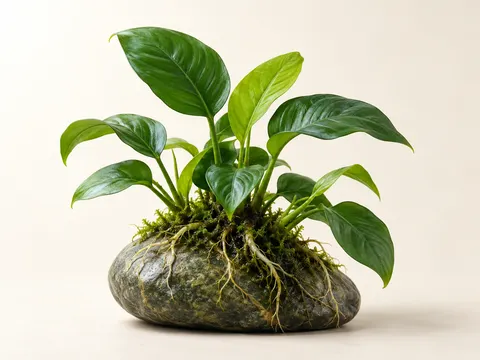
Buce Motleyana is a rhizome / epiphyte plant usually used foreground, midground, and attached to hardscape.
African Lungfish is an oddball fish, so the pairing works best when the planting style supports how that fish uses space and cover.
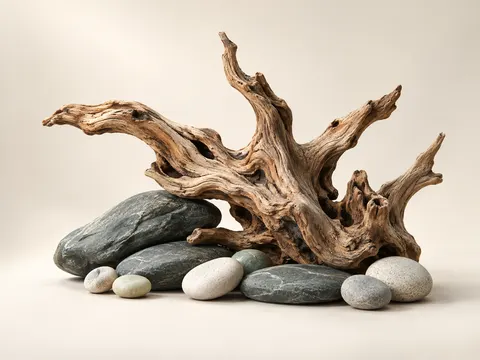
Buce Motleyana reaches about 10 cm tall by 15 cm wide and is usually attached / wedged to hardscape with no substrate required. That makes placement and anchoring more important than simply adding a larger bunch of stems or leaves.
In this pairing, the useful plant values are shrimp refuge and grazing surfaces. Place it where African Lungfish can actually use that structure instead of hiding the plant where it cannot do much.
Supplies for Buce Motleyana & African Lungfish
We may earn from qualifying purchases


Practical Recommendation
Treat this as a managed pairing. Plant it securely, give it time to root or attach, and use other plants or hardscape if the fish needs more shelter than one species can provide.
The decision should center on this signal: African Lungfish may still investigate the plant, but the tougher foliage gives it a better chance.
Best Use Case
Buce Motleyana can work with African Lungfish, but only if you are honest about the pressure the fish puts on the layout. This is the kind of pairing that succeeds when the plant is chosen for a reason, protected by placement, and supported by a maintenance routine that anticipates damage or crowding.
Frequently Asked Questions About Buce Motleyana and African Lungfish
Is Buce Motleyana a good plant for African Lungfish?
Buce Motleyana can work with African Lungfish, but this is a possible with caution pairing. The plant may need a protected position, stronger anchoring, or companion plants before it feels reliable in day-to-day use. The match depends on anchoring and placement more than the water numbers alone.
Can African Lungfish damage Buce Motleyana?
African Lungfish may still investigate the plant, but the tougher foliage gives it a better chance.
Buce Motleyana and African Lungfish share a workable water window around 24 to 28 °C, pH 6 to 7.5, and 5 to 12 dGH. Keep the tank near the middle of that overlap for the best long-term result.
What does Buce Motleyana add to a tank with African Lungfish?
Buce Motleyana is less tempting than softer, more palatable plants for known nibblers.
What is the main risk in this plant and fish pairing?
African Lungfish may still investigate the plant, but the tougher foliage gives it a better chance.
Plant and fish setup supplies
We may earn from qualifying purchases



Guidarium Editorial Desk
Reviewed against Guidarium care, stocking, and compatibility standards. Read the editorial policy.
- Last reviewed
- April 28, 2026
- Last updated
- April 28, 2026
- Issues or corrections?
- Contact the editorial team
Other Fish for Buce Motleyana
Scissortail Rasbora
Rasbora trilineata
Rosy Red Minnow / Fathead Minnow
Pimephales promelas
Yellow Acara
Aequidens metae
Uruguayan Eartheater
Gymnogeophagus australis
Threadfin Acara
Acarichthys heckelii
Red Striped Eartheater
Geophagus surinamensis
Other Plants for African Lungfish
Meebold's Lagenandra
Lagenandra meeboldii
Sweet Potato
Ipomoea batatas
Afzel's Anubias
Anubias afzelii
Anubias Barteri
Anubias barteri
Belinda's Buce
Bucephalandra belindae
Congo Anubias
Anubias heterophylla