
A highly active, large schooling fish found in Indo-Pacific estuaries. 'Scatophagus' translates to 'dung-eater', pointing to their voracious, omnivorous appetite and the massive amount of waste they produce. While juveniles can tolerate light brackish water, adults strictly require heavy brackish to full marine conditions. They possess mildly venomous dorsal spines.
Scat (Brackish) At a Glance
Scat (Brackish) Tank Requirements
Will Scat (Brackish) fit in your tank?
Care guides tell you what Scat (Brackish) needs, the next question is whether your tank can safely provide it. Test Scat (Brackish) against your tank size, maintenance needs, and the fish you already keep before you buy.
Scat (Brackish) Water Parameters
Scat (Brackish) Temperament & Compatibility
Scat (Brackish) Varieties
Each variety inherits the species defaults above. Only differences are highlighted.
Standard / Green Scat (Adult)
The mature form of the standard Green Scat. Requires heavy brackish or full marine water, exceptional filtration, and a very large tank. Will consume any aquatic plants.
Same care requirements as the base species
Also known as: Green Scat, Common Scat
Ruby / Red Scat (Adult)
A popular color morph or regional variant featuring deep red/orange coloration along the dorsal ridge. Care and sizing are completely identical to the standard Green Scat.
Same care requirements as the base species
Also known as: Ruby Scat, Red Scat, Red-backed Scat
Juvenile (Grow-out)
Sold at a small size (often incorrectly as freshwater fish). They grow exceptionally fast and their requirement for salinity increases as they mature. This tank size is strictly a temporary grow-out setup.
Differs in 4 traits from base species
Also known as: Baby Scat, Freshwater Scat
Scat (Brackish) Care Guide Summary
The Scat (Brackish), scientifically known as Scatophagus argus, belongs to the Oddballs family group. Adults reach a maximum size of approximately 30 cm and have a compressed body shape with a moderate growth rate. Classified as mostly peaceful, this species primarily occupies the mid-level and bottom zones of the aquarium and produces a extreme level of biological waste.
To thrive, the Scat (Brackish) requires a brackish required aquarium with a minimum volume of 450 litres and a tank length of at least 150 cm. Water temperature should be maintained between 20°C and 28°C, with a pH range of 7.5–8.5 and a general hardness of 12–30 dGH. A high water flow is preferred.
Due to its specialist needs, the Scat (Brackish) is best suited for fishkeepers who can provide a carefully planned setup. This species is available in 3 varieties: Standard / Green Scat (Adult), Ruby / Red Scat (Adult), and Juvenile (Grow-out). Each may differ slightly in size, temperament, or care needs, so it is worth checking the specific requirements of the variety you plan to keep.
Scat (Brackish) Habitat Setup
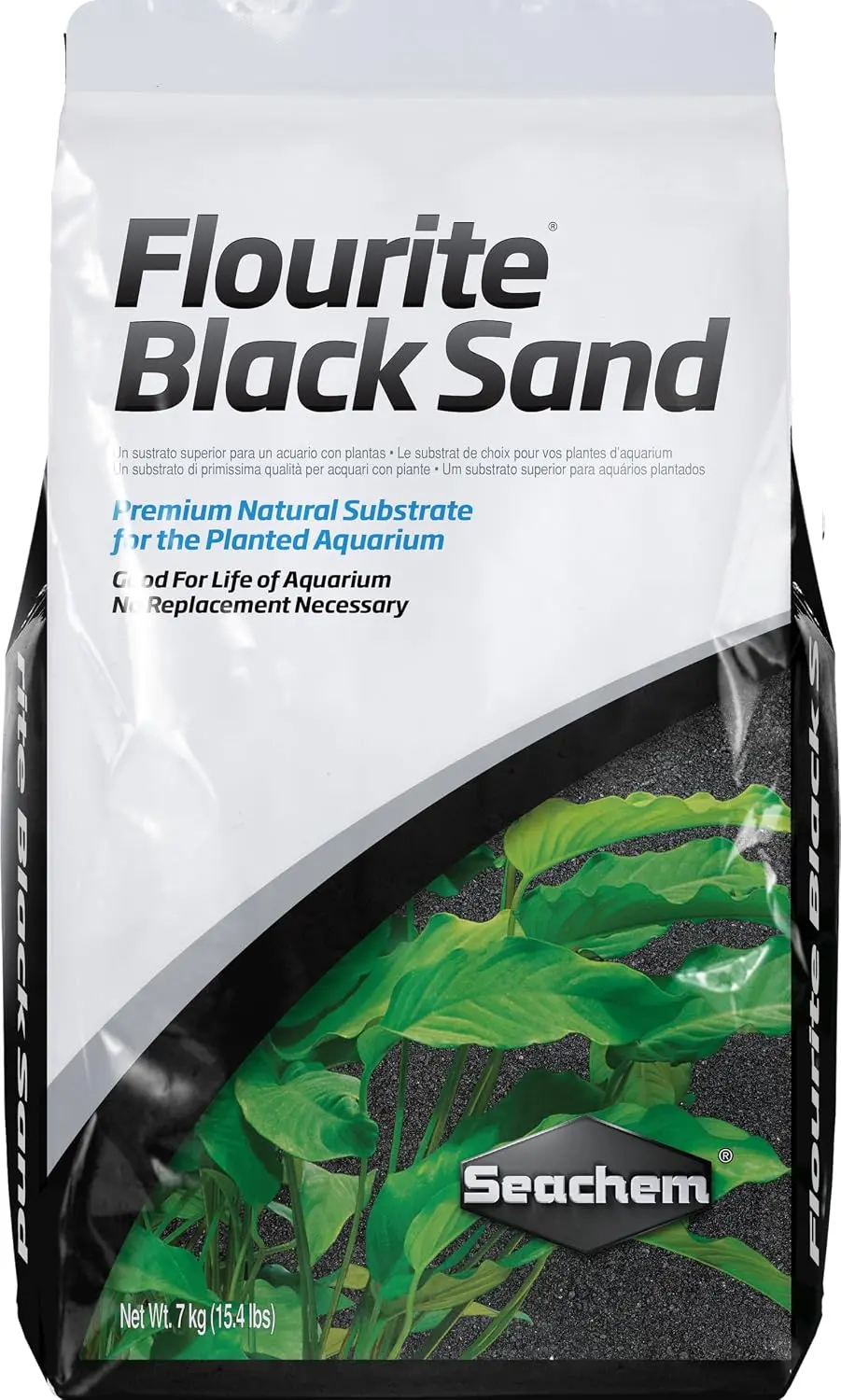
When setting up an aquarium for the Scat (Brackish), a high water flow best suits their natural preferences. Because this species occupies the mid-level and bottom zones, the aquarium layout should prioritise open swimming space in the centre of the tank for free movement and sufficient floor space with hiding spots among rocks, wood, or dense planting. Useful additions include a sand substrate to accommodate their sifting behaviour, smooth gravel or rounded substrate to protect their sensitive barbels, and an established tank with natural algae growth, as they depend on it as a primary food source. Keepers should note that live planted layouts may be difficult to maintain, as this species tends to uproot or consume vegetation.
Supplies for Scat (Brackish)
We may earn from qualifying purchases


Scat (Brackish) Compatibility Notes
Classified as mostly peaceful, the Scat (Brackish) is a social species that requires the company of its own kind to thrive. When choosing tankmates, avoid housing with slow-moving or long-finned species that may become targets for fin nipping, shy or slow-feeding tankmates may be outcompeted at feeding time, and their energetic swimming style may stress more sedentary or timid species. Selecting tankmates that favour different water layers from the mid-level and bottom zones can help reduce competition and territorial overlap.
Who Scat (Brackish) Is Actually For
Scat (Brackish) is best for a fishkeeper who wants a species that can settle into a calmer community setup and can provide a keeper who can commit to a proper group of at least 4. It makes the most sense for a hobbyist who will actually build around its needs, especially sand.
The most common mistake is treating Scat (Brackish) like any other community fish and skipping the soft sand it needs to forage safely. Another frequent problem is underestimating its social needs. A token pair or trio often behaves very differently from a real group.
Scat (Brackish) Recommended Tank Sizes
Standard aquarium sizes that meet the minimum volume and length requirements for Scat (Brackish).
Frequently Asked Questions About Scat (Brackish)
How big does Scat (Brackish) get?
Scat (Brackish) (Scatophagus argus) typically reaches a maximum adult size of approximately 30 cm. They have a compressed body shape and a moderate growth rate.
What tank size does Scat (Brackish) need?
A minimum aquarium volume of 450 litres and a tank length of at least 150 cm are recommended for Scat (Brackish). This ensures enough swimming space and helps maintain stable water conditions.
What water parameters does Scat (Brackish) need?
Scat (Brackish) thrives in brackish required conditions with a temperature range of 20–28°C, a pH between 7.5 and 8.5, and a general hardness of 12–30 dGH. A high water flow is preferred.
Is Scat (Brackish) peaceful or aggressive?
Scat (Brackish) is classified as mostly peaceful with an aggression score of 4 out of 10. They are generally well-suited to peaceful community tanks.
Can Scat (Brackish) live alone?
No, Scat (Brackish) should be kept in groups of at least 4 to reduce stress and encourage natural behaviour.
Does Scat (Brackish) have any special tank requirements?
Yes. Scat (Brackish) benefits from sand (sifters), smooth gravel (sensitive barbels), and established algae (otocinclus) in the aquarium. These features help replicate their natural habitat and promote overall health and well-being.
Useful setup supplies
We may earn from qualifying purchases

Guidarium Editorial Desk
Reviewed against Guidarium care, stocking, and compatibility standards. Read the editorial policy.
- Last reviewed
- April 28, 2026
- Last updated
- April 28, 2026
- Issues or corrections?
- Contact the editorial team
Top Tank Mates for Scat (Brackish)
These fish are strong compatibility matches for Scat (Brackish) based on water preferences, temperament, adult size, and tank behavior.
Wrestling Halfbeak
Dermogenys pusilla
Ideal Tank MatesPacific Sturgeon
Acipenser transmontanus
Ideal Tank MatesBlue Back Blue Eye
Pseudomugil cyanodorsalis
Ideal Tank MatesMono Sebae (Brackish)
Monodactylus sebae
Ideal Tank MatesPlants That Suit Scat (Brackish)
These plants pair well with Scat (Brackish) based on shared water preferences, layout fit, and how likely they are to hold up in the same aquarium.
Java Fern
Leptochilus pteropus
Jungle Val
Vallisneria americana
Lemon Bacopa
Bacopa caroliniana
Marimo Moss Ball
Aegagropila linnaei
Micro Sword
Lilaeopsis brasiliensis
Moneywort
Bacopa monnieri
Fish Similar to Scat (Brackish)
Colombian Shark Catfish (Brackish)
Ariopsis seemanni
A highly active, shark-like catfish that undergoes a dramatic physiological change during its life. While often sold as freshwater fish, juveniles require brackish water and adults MUST be transitioned to high-brackish or full marine conditions to survive and prevent disease. They are predatory and will eat any fish small enough to fit in their mouths. Caution: Their dorsal and pectoral spines are venomous.
Banded Archerfish (Brackish)
Toxotes jaculatrix
Famous for their ability to shoot down insects with a precise jet of water. As surface-dwelling predators native to mangrove estuaries, they require hard, brackish water to thrive long-term. They have a high prey drive and will eat any fish small enough to fit in their mouths. A tight-fitting lid is absolutely mandatory as they are exceptional jumpers.
Mono Sebae (Brackish)
Monodactylus sebae
A striking, deeply compressed (diamond-shaped) schooling fish native to the estuaries and mangroves of West Africa. While juveniles are frequently found in freshwater or light brackish water, adults strictly require high brackish to full marine conditions to survive long-term. They are hyperactive, grow extremely tall, and require massive, open aquariums to accommodate their schooling nature.
Green Spotted Puffer (Brackish)
Dichotomyctere nigroviridis
The Green Spotted Puffer is a highly intelligent but notoriously aggressive fish. While frequently (and incorrectly) sold as a freshwater species, they strictly require brackish water that increases in salinity as they mature, eventually needing high-brackish or full marine conditions as adults. They have beak-like teeth that grow continuously and must be worn down by a diet of hard-shelled foods. Best kept entirely alone.
Bronze Corydoras
Corydoras aeneus
A highly popular, peaceful schooling catfish known for its armor-like scales (scutes) and active bottom-feeding behavior. They are essential clean-up crew members but require a dedicated sinking diet (not just leftovers). Sand substrate is strictly required to prevent erosion and infection of their sensitive barbels. They are 'gut breathers' and will occasionally dart to the surface to gulp atmospheric air.
Figure 8 Puffer (Brackish)
Dichotomyctere ocellatus
A small, highly intelligent, and interactive pufferfish known for the distinctive figure-eight pattern on its back. While often sold as freshwater fish, they strictly require a low-end brackish environment (Specific Gravity 1.005-1.008) for long-term health and a full lifespan. They are aggressive fin-nippers and strict carnivores that require hard-shelled foods (like snails) to keep their continuously growing teeth trimmed.