
Black Ghost Knifefish
Apteronotus albifrons
A fascinating nocturnal predator native to the Amazon basin. It lacks a dorsal fin and moves via a continuous undulating ventral fin, allowing it to swim backwards as easily as forwards. It generates a weak electrical field to navigate and hunt in the dark. Scaleless and highly sensitive to medications, it requires smooth hiding places (like PVC pipes or smooth driftwood). Will consume any fish small enough to fit in its surprisingly large mouth.
Black Ghost Knifefish At a Glance
Black Ghost Knifefish Tank Requirements
Will Black Ghost Knifefish fit in your tank?
Care guides tell you what Black Ghost Knifefish needs, the next question is whether your tank can safely provide it. Test Black Ghost Knifefish against your tank size, maintenance needs, and the fish you already keep before you buy.
Black Ghost Knifefish Water Parameters
Black Ghost Knifefish Temperament & Compatibility
Black Ghost Knifefish Varieties
Each variety inherits the species defaults above. Only differences are highlighted.
Standard Adult
The fully grown Black Ghost Knifefish. Requires a massive footprint, excellent filtration, and strict solitary housing (no other knifefish) to prevent severe, often fatal, aggression.
Differs in 1 trait from base species
Also known as: Adult BGK, Full Grown
Juvenile (Grow-out)
Sold at a small size but will grow rapidly. Can be temporarily housed in smaller aquariums, but a concrete upgrade plan to a 150cm+ tank is mandatory. Still predatory towards small nano fish and shrimp.
Differs in 6 traits from base species
Also known as: Baby, Juvenile
Black Ghost Knifefish Care Guide Summary
The Black Ghost Knifefish, scientifically known as Apteronotus albifrons, belongs to the Oddballs family group. Adults reach a maximum size of approximately 40 cm and have a eel body shape with a moderate growth rate. Classified as semi-aggressive, this species primarily occupies the bottom and mid-level zones of the aquarium and produces a high level of biological waste.
To thrive, the Black Ghost Knifefish requires a freshwater only aquarium with a minimum volume of 450 litres and a tank length of at least 150 cm. Water temperature should be maintained between 23°C and 28°C, with a pH range of 6–8 and a general hardness of 5–15 dGH. A moderate water flow is preferred.
Due to its specialist needs, the Black Ghost Knifefish is best suited for fishkeepers who can provide a carefully planned setup. This species is available in 2 varieties: Standard Adult and Juvenile (Grow-out). Each may differ slightly in size, temperament, or care needs, so it is worth checking the specific requirements of the variety you plan to keep.
Black Ghost Knifefish Habitat Setup
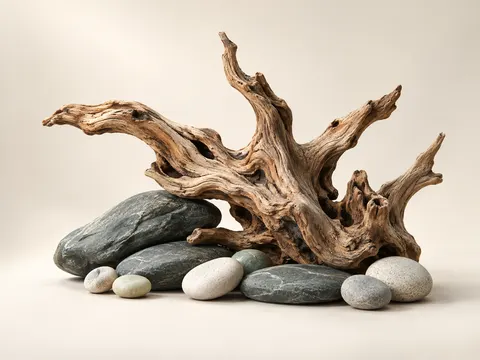
When setting up an aquarium for the Black Ghost Knifefish, a moderate water flow best suits their natural preferences. Because this species occupies the bottom and mid-level zones, the aquarium layout should prioritise open swimming space in the centre of the tank for free movement and sufficient floor space with hiding spots among rocks, wood, or dense planting. Useful additions include a sand substrate to accommodate their sifting behaviour, smooth gravel or rounded substrate to protect their sensitive barbels, and driftwood, which can serve as both a hiding place and a dietary supplement.
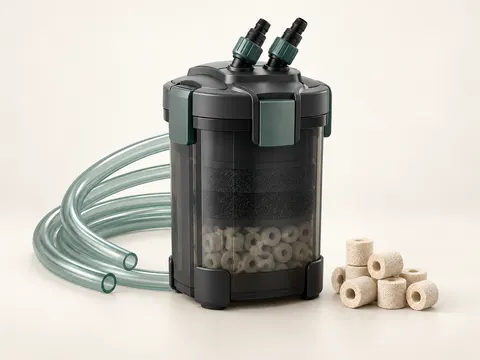
Supplies for Black Ghost Knifefish
We may earn from qualifying purchases


Black Ghost Knifefish Compatibility Notes
Classified as semi-aggressive, the Black Ghost Knifefish is best housed alone, as they do not tolerate others of their kind in confined spaces. When choosing tankmates, any fish small enough to fit in its mouth will likely be eaten, ornamental shrimp are not safe companions, conspecific aggression can be intense, especially in smaller tanks, and boisterous or fast-moving tankmates may cause this species undue stress. Selecting tankmates that favour different water layers from the bottom and mid-level zones can help reduce competition and territorial overlap.
Who Black Ghost Knifefish Is Actually For
Black Ghost Knifefish is best for a fishkeeper who wants a species that can settle into a calmer community setup and can provide someone who understands its individual space requirements. It makes the most sense for a hobbyist who will actually build around its needs, especially smooth gravel.
The most common mistake is treating Black Ghost Knifefish like any other community fish and skipping the soft sand it needs to forage safely. Another frequent problem is forcing it into an over-busy community when it would do better with more room or more deliberate tankmate choices.
Black Ghost Knifefish Recommended Tank Sizes
Standard aquarium sizes that meet the minimum volume and length requirements for Black Ghost Knifefish.
Black Ghost Knifefish Feeding & Diet Considerations
The Black Ghost Knifefish is a predatory species that will readily consume small fish, so nano or bite-sized tankmates should be avoided, will hunt and eat ornamental shrimp, making it unsuitable for shrimp-focused setups, and is primarily active at dusk and dawn, so offering food shortly after lights-off ensures it receives adequate nutrition.
Frequently Asked Questions About Black Ghost Knifefish
How big does Black Ghost Knifefish get?
Black Ghost Knifefish (Apteronotus albifrons) typically reaches a maximum adult size of approximately 40 cm. They have a eel body shape and a moderate growth rate.
What tank size does Black Ghost Knifefish need?
A minimum aquarium volume of 450 litres and a tank length of at least 150 cm are recommended for Black Ghost Knifefish. This ensures enough swimming space and helps maintain stable water conditions.
What water parameters does Black Ghost Knifefish need?
Black Ghost Knifefish thrives in freshwater only conditions with a temperature range of 23–28°C, a pH between 6 and 8, and a general hardness of 5–15 dGH. A moderate water flow is preferred.
Is Black Ghost Knifefish peaceful or aggressive?
Black Ghost Knifefish is classified as semi-aggressive with an aggression score of 6 out of 10. They can work in community setups but may clash with certain tankmates.
Can Black Ghost Knifefish live with others of its kind?
No. Only one Black Ghost Knifefish should be kept per tank. Keeping multiples in the same aquarium typically results in aggression and stress.
Is Black Ghost Knifefish safe with shrimp?
No. Black Ghost Knifefish is known to eat ornamental shrimp and is not recommended for shrimp tanks. Even larger shrimp species like Amano Shrimp may be at risk.
Does Black Ghost Knifefish have any special tank requirements?
Yes. Black Ghost Knifefish benefits from smooth gravel (sensitive barbels), driftwood (digestion/hiding), and sand (sifters) in the aquarium. These features help replicate their natural habitat and promote overall health and well-being.
Useful setup supplies
We may earn from qualifying purchases




Guidarium Editorial Desk
Reviewed against Guidarium care, stocking, and compatibility standards. Read the editorial policy.
- Last reviewed
- April 28, 2026
- Last updated
- April 28, 2026
- Issues or corrections?
- Contact the editorial team
Plants That Suit Black Ghost Knifefish
These plants pair well with Black Ghost Knifefish based on shared water preferences, layout fit, and how likely they are to hold up in the same aquarium.
African Onion Plant
Crinum calamistratum
Afzel's Anubias
Anubias afzelii
Amazon Sword
Echinodorus amazonicus
Anacharis
Egeria densa
Anubias Barteri
Anubias barteri
Ashy Pipewort
Eriocaulon cinereum
Fish Similar to Black Ghost Knifefish
African Knifefish
Xenomystus nigri
A fascinating nocturnal predator named for its blade-like shape. Lacking a dorsal fin, it moves by rippling its long anal fin, allowing it to easily swim backward and forward. While peaceful with larger tank mates, it is an opportunistic piscivore that will swallow any fish or invertebrate small enough to fit in its mouth. It requires dim lighting and plenty of caves (PVC or driftwood) to feel secure during the day.
Clown Knifefish
Chitala ornata
A massive, nocturnal predator native to Southeast Asia, widely known for the distinct row of ocellated spots above its anal fin. While sold as small silvery cute juveniles, they grow incredibly fast into nearly 1-meter giants that require immense aquariums. They are obligate carnivores and will eat any fish small enough to fit in their large mouths. They are shy during the day and require large hiding tubes or caves.
Black Fin Cory
Corydoras leucomelas
A peaceful schooling catfish native to the Amazon basin, easily identified by its black dorsal fin and a dark mask-like band across its eyes. Like all Corydoras, they are bottom-dwellers that use sensitive barbels to forage. They possess a modified intestine allowing them to gulp atmospheric air, so occasional darts to the surface are normal. They are highly social and require a soft sandy substrate to prevent barbel erosion.
Freshwater Toadfish (Prehistoric Monster Fish)
Thalassophryne amazonica
A highly cryptic, sedentary ambush predator native to the Amazon basin. WARNING: This species possesses hollow, venomous spines on its dorsal fin and gill covers; handle with extreme caution. They spend most of their time buried in the substrate and are capable of swallowing tankmates nearly their own size. While inactive, they require excellent filtration due to the high waste produced by a predatory diet.
Midnight Catfish
Auchenipterichthys coracoideus
A secretive, nocturnal driftwood catfish native to the Amazon. Aptly named for its dark blue-grey body speckled with white 'stars', it is completely peaceful towards suitably sized tank mates. However, it is an opportunistic predator at night and will consume small fish (like Neon Tetras) and shrimp that fit into its mouth. It requires subdued lighting and ample hiding spots, particularly hollow driftwood.
True Julii Corydoras
Corydoras julii
A highly sought-after, peaceful schooling catfish native to the lower Amazon. They feature distinctive fine black dots on their heads (unlike the reticulated, maze-like lines of the commonly mislabeled 'False Julii', C. trilineatus) and a black-tipped dorsal fin. As obligate bottom-dwellers, they continuously sift through the substrate and strictly require soft sand to prevent erosion and infection of their delicate sensory barbels. They are highly gregarious and must be kept in groups.