
A highly intelligent, interactive, and aggressive freshwater pufferfish native to the Mekong basin. They feature an earthy base color speckled with bright orange or pale spots. As true ambush predators and molluscivores, they require hard-shelled foods like snails and crustaceans to naturally file down their ever-growing teeth. Due to their extreme territoriality and formidable bite, they are widely considered a 'wet pet' and must be kept strictly alone.
Abei Puffer At a Glance
Abei Puffer Tank Requirements
Will Abei Puffer fit in your tank?
Care guides tell you what Abei Puffer needs, the next question is whether your tank can safely provide it. Test Abei Puffer against your tank size, maintenance needs, and the fish you already keep before you buy.
Abei Puffer Water Parameters
Abei Puffer Temperament & Compatibility
Abei Puffer Varieties
Each variety inherits the species defaults above. Only differences are highlighted.
Standard
The standard wild-type Abei Puffer. Requires a heavily structured tank with broken sightlines and fine sand, as they often bury themselves to ambush prey. Must be fed a specialized diet rich in crunchy shells to prevent fatal dental overgrowth.
Same care requirements as the base species
Also known as: Wild Type, Adult
Abei Puffer Care Guide Summary
The Abei Puffer, scientifically known as Pao abei, belongs to the Puffers family group. Adults reach a maximum size of approximately 10.5 cm and have a globular body shape with a moderate growth rate. Classified as highly aggressive, this species primarily occupies the mid-level and bottom zones of the aquarium and produces a high level of biological waste.
To thrive, the Abei Puffer requires a freshwater only aquarium with a minimum volume of 114 litres and a tank length of at least 80 cm. Water temperature should be maintained between 24°C and 28°C, with a pH range of 6–7.8 and a general hardness of 5–15 dGH. A low water flow is preferred.
Due to its specialist needs, the Abei Puffer is best suited for fishkeepers who can provide a carefully planned setup. The Abei Puffer is typically available in one standard form.
Abei Puffer Habitat Setup
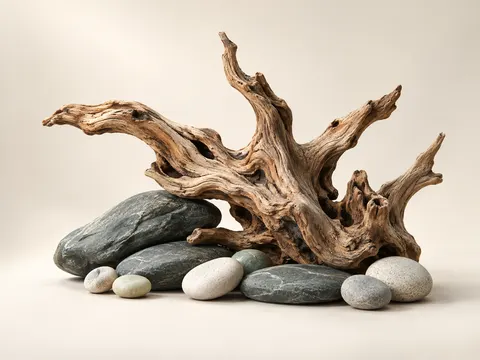
When setting up an aquarium for the Abei Puffer, a low water flow best suits their natural preferences. Because this species occupies the mid-level and bottom zones, the aquarium layout should prioritise open swimming space in the centre of the tank for free movement and sufficient floor space with hiding spots among rocks, wood, or dense planting. Useful additions include a sand substrate to accommodate their sifting behaviour, driftwood, which can serve as both a hiding place and a dietary supplement, and dense planting to provide cover, break sightlines, and reduce stress. Keepers should note that expect substrate disturbance, so lightweight décor should be secured.
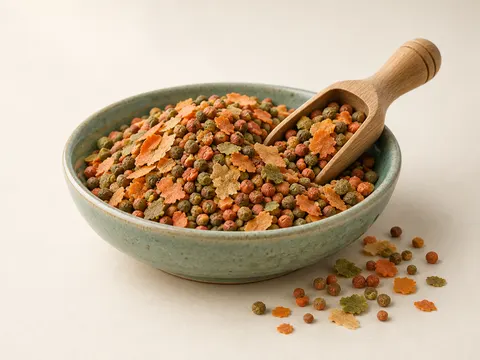
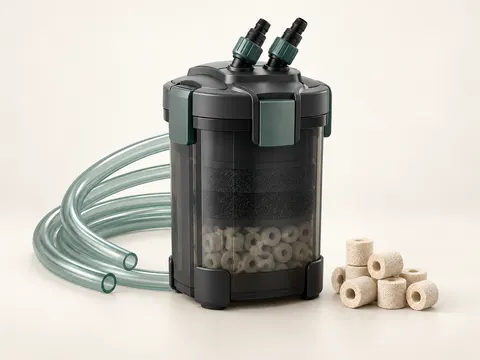
Supplies for Abei Puffer
We may earn from qualifying purchases

Abei Puffer Compatibility Notes
Classified as highly aggressive, the Abei Puffer is best housed alone, as they do not tolerate others of their kind in confined spaces. When choosing tankmates, avoid housing with slow-moving or long-finned species that may become targets for fin nipping, any fish small enough to fit in its mouth will likely be eaten, ornamental shrimp are not safe companions, snails will be treated as food rather than tankmates, conspecific aggression can be intense, especially in smaller tanks, and territorial behaviour may cause issues if hiding spots or floor space are limited. Selecting tankmates that favour different water layers from the mid-level and bottom zones can help reduce competition and territorial overlap.
Who Abei Puffer Is Actually For
Abei Puffer is best for a fishkeeper who expects a species with attitude and plans the tank around that behavior and can provide someone who understands its individual space requirements. It makes the most sense for a hobbyist who will actually build around its needs, especially sand.
The most common mistake is treating Abei Puffer like any other community fish and skipping the soft sand it needs to forage safely. Another frequent problem is forcing it into an over-busy community when it would do better with more room or more deliberate tankmate choices.
Abei Puffer Recommended Tank Sizes
Standard aquarium sizes that meet the minimum volume and length requirements for Abei Puffer.
30 Gallon Breeder
40 Gallon Breeder
55 Gallon Standard
60 Gallon Breeder
75 Gallon Standard
90 Gallon Standard
Show 11 more tank sizes
Abei Puffer Feeding & Diet Considerations
The Abei Puffer is a predatory species that will readily consume small fish, so nano or bite-sized tankmates should be avoided, will hunt and eat ornamental shrimp, making it unsuitable for shrimp-focused setups, and actively feeds on snails and can be used as a natural snail population control.
Frequently Asked Questions About Abei Puffer
How big does Abei Puffer get?
Abei Puffer (Pao abei) typically reaches a maximum adult size of approximately 10.5 cm. They have a globular body shape and a moderate growth rate.
What tank size does Abei Puffer need?
A minimum aquarium volume of 114 litres and a tank length of at least 80 cm are recommended for Abei Puffer. This ensures enough swimming space and helps maintain stable water conditions.
What water parameters does Abei Puffer need?
Abei Puffer thrives in freshwater only conditions with a temperature range of 24–28°C, a pH between 6 and 7.8, and a general hardness of 5–15 dGH. A low water flow is preferred.
Is Abei Puffer peaceful or aggressive?
Abei Puffer is classified as highly aggressive with an aggression score of 9 out of 10. Careful tankmate selection is essential to avoid conflict.
Can Abei Puffer live with others of its kind?
No. Only one Abei Puffer should be kept per tank. Keeping multiples in the same aquarium typically results in aggression and stress.
Is Abei Puffer safe with shrimp?
No. Abei Puffer is known to eat ornamental shrimp and is not recommended for shrimp tanks. Even larger shrimp species like Amano Shrimp may be at risk.
Will Abei Puffer eat snails?
Yes. Abei Puffer actively feeds on snails. While this can be useful for controlling pest snail populations, it means decorative snails should not be housed with this species.
Does Abei Puffer have any special tank requirements?
Yes. Abei Puffer benefits from sand (sifters), driftwood (digestion/hiding), and plants - densely covered in the aquarium. These features help replicate their natural habitat and promote overall health and well-being.
Useful setup supplies
We may earn from qualifying purchases




Guidarium Editorial Desk
Reviewed against Guidarium care, stocking, and compatibility standards. Read the editorial policy.
- Last reviewed
- May 1, 2026
- Last updated
- May 1, 2026
- Issues or corrections?
- Contact the editorial team
Plants That Suit Abei Puffer
These plants pair well with Abei Puffer based on shared water preferences, layout fit, and how likely they are to hold up in the same aquarium.
Meebold's Lagenandra
Lagenandra meeboldii
Sweet Potato
Ipomoea batatas
Afzel's Anubias
Anubias afzelii
Anubias Barteri
Anubias barteri
Congo Anubias
Anubias heterophylla
Dwarf Buce
Bucephalandra pygmaea
Fish Similar to Abei Puffer
Brown Puffer
Pao turgidus
A heavily built, strictly freshwater pufferfish native to the Mekong basin in Southeast Asia. Often sold as part of the 'Target Puffer' complex, the Brown Puffer is a notorious ambush predator. They spend much of their time lurking among plants or partially buried in the substrate waiting for prey. They are highly aggressive, strictly solitary, and possess a sharp beak capable of crushing snails and fatally injuring tank mates.
Fahaka Puffer
Tetraodon lineatus
A massive, highly intelligent, and extremely aggressive freshwater pufferfish native to the Nile, Senegal, and Niger rivers. Often referred to as 'water dogs' due to their owner recognition and begging behavior. They are strictly solitary pets that will relentlessly attack and kill any tank mates. They require a diet of hard-shelled invertebrates to keep their ever-growing teeth trimmed.
Arrowhead Puffer
Pao suvattii
A highly predatory freshwater pufferfish native to the Mekong basin. Named for its V-shaped, flattened head, it is a specialized ambush predator that buries itself in sand with only its eyes and upwards-facing mouth exposed. It is notoriously aggressive and will consume or fatally bite any tankmate, regardless of size. Must be kept strictly solitary.
Red Tailed Redeye Puffer
Carinotetraodon irrubesco
A small, true freshwater pufferfish native to the river basins of Indonesia. Known for their striking red eyes and highly inquisitive nature. While considered one of the more 'peaceful' Carinotetraodon species, they are still notorious fin-nippers and specialized predators of snails and dwarf shrimp. They require a heavily planted tank to break lines of sight.
Green Spotted Puffer (Brackish)
Dichotomyctere nigroviridis
The Green Spotted Puffer is a highly intelligent but notoriously aggressive fish. While frequently (and incorrectly) sold as a freshwater species, they strictly require brackish water that increases in salinity as they mature, eventually needing high-brackish or full marine conditions as adults. They have beak-like teeth that grow continuously and must be worn down by a diet of hard-shelled foods. Best kept entirely alone.
Amazon Puffer
Colomesus asellus
One of the few truly freshwater, community-safe pufferfish. Native to the Amazon basin, these energetic swimmers are known for their bumblebee-like stripes and erratic swimming patterns. Unlike most puffers, they are social and prefer to be kept in groups. CRITICAL WARNING: This species has the fastest-growing teeth of any puffer. They REQUIRE a daily diet of hard-shelled foods (snails, clams, crustaceans) or they will require manual dentistry (trimming) to prevent starvation.