
Can Capuron's Aponogeton and Madagascar Lace Plant Grow Together?
They can grow together, but it is not a plant-and-forget pairing. The shared water range is about 22 to 24 °C, pH 6 to 7.2, and 4 to 10 dGH. Plan the spacing, trimming rhythm, and shade control before planting so one species does not slowly crowd the other.
Capuron's Aponogeton
Aponogeton capuronii
Madagascar Lace Plant
Aponogeton madagascariensis
Quick Decision
Use this first pass to decide whether the pairing deserves a real place in the tank plan before you get into the full care details.
70/100
Viable, but only with more deliberate layout choices.
Workable overlap
Shared range: 22-24°C, pH 6-7.2, 4-10 dGH.
High crowding
Both use Midground and Background, so leave room before they mature.
Caution
Both plants tend to work in the midground and background, so spacing matters more than usual.
Side-by-Side Planting Notes
The best coexistence pairings are not just plants with similar water ranges. They also need compatible mature size, feeding style, shade, and maintenance rhythm.
Shared placement: Midground and Background.
Light and CO2 expectations are close enough for one routine.
Shared water overlap: 22-24°C, pH 6-7.2, 4-10 dGH.
Shared benefit: Breaks lines of sight.
Shared Environment
Capuron's Aponogeton and Madagascar Lace Plant share a workable water window around 22 to 24 °C, pH 6 to 7.2, and 4 to 10 dGH.
Both plants are comfortable in freshwater, so salinity is not a meaningful obstacle.
Both prefer strong, stream-style flow, so circulation can be planned as one steady pattern.
Both fit moderate light and recommended added CO2, so one lighting and CO2 plan can support the pair.
Layout and Spacing
Both plants naturally lean toward the midground and background, which is why spacing, pruning, and final mature size matter more than they do in a more staggered planting mix.
Capuron's Aponogeton reaches about 45 cm tall by 20 cm wide, while Madagascar Lace Plant reaches about 60 cm tall by 40 cm wide. Use those mature sizes for the layout, not the small nursery portions you bring home.
Shade is worth watching, but it is usually manageable through trimming and a little spatial separation.
Both are typically bulb / tuber on or partly in substrate with nutrient-rich substrate preferred and feed mainly as root feeders. The method is simple, but it also means the same planting zone can feel crowded if they are placed too close together.
Maintenance Outlook
Crowding becomes likely once both plants hit mature size, so this pairing really wants a roomier footprint or a more aggressive trim schedule.
Capuron's Aponogeton brings moderate growth, moderate maintenance, and advanced difficulty. Madagascar Lace Plant brings moderate growth, high maintenance, and advanced difficulty. If one grows much faster, trim that plant before it starts making the other look like the problem.
The practical watch-outs are that both plants tend to work in the midground and background, so spacing matters more than usual; and that their mature spread can crowd the same zone quickly unless the layout is oversized from the start; and that the layout needs a little thought so one plant does not slowly dim the other.
The strongest reasons to try the mix are that they share a workable temperature window around 22 to 24 °C; and that their flow preferences sit close enough to tune one layout around both plants.
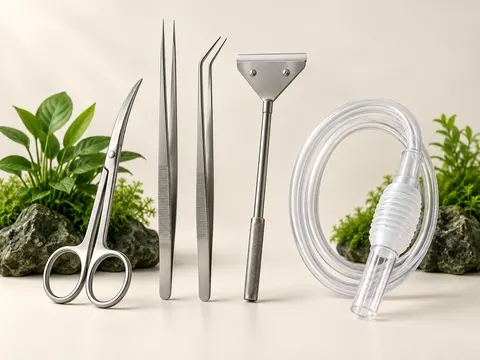
Supplies for Capuron's Aponogeton & Madagascar Lace Plant
We may earn from qualifying purchases

Practical Recommendation
Use this pairing when you are willing to manage the scape, not when you want a plant-and-forget combination. Start with more spacing than you think you need, then adjust once both plants show their real growth pace.
The simple success test is whether both plants still look healthy after the faster grower has been trimmed several times. If one keeps declining after routine care, the layout is probably asking too much of it.
Best Use Case
This pairing is best treated as a layout decision, not just a water-parameter match. Capuron's Aponogeton and Madagascar Lace Plant can work together, but only when you intentionally manage spacing, shade, and maintenance so the stronger grower does not quietly turn the other into dead weight.
Frequently Asked Questions About Capuron's Aponogeton and Madagascar Lace Plant
Can Capuron's Aponogeton and Madagascar Lace Plant grow in the same aquarium?
They can grow together, but it is not a plant-and-forget pairing. The shared water range is about 22 to 24 °C, pH 6 to 7.2, and 4 to 10 dGH. Plan the spacing, trimming rhythm, and shade control before planting so one species does not slowly crowd the other.
What water conditions suit both Capuron's Aponogeton and Madagascar Lace Plant?
The shared water window is about 22 to 24 °C, pH 6 to 7.2, and 4 to 10 dGH. Keep the tank in the middle of that overlap instead of chasing the outer edge of either plant's tolerance.
Will Capuron's Aponogeton and Madagascar Lace Plant compete for the same space?
Yes, at least partly. Both plants are often used midground and background, so mature size, pruning rhythm, and shade control matter. Start them with visible separation instead of letting them meet on planting day.
Is light or CO2 the bigger challenge with this pairing?
Neither light nor CO2 is a major divider here compared with most mixed-plant pairings.
What is the main risk when keeping Capuron's Aponogeton with Madagascar Lace Plant?
Both plants tend to work in the midground and background, so spacing matters more than usual.
Plant pairing supplies
We may earn from qualifying purchases




Guidarium Editorial Desk
Reviewed against Guidarium care, stocking, and compatibility standards. Read the editorial policy.
- Last reviewed
- April 21, 2026
- Last updated
- April 21, 2026
- Issues or corrections?
- Contact the editorial team
Related Coexistence Guides
Downoi
Pogostemon helferi
Dwarf Hairgrass
Eleocharis parvula
S. Repens
Staurogyne repens
Slender Hairgrass
Eleocharis acicularis
Water Violet
Hottonia palustris
Micro Sword
Lilaeopsis brasiliensis