
German Blue Ram
Mikrogeophagus ramirezi
A strikingly colorful dwarf cichlid native to the Orinoco River basin. Famous for its vibrant blue spangles and peaceful demeanor compared to larger cichlids. They are strictly thermophilic (require high temperatures of 27-30°C / 81-86°F) and thrive in soft, acidic water. As 'earth-eaters' (Mikrogeophagus), they sift sand for food and form monogamous pairs.
German Blue Ram At a Glance
German Blue Ram Tank Requirements
Will German Blue Ram fit in your tank?
Care guides tell you what German Blue Ram needs, the next question is whether your tank can safely provide it. Test German Blue Ram against your tank size, maintenance needs, and the fish you already keep before you buy.
German Blue Ram Water Parameters
German Blue Ram Temperament & Compatibility
German Blue Ram Varieties
Each variety inherits the species defaults above. Only differences are highlighted.
Standard / German Blue
The classic wild-type coloration featuring vivid blue spangles, a yellow/orange face, a pink belly (in females), and a prominent black lateral spot.
Same care requirements as the base species
Also known as: GBR, Wild Type
Electric Blue
A selectively bred morph exhibiting solid, bright, metallic blue coloration over the entire body. Genetically identical in care requirements but often slightly more sensitive to water quality.
Same care requirements as the base species
Also known as: EBR, Neon Blue Ram
Gold Ram
A xanthic morph lacking dark pigments, resulting in a vibrant yellow-gold body while retaining the signature blue spangles.
Same care requirements as the base species
Also known as: Golden Ram, Xanthic
Long Finned
Features selectively bred extended, flowing fins. Requires gentler flow to prevent exhaustion and snag-free decor to avoid tearing.
Differs in 1 trait from base species
Also known as: Veiltail Ram, Hi-Fin Ram
Balloon Morph
Selectively bred for a compacted, round spine. This mutation drastically alters their swimming physics, compresses internal organs, and requires pristine water. Highly prone to swim bladder issues.
Differs in 1 trait from base species
Also known as: Balloon Ram, Short Body
German Blue Ram Care Guide Summary
The German Blue Ram, scientifically known as Mikrogeophagus ramirezi, belongs to the Cichlids - South American family group. Adults reach a maximum size of approximately 6 cm and have a compressed body shape with a moderate growth rate. Classified as mostly peaceful, this species primarily occupies the mid-level and bottom zones of the aquarium and produces a high level of biological waste.
To thrive, the German Blue Ram requires a freshwater only aquarium with a minimum volume of 60 litres and a tank length of at least 60 cm. Water temperature should be maintained between 27°C and 30°C, with a pH range of 5–7 and a general hardness of 1–8 dGH. A low water flow is preferred.
Due to its specialist needs, the German Blue Ram is best suited for fishkeepers who can provide a carefully planned setup. This species is available in 5 varieties: Standard / German Blue, Electric Blue, Gold Ram, Long Finned, and Balloon Morph. Each may differ slightly in size, temperament, or care needs, so it is worth checking the specific requirements of the variety you plan to keep.
German Blue Ram Habitat Setup
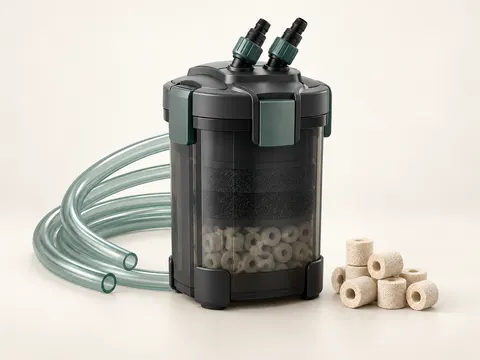
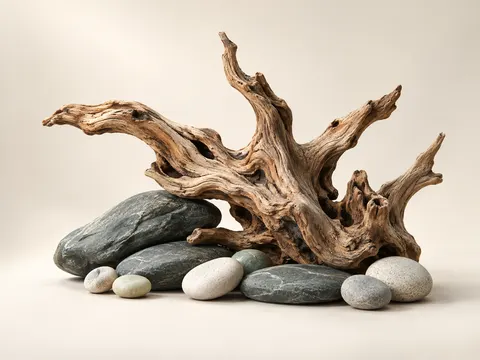
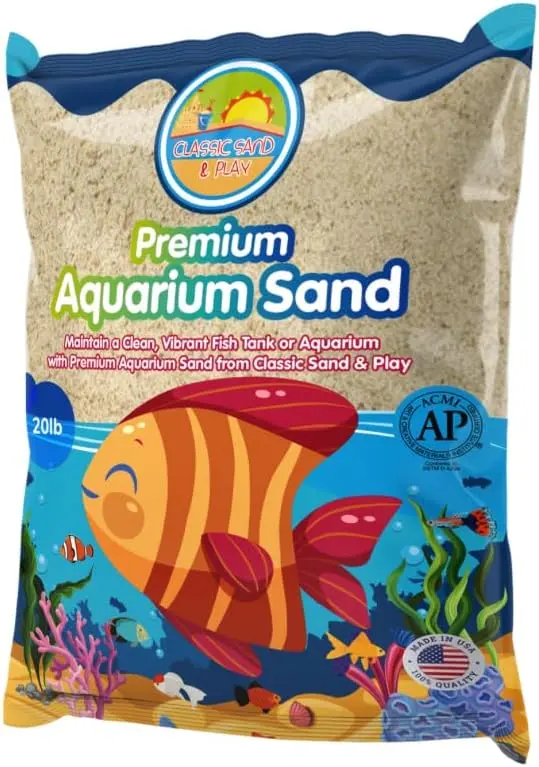
When setting up an aquarium for the German Blue Ram, a low water flow best suits their natural preferences. Because this species occupies the mid-level and bottom zones, the aquarium layout should prioritise open swimming space in the centre of the tank for free movement and sufficient floor space with hiding spots among rocks, wood, or dense planting. Useful additions include a sand substrate to accommodate their sifting behaviour, driftwood, which can serve as both a hiding place and a dietary supplement, leaf litter or blackwater tannins to replicate their natural soft-water habitat, and dense planting to provide cover, break sightlines, and reduce stress. Keepers should note that expect substrate disturbance, so lightweight décor should be secured.
Supplies for German Blue Ram
We may earn from qualifying purchases


German Blue Ram Compatibility Notes
Classified as mostly peaceful, the German Blue Ram is adaptable and can be kept singly or in a small group, offering flexibility when planning a community tank. When choosing tankmates, territorial behaviour may cause issues if hiding spots or floor space are limited and boisterous or fast-moving tankmates may cause this species undue stress. Selecting tankmates that favour different water layers from the mid-level and bottom zones can help reduce competition and territorial overlap.
Who German Blue Ram Is Actually For
German Blue Ram is best for a fishkeeper who wants a species that can settle into a calmer community setup and can provide someone who understands its individual space requirements. It makes the most sense for a hobbyist who will actually build around its needs, especially sand.
The most common mistake is treating German Blue Ram like any other community fish and skipping the soft sand it needs to forage safely. Another frequent problem is forcing it into an over-busy community when it would do better with more room or more deliberate tankmate choices.
German Blue Ram Recommended Tank Sizes
Standard aquarium sizes that meet the minimum volume and length requirements for German Blue Ram.
20 Gallon High
20 Gallon Long
29 Gallon Standard
30 Gallon Breeder
36 Gallon Bowfront
40 Gallon Breeder
Show 19 more tank sizes
Frequently Asked Questions About German Blue Ram
How big does German Blue Ram get?
German Blue Ram (Mikrogeophagus ramirezi) typically reaches a maximum adult size of approximately 6 cm. They have a compressed body shape and a moderate growth rate.
What tank size does German Blue Ram need?
A minimum aquarium volume of 60 litres and a tank length of at least 60 cm are recommended for German Blue Ram. This ensures enough swimming space and helps maintain stable water conditions.
What water parameters does German Blue Ram need?
German Blue Ram thrives in freshwater only conditions with a temperature range of 27–30°C, a pH between 5 and 7, and a general hardness of 1–8 dGH. A low water flow is preferred.
Is German Blue Ram peaceful or aggressive?
German Blue Ram is classified as mostly peaceful with an aggression score of 4 out of 10. They are generally well-suited to peaceful community tanks.
Can German Blue Ram live alone?
Yes, German Blue Ram can be kept singly or in a group. They are flexible and adapt well to both setups.
Does German Blue Ram have any special tank requirements?
Yes. German Blue Ram benefits from sand (sifters), plants - densely covered, driftwood (digestion/hiding), and leaf litter/blackwater in the aquarium. These features help replicate their natural habitat and promote overall health and well-being.
Useful setup supplies
We may earn from qualifying purchases



Guidarium Editorial Desk
Reviewed against Guidarium care, stocking, and compatibility standards. Read the editorial policy.
- Last reviewed
- April 28, 2026
- Last updated
- April 28, 2026
- Issues or corrections?
- Contact the editorial team
Top Tank Mates for German Blue Ram
These fish are strong compatibility matches for German Blue Ram based on water preferences, temperament, adult size, and tank behavior.
Starlight Bristlenose Pleco (L183)
Ancistrus dolichopterus
Ideal Tank MatesStriped Raphael Catfish
Platydoras armatulus
Ideal Tank MatesAmazon Leaf Fish
Monocirrhus polyacanthus
Ideal Tank MatesCupid Cichlid
Biotodoma cupido
Ideal Tank MatesChocolate Gourami
Sphaerichthys osphromenoides
Ideal Tank MatesCheckerboard Cichlid
Dicrossus filamentosus
Ideal Tank MatesPlants That Suit German Blue Ram
These plants pair well with German Blue Ram based on shared water preferences, layout fit, and how likely they are to hold up in the same aquarium.
Amazon Frogbit
Limnobium laevigatum
Asian Watergrass
Hygroryza aristata
Asian Watermoss
Salvinia cucullata
Carolina Mosquito Fern
Azolla caroliniana
Common Duckweed
Lemna minor
Crystalwort
Riccia fluitans
Fish Similar to German Blue Ram
Bolivian Ram
Mikrogeophagus altispinosus
A hardy and relatively peaceful dwarf cichlid native to the Amazon river basin. Compared to the popular German Blue Ram, the Bolivian Ram is larger, much more forgiving of water parameters, and prefers slightly cooler temperatures. They are eartheaters (geophagine) that sift through the substrate for food, making soft sand an absolute requirement to prevent gill damage.
Three-striped Dwarf Cichlid
Apistogramma trifasciata
A stunning dwarf cichlid native to the Guaporé and Paraguay river basins in South America. They are renowned for their striking metallic blue sheen and the male's spectacular sail-like dorsal fin. As peaceful micropredators, they are excellent for planted community tanks, but require soft, acidic water, stable parameters, and a fine sand substrate to sift through.
Panda Dwarf Cichlid
Apistogramma nijsseni
A striking South American dwarf cichlid native to blackwater habitats in Peru. Famous for the female's bright yellow coloration and distinct 'panda' black blotches. Males are larger with a blue-yellow sheen and a red-edged rounded tail. They require soft, acidic water, leaf litter, and fine sand to sift through.
Dwarf Green Pike Cichlid
Crenicichla compressiceps
A striking dwarf pike cichlid native to the fast-flowing rapids of the lower Rio Tocantins basin in Brazil. Known for their distinctive vertical green/yellow banding and elongated shape. As a rheophilic (flow-loving) species, they require highly oxygenated water with strong current to thrive. Despite their small size, they have a fiery temperament, are highly territorial, and are active micropredators that will hunt shrimp and small fish.
Cockatoo Dwarf Cichlid
Apistogramma cacatuoides
A highly popular and vibrant dwarf cichlid native to the Amazon basin. Named for the male's flamboyant, crest-like dorsal fin. They are cave-spawners that require a fine sand substrate (which they sift through their gills) and plenty of hiding spots. While generally peaceful in community tanks, they become fiercely territorial when breeding.
Hongsloi Apistogramma
Apistogramma hongsloi
A striking dwarf cichlid native to the Orinoco River basin in South America. They are popular for their vivid red, yellow, and blue colors. Best kept in blackwater setups with soft, acidic water and plenty of leaf litter. They form harems and require sand substrate, as they sift sand through their gills to find food.